
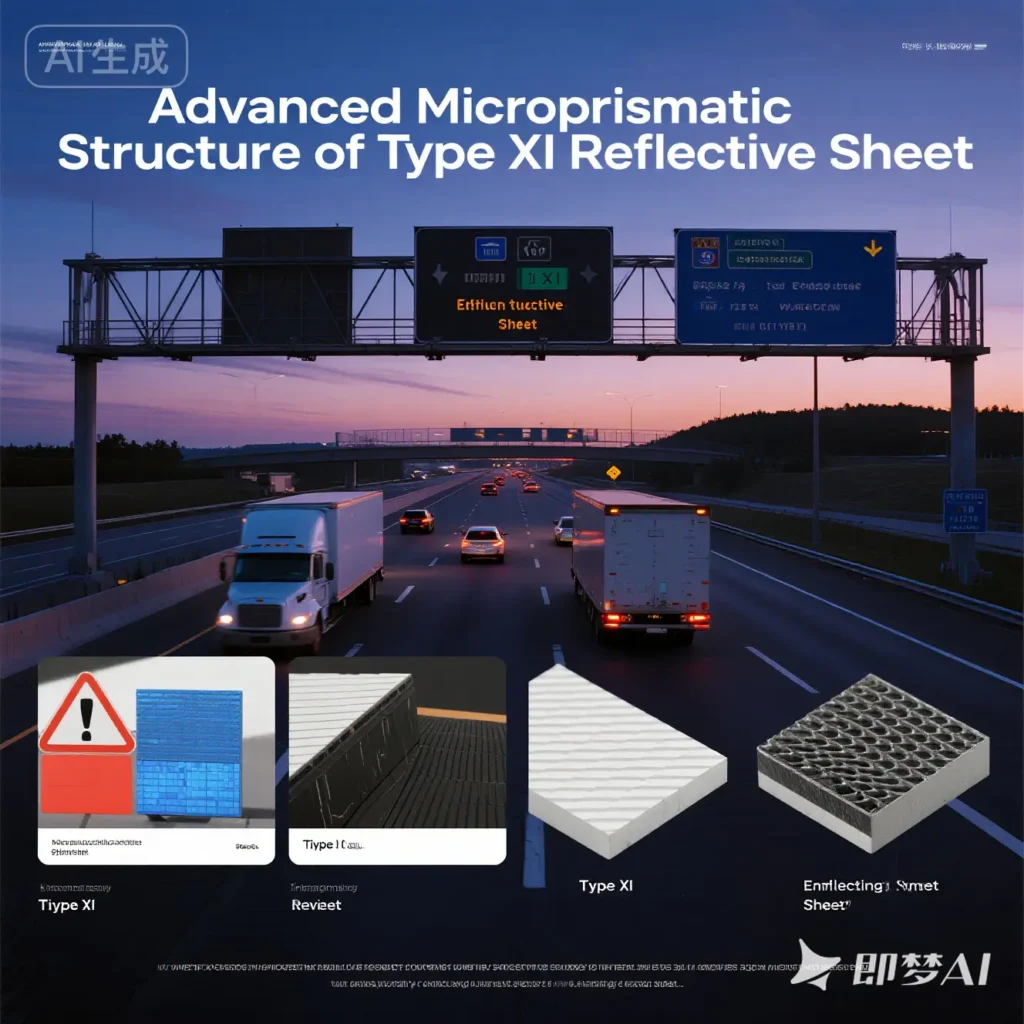
Type XI Reflective Sheeting is often described as one of the highest-performance reflective sheeting categories used for traffic signs, but that description is still incomplete. The real reason Type XI matters is not only that it looks brighter when viewed straight on. Its real value is that it can remain highly visible at wider viewing angles and more difficult approach geometries, which makes it especially useful for large signs, high-mounted signs, multilane roads, and truck-heavy traffic environments.
In practical terms, Type XI reflective sheeting is a high-performance microprismatic material designed to provide very strong retroreflective performance not only in standard viewing conditions, but also at larger entrance and observation angles where many lower-grade materials lose more visible brightness.
This is why buyers should not evaluate Type XI only by asking whether it is “brighter” than other reflective sheeting. The more important question is how it performs when the sign is large, mounted high, approached from multiple lanes, or viewed by drivers sitting at different heights—especially truck drivers and motorists in real nighttime traffic.
Type XI reflective sheeting is worth the premium when the project needs stronger visibility across wider viewing conditions, because its full cube prism structure helps maintain higher brightness at larger angles where many other prismatic materials lose effectiveness.
What Makes Type XI Reflective Sheeting Structurally Different from Other Prismatic Sheeting?
Many buyers know that Type XI is “microprismatic,” but fewer understand that not all microprismatic sheeting uses the same optical structure.
A core technical difference is that Type XI sheeting is commonly associated with full cube prism technology, while many other prismatic reflective sheetings use corner cube prism structures.
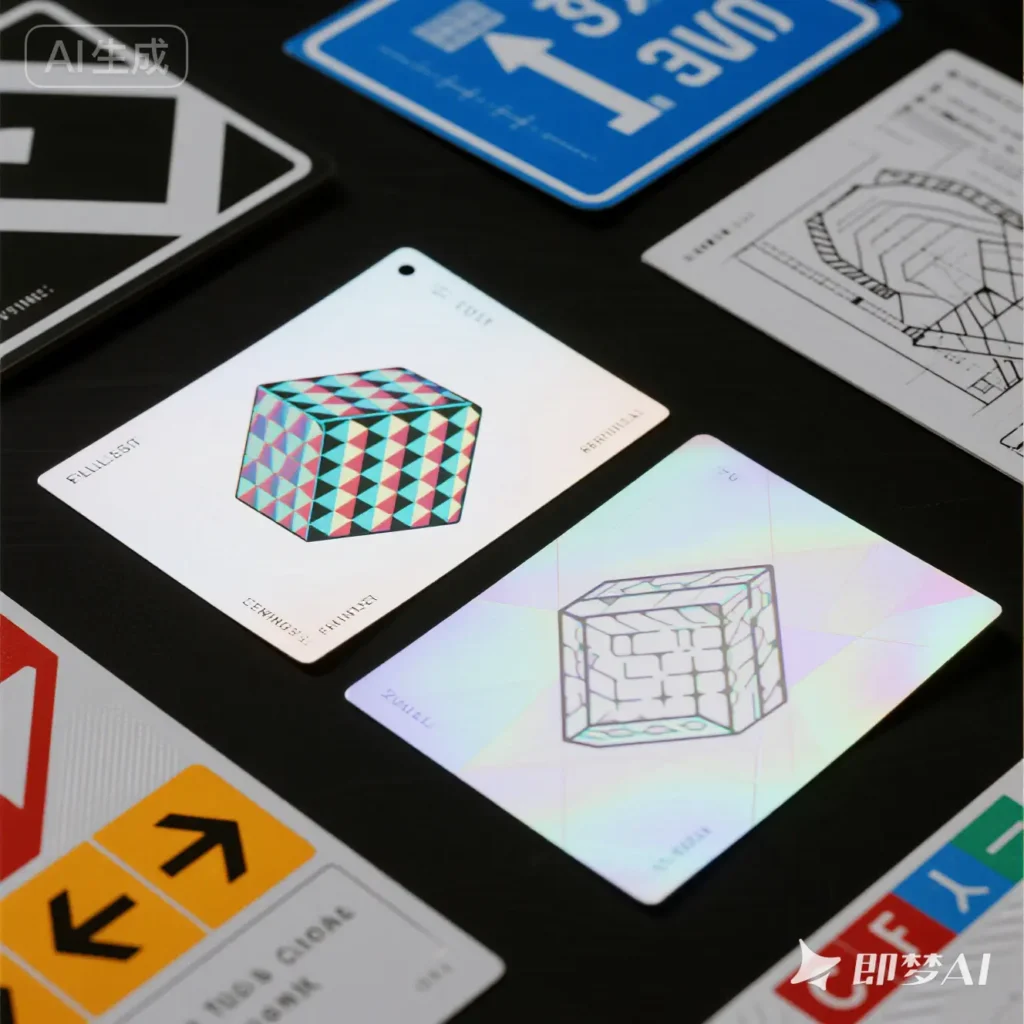
This distinction matters because buyers often hear “prismatic sheeting” and assume all prismatic products perform in roughly the same way. They do not.
In simplified terms, many standard prismatic materials use corner cube geometry. These products can perform well and are widely used across traffic sign applications, but their optical behavior is still different from full cube systems.
Type XI’s full cube prism structure is one of the reasons it is positioned as a premium reflective technology. It is engineered to deliver stronger light return performance across a broader range of real road-sign viewing conditions. That does not mean every project automatically needs Type XI. It does mean the technology difference is real, and the performance difference is not just a branding story.
For serious buyers, this is an important procurement lesson: Type XI is not simply “another prismatic grade.” Its optical structure is part of what makes it a different performance class.
- Not all prismatic reflective sheeting uses the same optical structure.
- Type XI is distinguished by full cube prism technology rather than standard corner cube construction.
- The structure difference helps explain the performance gap between Type XI and many lower prismatic grades.
Why Is Type XI Better at Large Angles and Difficult Viewing Conditions?
This is the real technical selling point that many generic articles fail to explain.
Type XI is valued not only for high frontal brightness, but for stronger brightness retention at larger entrance and observation angles, where many other reflective materials become less visible.
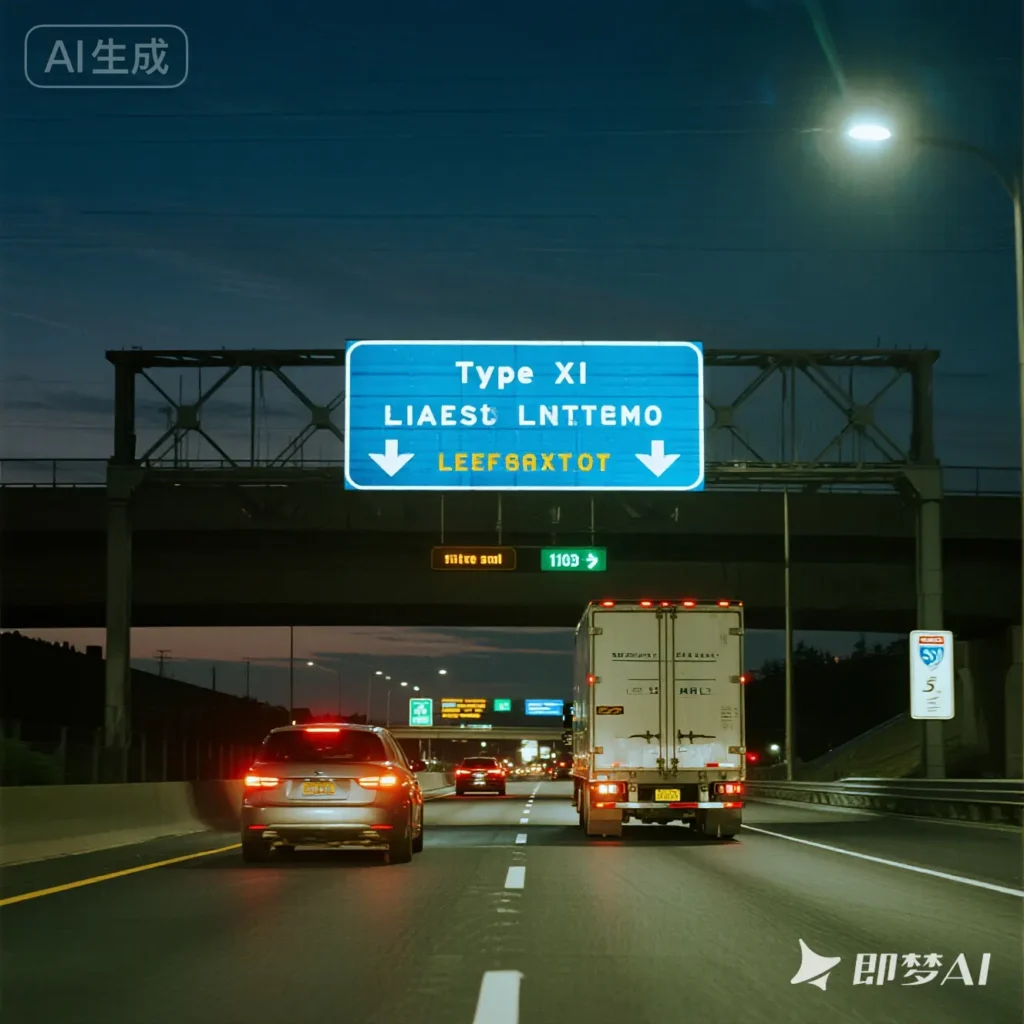
In real traffic, drivers do not always approach a sign from an ideal straight-on position. They may be:
- in outer lanes,
- closer to or farther from the sign,
- in taller vehicles such as trucks or buses,
- or viewing signs mounted high above the roadway.
This is where angle performance becomes critical.
A reflective material can have strong brightness in a direct frontal test and still lose usefulness when the geometry becomes less favorable. Type XI is different because its full cube prism design helps maintain stronger light return under wider angle conditions. That means the sign can remain easier to see when:
- the vehicle is not directly centered to the sign,
- the driver’s eye position is higher or lower,
- the sign is large or mounted high,
- or the roadway layout creates wider approach angles.
This is one of the biggest practical reasons agencies and contractors upgrade to Type XI. The benefit is not only “more brightness.” The benefit is more usable brightness from more real-world viewing positions.
- Type XI’s key advantage is not only frontal brightness but angle performance.
- Large-angle brightness matters in real traffic because drivers do not approach signs from one perfect position.
- Type XI helps maintain visibility for more lanes, more vehicle types, and more sign geometries.
Why Is Type XI Especially Useful for Large Signs, High-Mounted Signs, and Trucks?
The value of Type XI becomes easier to understand once buyers think about actual sign geometry instead of only material categories.
Type XI is especially useful where sign size, installation height, and vehicle height create more demanding viewing angles—such as overhead guide signs, gantry signs, multilane highways, and truck-heavy traffic corridors.
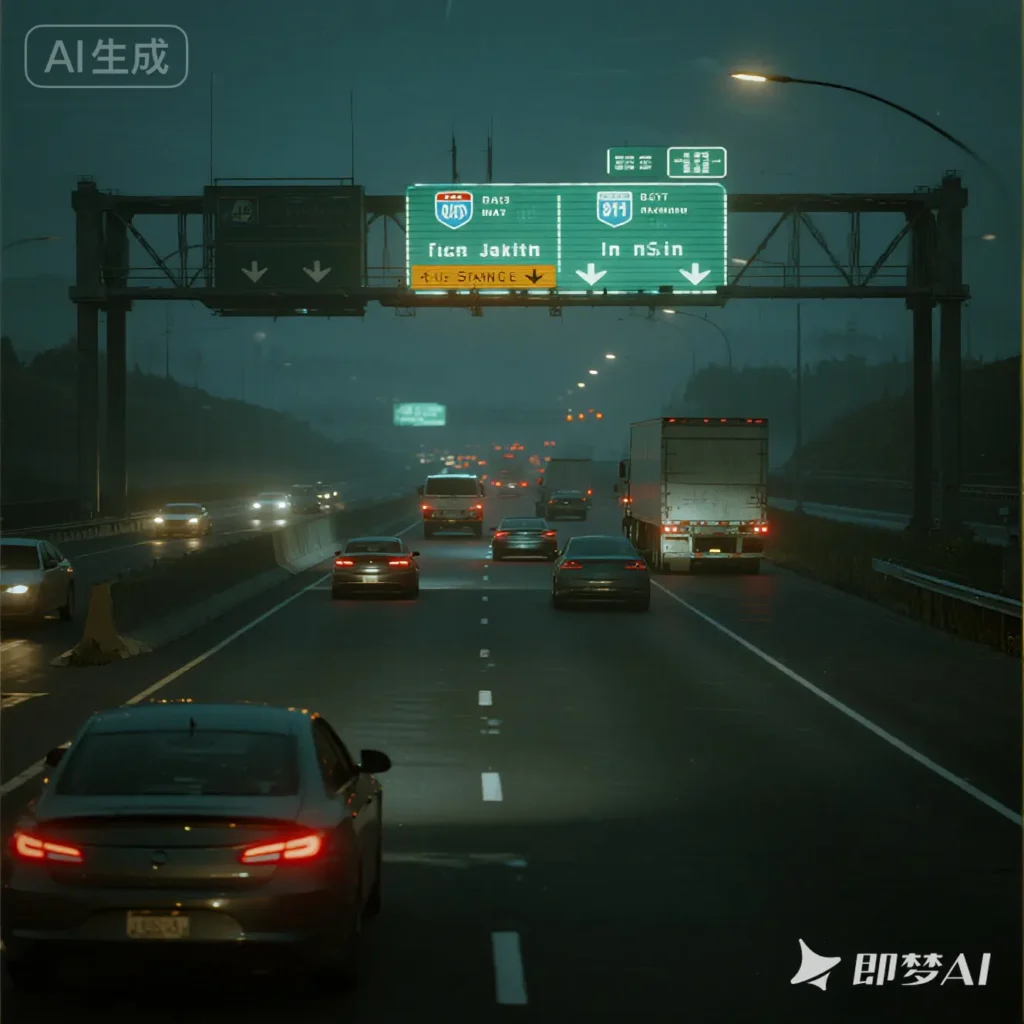
A small roadside sign on a lower-speed road does not create the same optical challenge as a large guide sign mounted high above a multilane highway. The larger and higher the sign, the more important angle performance becomes.
Truck traffic adds another layer. A truck driver sits at a different height than a passenger car driver, and that changes the observation geometry between the headlights, the sign face, and the driver’s eyes. In these conditions, a sheeting that performs better at wider angles can deliver a meaningful visibility advantage.
That is why Type XI is often especially valuable for:
- large guide signs,
- high-mounted signs,
- overhead directional signs,
- freeway and expressway systems,
- multilane roads,
- and road networks with significant truck traffic.
In these environments, the question is not just whether the sign is reflective. The question is whether the sign remains bright enough from the actual driver positions that matter most.
- Type XI is particularly valuable where signs are large, high, and viewed from varied positions.
- Truck-heavy and multilane environments increase the importance of wide-angle brightness.
- The bigger the sign geometry challenge, the more meaningful Type XI’s optical advantage becomes.
What Should Buyers Verify Before Ordering Type XI Reflective Sheeting?
Because Type XI is a premium and technical category, buyers should verify more than product name and sample appearance.
Before ordering, buyers should confirm the sheeting structure, standards alignment, angle-performance claims, supplier documentation, and whether the project truly benefits from full cube performance.

If I were qualifying a Type XI supplier, I would focus on five checks.
1. Confirm the actual Type XI basis
Ask what standard reference supports the Type XI claim and whether the supplier can document it clearly.
2. Verify optical structure
If the product is being sold as a premium Type XI solution, ask whether it uses full cube prism construction and how that affects angle performance.
3. Review angle-related performance, not just frontal brightness
This is one of the most important points. Buyers should ask how the product performs in wider-angle conditions relevant to large signs and truck traffic.
4. Check application fit
Does the project actually involve high-mounted signs, large-format signs, expressways, multilane roads, or demanding nighttime visibility requirements?
5. Evaluate supplier credibility
Can the supplier explain the difference between Type XI, HIP, and other prismatic grades clearly, or are they only repeating “highest brightness” language without technical depth?
This matters because premium material categories attract premium claims. Buyers should not pay for Type XI unless the supplier can explain both the standard position and the real optical advantage.
- Buyers should verify full cube structure and angle-performance relevance, not just “premium” claims.
- Type XI procurement should focus on real traffic geometry and sign use conditions.
- A technically credible supplier should explain why Type XI is better, not just say that it is.
Conclusion
Type XI Reflective Sheeting is best understood not simply as a higher-grade reflective film, but as a high-performance optical system designed for more demanding road-sign visibility conditions. Its real advantage comes from the combination of strong frontal brightness and stronger brightness retention at larger angles, which makes it especially useful for large signs, high-mounted signs, multilane roads, and truck-influenced traffic environments.
For buyers, this changes the sourcing logic. The best question is no longer “Do I want the brightest sheeting?” The better question is “Do I need stronger visibility from more real-world viewing positions?” If the answer is yes, Type XI can be a very practical upgrade rather than just a premium option.
- ASTM D4956 reference materials
- Technical comparison resources on full cube versus corner cube prism technology
- Supplier technical bulletins with angle-performance data
FAQs
1. What is the main difference between Type XI and other prismatic sheeting?
A key difference is that Type XI is associated with full cube prism technology, while many other prismatic sheetings use corner cube structures. This affects how the material performs under wider viewing angles.
2. Is Type XI only brighter when viewed straight on?
No. One of its most important advantages is stronger brightness at larger entrance and observation angles, not only strong frontal brightness.
3. Why is Type XI useful for large road signs?
Large and high-mounted signs are often viewed from more difficult angles. Type XI helps keep those signs more visible from real driver positions across multiple lanes and vehicle heights.
4. Why does truck traffic make Type XI more valuable?
Truck drivers sit higher than passenger car drivers, which changes viewing geometry. Type XI’s stronger angle performance can help maintain sign brightness for those viewing conditions.
5. What should I ask a supplier before buying Type XI?
Ask for the standard reference, confirmation of full cube prism structure where applicable, technical data on angle performance, and a clear explanation of how the product differs from lower prismatic grades.