
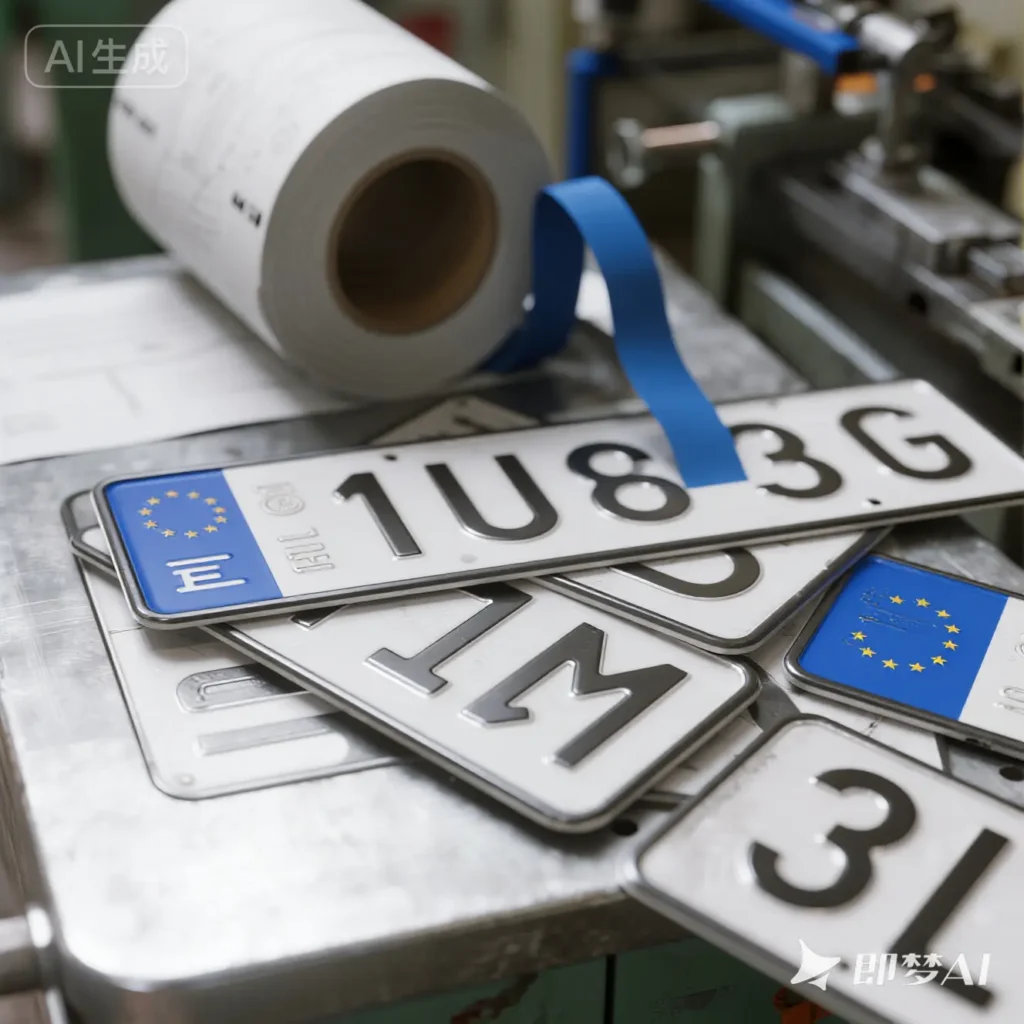
License plate reflective sheeting is one of the most critical materials in registration plate production, because it directly affects night visibility, embossing quality, weather durability, and legal conformity. For manufacturers and buyers working with European-style plates, the question is not simply whether the film is reflective. The real question is whether it performs correctly after plate conversion and whether it supports the relevant plate system requirements.
In practical terms, license plate reflective sheeting is a specialized retroreflective film used to manufacture vehicle registration plates. A suitable product must work not only as a reflective layer, but also as a stable conversion material for embossing, hot stamping, printing, adhesion to aluminum, and long-term outdoor exposure.
That is why buyers should not source license plate sheeting the same way they source ordinary traffic sign film or commercial reflective vinyl. In registration plate production, material selection is closely tied to plate construction, manufacturing process, anti-counterfeit features, durability expectations, and in many projects, standards such as DIN 74069 and ISO 7591.
For license plate manufacturers, the right reflective sheeting is the one that fits the target plate standard, plate construction method, and conversion process—not just the one with the brightest brochure or the cheapest price.
What Makes License Plate Reflective Sheeting Different from Ordinary Reflective Film?
This is the first sourcing mistake many buyers make: they assume license plate reflective sheeting is just another reflective film with a different name.
It is not. License plate reflective sheeting is a plate-conversion material, meaning it must survive manufacturing steps such as laminating to aluminum, embossing, hot stamping, and years of outdoor use without losing readability or retroreflective performance.
Traffic sign reflective sheeting is usually designed for flat rigid sign faces. Commercial reflective vinyl may be made for graphics, fleet marking, or general visibility enhancement. License plate reflective sheeting has a different job. It must become part of a finished number plate system.
In real production, the sheeting is often applied to aluminum blanks and then subjected to downstream processing such as:
- embossing,
- character coloring or hot stamping,
- edge forming,
- and long-term outdoor service on vehicles.
That means the material needs to balance several performance requirements at once:
- good retroreflection,
- stable adhesion to prepared aluminum,
- embossability without excessive cracking,
- resistance to weathering,
- and consistent appearance after conversion.
For European-style embossed plates, this distinction is especially important. A film can look acceptable in a sample roll but still perform poorly after embossing or after exposure to UV, salt, dirt, washing, and winter road conditions.
- License plate reflective sheeting is a conversion material, not just a reflective surface film.
- Embossing performance is a major difference between plate sheeting and ordinary sign sheeting.
- Buyers should evaluate finished-plate performance, not just roll appearance.
Why Do DIN 74069 and ISO 7591 Matter When Choosing License Plate Sheeting?
If the finished plate must serve a regulated or semi-regulated market, standards matter early—not after purchasing.
For buyers involved in European or export-oriented plate production, DIN 74069 and ISO 7591 are important reference points because they relate to plate construction, readability, reflectivity, and long-term performance expectations.
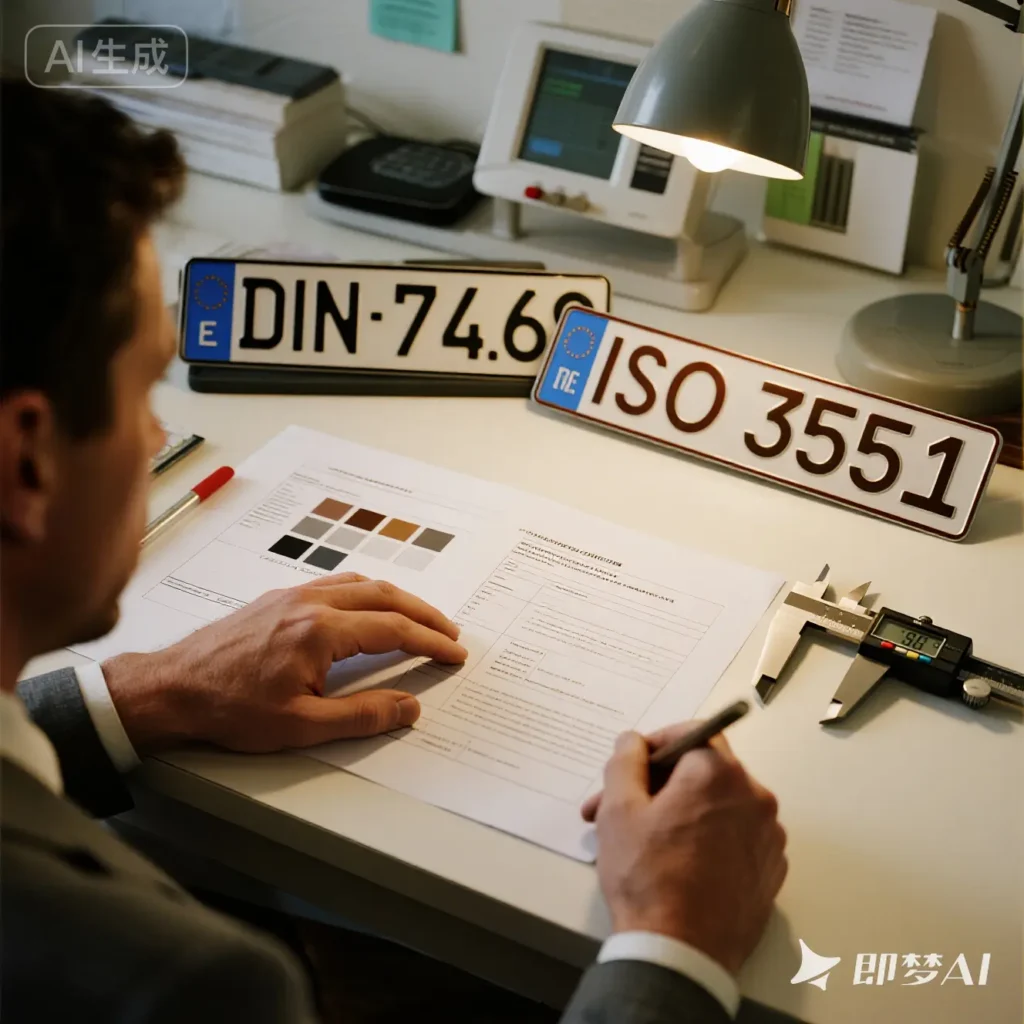
From a practical buyer perspective, these standards matter because they shift the sourcing conversation from “Is this reflective?” to “Can this material support a compliant, durable registration plate system?”
DIN 74069 is closely associated with German registration plate construction and finished plate characteristics. In that context, buyers are not simply buying reflective film. They are buying a material that becomes part of a finished plate that must remain legible, durable, and suitable for official use.
ISO 7591 is also highly relevant because it deals with retroreflective registration plate requirements and helps frame expectations around visibility and performance. For international buyers, this is important when comparing suppliers across countries, because many sellers use broad phrases like “license plate reflective sheeting” without explaining whether their product has actually been developed for official registration plate systems.
In real procurement, standards awareness helps buyers ask better questions:
- Is the product already used in registration plate programs?
- Does it support embossed aluminum plate production?
- Can the supplier provide technical evidence tied to registration plate use rather than general reflective film use?
- Is the material suitable for multi-year outdoor service?
This is where many generic supplier pages are weak. They show the material, but they do not explain whether it truly fits the target registration plate standard.
- Standards help buyers evaluate finished-plate suitability, not just raw material claims.
- DIN 74069 and ISO 7591 make the sourcing discussion more technical and less marketing-driven.
- Buyers should ask whether the film is proven in real registration plate production, not just labeled for it.
What Technical Properties Should Buyers Test Before Approving a Supplier?
A license plate sheeting supplier should never be approved on price list alone.
At minimum, buyers should test embossability, adhesion to aluminum, retroreflectivity, weather resistance, and process compatibility with their actual plate production workflow.

If I were qualifying a new supplier for license plate sheeting, I would begin with five practical tests and checks.
1. Embossing behavior
This is one of the most important checks. Some films crack too easily, lose appearance around raised characters, or show unstable performance after hot stamping.
2. Aluminum compatibility
Buyers should verify which substrate the sheeting is designed for. Many registration plate systems use specially prepared aluminum blanks. If the film was developed around a particular substrate treatment, mismatch can lead to delamination or poor long-term bonding.
3. Retroreflective performance after conversion
A supplier may show reflectivity data on unprocessed film, but plate makers need to know how the material performs after lamination, embossing, and finishing.
4. Outdoor durability
A meaningful durability claim should be connected to service conditions. Ask whether the expected life applies after conversion, on vertical exposure, and under real weather conditions.
5. Process compatibility
Buyers should ask about:
- storage conditions,
- minimum application temperature,
- conditioning time,
- embossing recommendations,
- hot stamping compatibility,
- printable or preprinted options,
- shelf life,
- and recommended handling.
In plate manufacturing, many problems appear not because the material is “bad” in general, but because it is not compatible with the actual production line.
- Sample approval should include processed plate testing, not just roll inspection.
- Adhesion, embossing, and converted retroreflectivity are key technical checkpoints.
- Process compatibility is often the hidden reason behind scrap and quality complaints.
How Should Buyers Compare License Plate Reflective Sheeting Suppliers in Real B2B Sourcing?
In this market, supplier quality is often just as important as film quality.
The best supplier is usually the one who can support a stable registration plate program with consistent batches, technical clarity, and repeatable conversion results—not simply the one with the lowest square-meter price.

A reliable supplier comparison should include at least these five areas:
1. Sample quality consistency
Do multiple samples behave the same way in embossing, adhesion, and hot stamping?
2. Technical communication
Can the supplier explain the film clearly in relation to aluminum preparation, embossing, outdoor durability, and finished plate use?
3. Documentation quality
A serious supplier should be able to provide:
- technical data sheet,
- application guide,
- storage guide,
- durability statement,
- and where relevant, test references tied to registration plate applications.
4. Supply stability
Plate manufacturers need repeatability. If one batch embosses well and the next one does not, price savings disappear quickly.
5. Real industry experience
A supplier familiar with registration plates is very different from a supplier that mainly sells general reflective film. Experience in embossed plate applications, official plate programs, or export markets is a major advantage.
One of the most common buyer mistakes is comparing only initial material price. In reality, the true cost includes reject rate, downtime, rework, and the risk of field complaints later. In license plate production, stability usually beats cheapness.
- Supplier evaluation should include technical support and repeatability, not only quotation.
- Registration plate experience is a meaningful supplier advantage.
- The lowest material price can become the highest total production cost.
Conclusion
License plate reflective sheeting should be sourced as a registration plate system material, not as a generic reflective product. That is especially true when the finished plate must support standards and expectations associated with systems such as DIN 74069 and ISO 7591.
For buyers and plate manufacturers, the smartest approach is to start with the finished plate requirement, then work backward: substrate, embossing behavior, retroreflectivity, durability, process compatibility, and supplier consistency. When those factors are clear, price comparison becomes useful. When they are not clear, a low quote can create very expensive problems later.
The best sourcing decision is usually based on real converted plate testing, not just on roll samples or sales claims.
- Official technical references related to
DIN 74069 - Official technical references related to
ISO 7591 - Product bulletins from proven license plate sheeting suppliers
FAQs
1. Is license plate reflective sheeting the same as traffic sign reflective sheeting?
No. Some technologies may overlap, but registration plate sheeting is designed for plate production and often must tolerate embossing, hot stamping, and long-term vehicle exposure in ways that standard traffic sign film may not.
2. Why are DIN 74069 and ISO 7591 important for buyers?
Because they shift the focus toward finished registration plate performance, readability, reflectivity, and durability. They help buyers ask whether the sheeting is suitable for real plate systems rather than just reflective in general.
3. What is the first practical test a buyer should run?
For most manufacturers, embossing performance is one of the most important first tests. If the film cannot handle embossing well, it is usually not suitable for embossed registration plate production.
4. Can any reflective film be laminated onto aluminum blanks for license plates?
No. Buyers should verify aluminum compatibility, adhesive suitability, and conversion conditions. Using the wrong film-substrate combination can lead to delamination or poor durability.
5. What should I ask a supplier before placing a bulk order?
Ask for technical data sheets, application conditions, substrate recommendation, embossing guidance, outdoor durability basis, sample support, and evidence that the product has been used in real license plate manufacturing.