
In mining sites, industrial yards, warehouses, and roadside work zones, visibility is not a nice-to-have feature. It is a direct safety control. When vehicles, equipment, signs, and hazard areas are difficult to see, the risk of collision, worker injury, and operational downtime increases quickly.
Reflective stickers for vehicles, mining, industrial sites, and warning signs are adhesive retroreflective decals designed to make objects, hazards, and instructions visible in low-light conditions by reflecting light back toward its source. They are commonly used on trucks, trailers, mining equipment, forklifts, barriers, PPE, machinery panels, and OSHA-style warning signs to improve nighttime visibility, site communication, and safety compliance.
For buyers, the challenge is not simply finding a reflective sticker. It is choosing the right material grade, adhesive, color, durability level, and compliance format for the environment where the sticker will actually be used. A decal that works on a warehouse wall may fail quickly on a mining truck exposed to dust, vibration, UV, fuel, pressure washing, and extreme temperature changes.
This guide is written from practical experience with reflective sheeting, safety decals, vehicle marking materials, and industrial sign applications where long-term adhesion, retroreflectivity, and compliance matter as much as price.
How Do Reflective Stickers Improve Safety in Mining and Industrial Worksites?
Reflective stickers improve safety by making vehicles, equipment, hazard zones, and warning messages more visible when light is limited, blocked, or uneven. In mining and industrial environments, this helps drivers, machine operators, and workers identify risks faster and react before a collision or near-miss occurs.
In many worksites, lighting is inconsistent. Mines may operate underground, at night, or in dusty open-pit conditions. Industrial yards may have blind corners, moving forklifts, loading docks, temporary barriers, and parked vehicles. Reflective stickers help create visual contrast in these environments without requiring the object itself to be powered or illuminated.
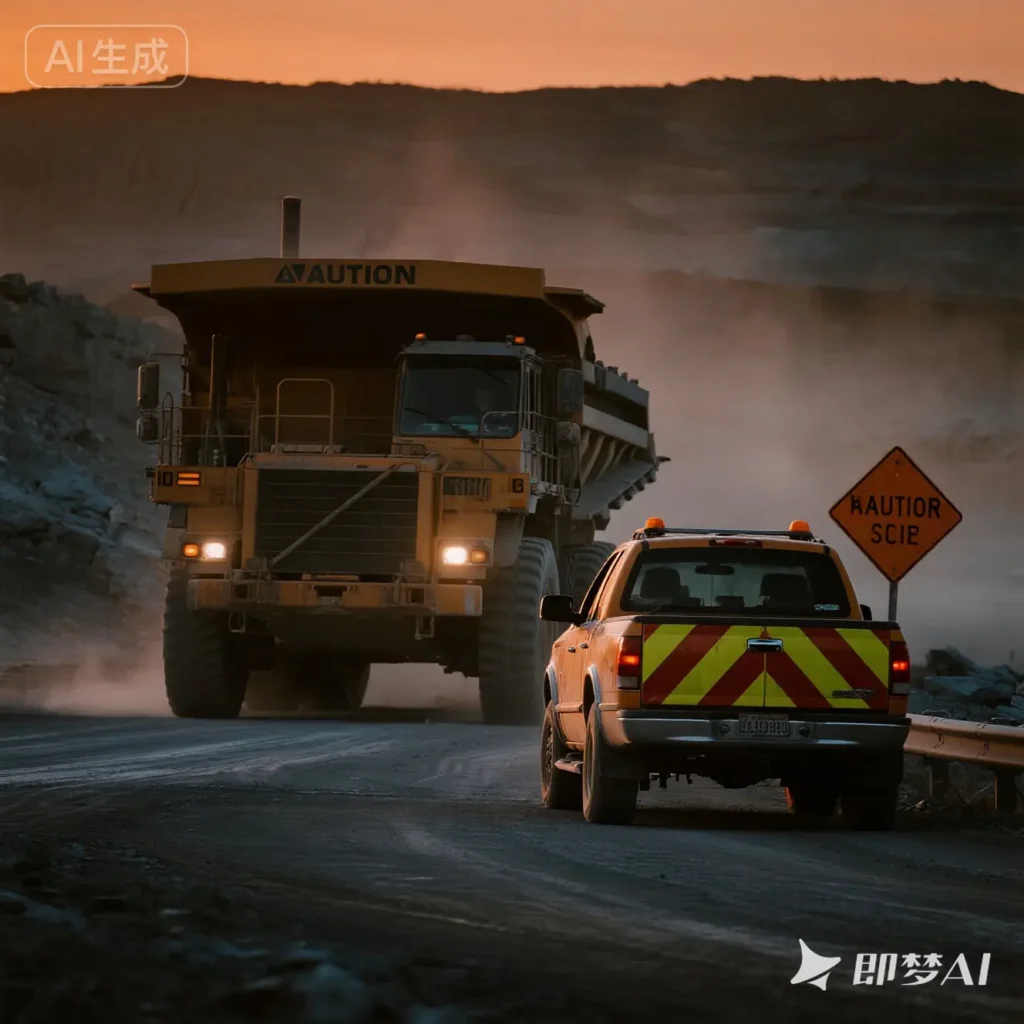
Reflective stickers work through retroreflection. Instead of scattering light in all directions, the reflective material redirects incoming light — such as headlights, helmet lamps, or work vehicle beams — back toward the viewer. This makes the sticker appear bright even when the surrounding area is dark.
Common safety uses include:
- Marking heavy vehicles and service trucks so they can be seen from the side and rear
- Highlighting trailer edges, bumpers, and door frames
- Identifying dangerous machinery surfaces or pinch points
- Making warning signs readable in poor lighting
- Marking mine entrances, restricted zones, and high-risk areas
- Improving visibility of temporary barriers, cones, bollards, and guardrails
- Supporting communication where noise makes verbal warnings unreliable
In mining operations, reflective decals are especially valuable because vehicle size and blind spots create major hazards. Large haul trucks, loaders, excavators, and smaller service vehicles often share the same access roads. Reflective markings help operators judge location, width, and movement direction more quickly.
For industrial sites, reflective stickers help reduce small but frequent risks: forklift collisions, low-light pedestrian crossings, loading dock accidents, and workers missing warning labels during night shifts.
Reflective stickers do not replace lighting, training, or traffic control plans — but they are a low-cost visibility layer that can significantly improve hazard recognition in low-light or high-risk environments.
What Types of Reflective Stickers Are Used for Vehicles, Mining, Industry, and Warning Signs?
The main types include vehicle reflective tape, mining safety decals, industrial warning labels, OSHA-style reflective signs, conspicuity markings, and custom printed reflective stickers. The right type depends on whether the sticker is applied to a moving vehicle, fixed equipment, warning sign, building surface, or temporary safety device.
A sticker used on a mining truck needs different performance than one used on a warehouse door. Vehicle and mining applications usually require stronger adhesive, higher retroreflectivity, abrasion resistance, and better weathering performance than general-purpose warning labels.
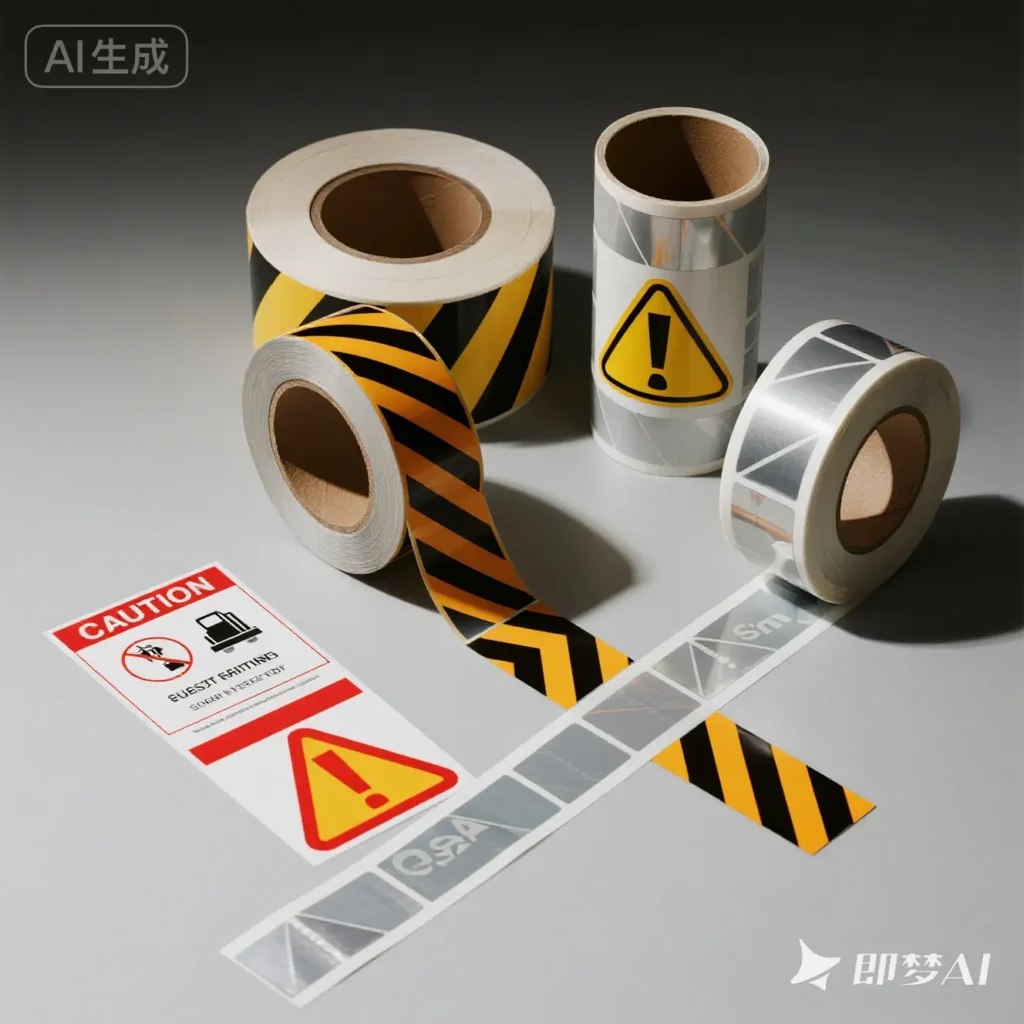
Here are the most common categories buyers should understand:
- Type Typical Use Key Requirement
- Reflective vehicle tape Trucks, trailers, service vehicles High brightness, long outdoor durability, strong adhesive
- Mining equipment decals Haul trucks, loaders, excavators Abrasion resistance, dust tolerance, heavy-duty adhesive
- Industrial warning labels Machinery, panels, restricted areas Clear printing, chemical resistance, adhesion to metal/plastic
- OSHA-style reflective signs Mine entrances, hazard zones, restricted areas Standard warning layout, readable at night
- Conspicuity markings Commercial vehicles and trailers Compliance with vehicle marking standards
- Custom printed reflective stickers Brand, safety, directional, or site-specific messages Print durability and color visibility
Material choice matters. Reflective stickers can be made with engineer grade glass bead film, high intensity prismatic sheeting, or diamond grade prismatic sheeting, depending on visibility distance and safety importance.
For low-speed indoor areas, engineer grade may be enough. For outdoor industrial yards, road-facing signs, and moving vehicles, high intensity prismatic material is usually more appropriate. For critical warning signs, mine access areas, large equipment, or high-speed vehicle routes, premium prismatic materials provide stronger nighttime visibility.
Adhesive is just as important as brightness. Mining and industrial stickers may face:
- Dust and mud
- UV exposure
- Oil and fuel contact
- Vibration
- Pressure washing
- Metal expansion and contraction
- Rough or painted surfaces
- Temperature changes
A low-cost reflective sticker may look acceptable when applied, but if the adhesive fails after three months, the safety value disappears. Buyers should request adhesive data, surface preparation instructions, and sample testing before placing volume orders.
In harsh industrial and mining environments, adhesive failure is often a bigger practical problem than insufficient brightness. A high-reflectivity sticker is only useful if it stays bonded to the surface.
When Should Buyers Choose Heavy-Duty Reflective Stickers Instead of Standard Reflective Decals?
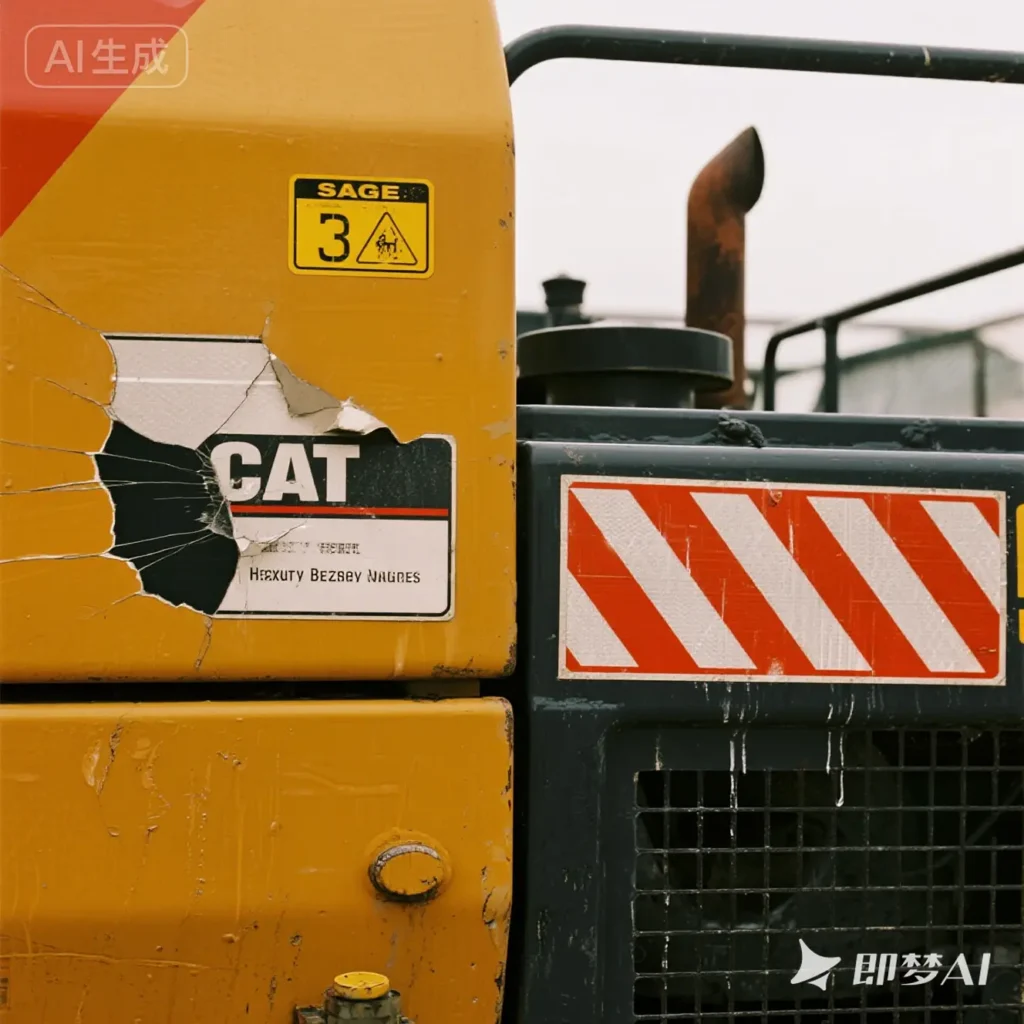
Buyers should choose heavy-duty reflective stickers when the decal will be used outdoors, on vehicles, on mining equipment, near moving machinery, or in environments exposed to abrasion, chemicals, water, dust, vibration, or extreme temperatures. Standard decals are better suited for clean, low-risk, indoor applications.
The difference is not just price. Heavy-duty reflective stickers usually use stronger reflective sheeting, thicker film, more aggressive pressure-sensitive adhesive, better UV resistance, and sometimes a protective overlaminate for printed graphics.
Use standard reflective decals for:
- Indoor warehouse signs
- Office or facility safety labels
- Low-touch warning notices
- Temporary promotional or directional signs
- Smooth clean surfaces with limited weather exposure
Use heavy-duty reflective stickers for:
- Trucks, trailers, and service vehicles
- Mining equipment and quarry machinery
- Outdoor warning signs
- Roadside safety signs
- Construction site equipment
- Forklifts and material handling vehicles
- Fuel tanks, containers, gates, and barriers
- Long-term industrial hazard marking
For mining and heavy industry, buyers should pay attention to three durability factors.
First, surface compatibility. Reflective stickers applied to painted metal, stainless steel, aluminum, plastic, rubber, and powder-coated surfaces may perform differently. Some low-energy plastics require special adhesive.
Second, edge sealing and overlamination. Printed reflective stickers used outdoors may need a clear protective laminate to prevent ink fading, scratching, or chemical attack. Edges should be well-cut and pressed down to reduce water entry.
Third, cleaning resistance. Many mining and industrial vehicles are washed aggressively. Stickers must withstand pressure washing, detergent, and repeated dirt removal without lifting or losing reflectivity.
A practical buying rule: if the sticker is part of a safety system and failure could increase risk, choose the heavy-duty version and test it first. The cost difference is small compared with replacement labor, safety incidents, or failed inspections.
Standard reflective decals are a cost-effective option for controlled environments, but heavy-duty reflective stickers are the safer choice for vehicles, mining sites, outdoor work areas, and critical warning applications.
What Should Buyers Ask Suppliers Before Ordering Reflective Stickers for Safety Applications?
Before ordering reflective stickers for vehicles, mining, industrial sites, or warning signs, buyers should ask about reflective grade, adhesive type, outdoor durability, printing method, compliance requirements, sample testing, and batch consistency. These questions help confirm whether the product is suitable for the actual operating environment.
Many reflective sticker failures happen because the buyer only compares price and size. For safety applications, the supplier should be able to provide technical details, not just product photos.

Here is a practical supplier checklist:
- What reflective material grade is used?
Ask whether the sticker uses engineer grade, high intensity prismatic, diamond grade, or another reflective film. For road-facing or vehicle applications, request the applicable ASTM D4956 type, EN 12899 class, or vehicle marking standard where relevant.
- What adhesive system is used?
Ask whether the adhesive is suitable for metal, painted surfaces, plastic, powder coating, or rough industrial substrates. Request peel strength data if the sticker will be exposed to vibration, washing, heat, or outdoor conditions.
- How long is the outdoor durability rating?
A supplier may say “weatherproof,” but that is too vague. Ask for expected outdoor life, UV resistance, and any accelerated weathering test results. For mining and industrial use, clarify whether the rating assumes clean road conditions or harsher environments.
- Is the print protected?
If the sticker includes warning text, symbols, arrows, numbers, or logos, ask whether printing is UV-resistant and whether a protective laminate is included. Without protection, printed colors may fade before the reflective material itself fails.
- Can the supplier provide samples for field testing?
Always test samples on the real surface before ordering. Apply them to the actual vehicle, sign blank, metal panel, or equipment surface. Observe adhesion after cleaning, temperature changes, and normal use.
- What standards or formats are required?
For vehicle markings, check local road safety and conspicuity requirements. For workplace signs, OSHA, MSHA, ANSI, ISO, or local safety sign standards may apply depending on the country and industry.
- How consistent is the supplier’s production?
Ask whether the supplier can keep color, brightness, adhesive, and thickness consistent across batches. This matters for importers and distributors who need stable inventory quality.
[Sub-heading claims]
A reliable reflective sticker supplier should be able to discuss material grade, adhesive performance, durability, and compliance clearly. If the answer to every technical question is only “yes, good quality,” buyers should test carefully before committing.
Conclusion
Reflective stickers for vehicles, mining, industrial sites, and warning signs are simple products with serious safety responsibilities. They help workers, drivers, and machine operators see hazards, equipment, and instructions faster in low-light or high-risk environments.
The right product depends on where it will be used. Indoor labels may only need basic reflective film. Vehicle and mining applications usually require high intensity or heavy-duty reflective materials, strong adhesive, durable printing, and proven weather resistance.
For buyers, the safest approach is to define the application first, then choose the reflective grade, adhesive, durability level, and compliance format around that use case. Ask suppliers for technical data, request samples, test them on real surfaces, and avoid making decisions based on price alone.
[External links recommendation]
MSHA Mine Safety and Health Administration
ASTM D4956 Standard Specification for Retroreflective Sheeting
ECE R104 Vehicle Conspicuity Marking Information
FAQs
What is a reflective sticker for vehicles, mining, industry, and warning signs?
A reflective sticker is an adhesive safety decal made with retroreflective material that bounces light back toward the source, making vehicles, equipment, signs, and hazards more visible in low-light conditions. In mining and industrial use, these stickers are commonly applied to trucks, heavy machinery, barriers, warning signs, gates, containers, and safety equipment.
How do reflective stickers work at night?
Reflective stickers work through retroreflection. Tiny glass beads or microprismatic elements inside the material redirect incoming light — such as vehicle headlights or work lamps — back toward the viewer. This makes the sticker appear bright at night even without its own power source.
What is the difference between standard reflective stickers and heavy-duty reflective stickers?
Standard reflective stickers are suitable for clean, low-risk indoor or short-term applications. Heavy-duty reflective stickers are designed for outdoor, vehicle, mining, and industrial use where the material must resist UV, dust, water, abrasion, vibration, chemicals, and pressure washing. Heavy-duty versions usually have stronger adhesive and more durable reflective film.
When should buyers choose reflective stickers for mining or industrial sites?
Buyers should choose reflective stickers when vehicles, machines, signs, or hazard areas must remain visible in darkness, dust, poor weather, or low-light operations. They are especially useful on mining vehicles, service trucks, forklifts, loading docks, mine entrances, restricted zones, and industrial warning signs where visibility directly affects safety.
What should buyers ask before ordering reflective safety stickers?
Buyers should ask about reflective grade, adhesive type, outdoor durability, surface compatibility, printing protection, compliance requirements, sample testing, and batch consistency. For safety-critical use, they should request technical data and test samples on the real surface before placing a large order.