
What Is Reflective Sheeting With Adhesive and How Do You Choose the Right Type for Your Application?
If you’ve ever applied a reflective decal to a sign blank, a vehicle, or a safety marker, the adhesive layer on the back of that sheeting is doing more work than most people realize. It’s not just holding the material in place — it’s determining whether the sign stays intact for 7 years or starts lifting at the edges within months.
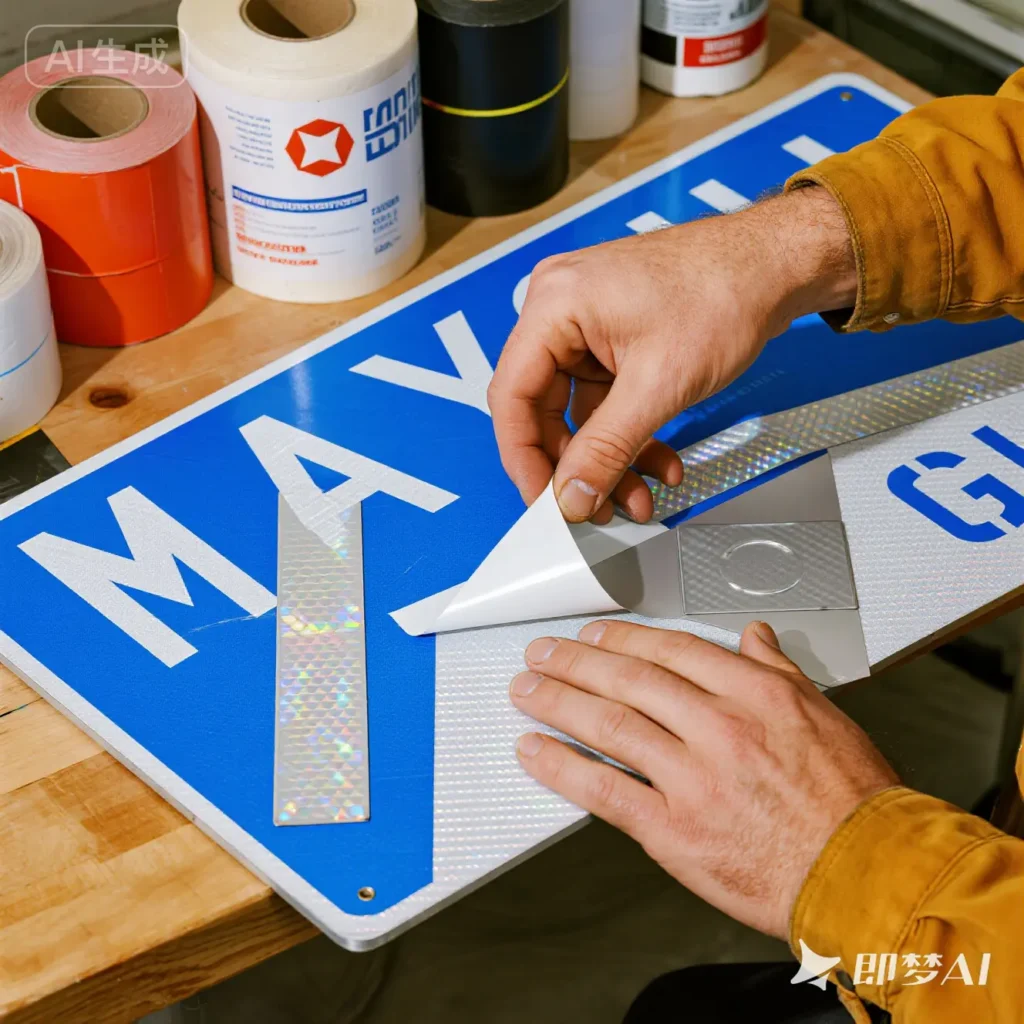
Reflective sheeting with adhesive is retroreflective material supplied with a factory-applied pressure-sensitive adhesive (PSA) on the back, protected by a release liner that’s peeled off during application. It’s available across all major grades — Engineer Grade (EGP), High Intensity Prismatic (HIP), and Diamond Grade (DG) — and is the standard format used by sign manufacturers, vehicle marking applicators, and safety product fabricators worldwide.
For buyers, the reflective layer gets most of the attention, but adhesive performance is where many real-world failures happen — edge lifting, bubbling, delamination, and bond failure in extreme temperatures. This guide covers what you need to know about the adhesive side of reflective sheeting: what types exist, how they differ, what causes failures, and how to specify the right product for your application.
This article draws on direct experience with reflective sheeting application across traffic sign manufacturing, vehicle conspicuity marking, and industrial safety signage.
How Does the Adhesive on Reflective Sheeting Actually Work — and Why Does It Matter?
Most buyers focus entirely on the reflective performance and overlook the adhesive until something goes wrong in the field.
The adhesive on reflective sheeting is a pressure-sensitive adhesive (PSA) — meaning it forms a bond when pressed onto a substrate without requiring heat, water, or solvent activation. The two most common PSA types used on reflective sheeting are acrylic-based adhesives and rubber-based (synthetic rubber) adhesives, each with different performance characteristics.
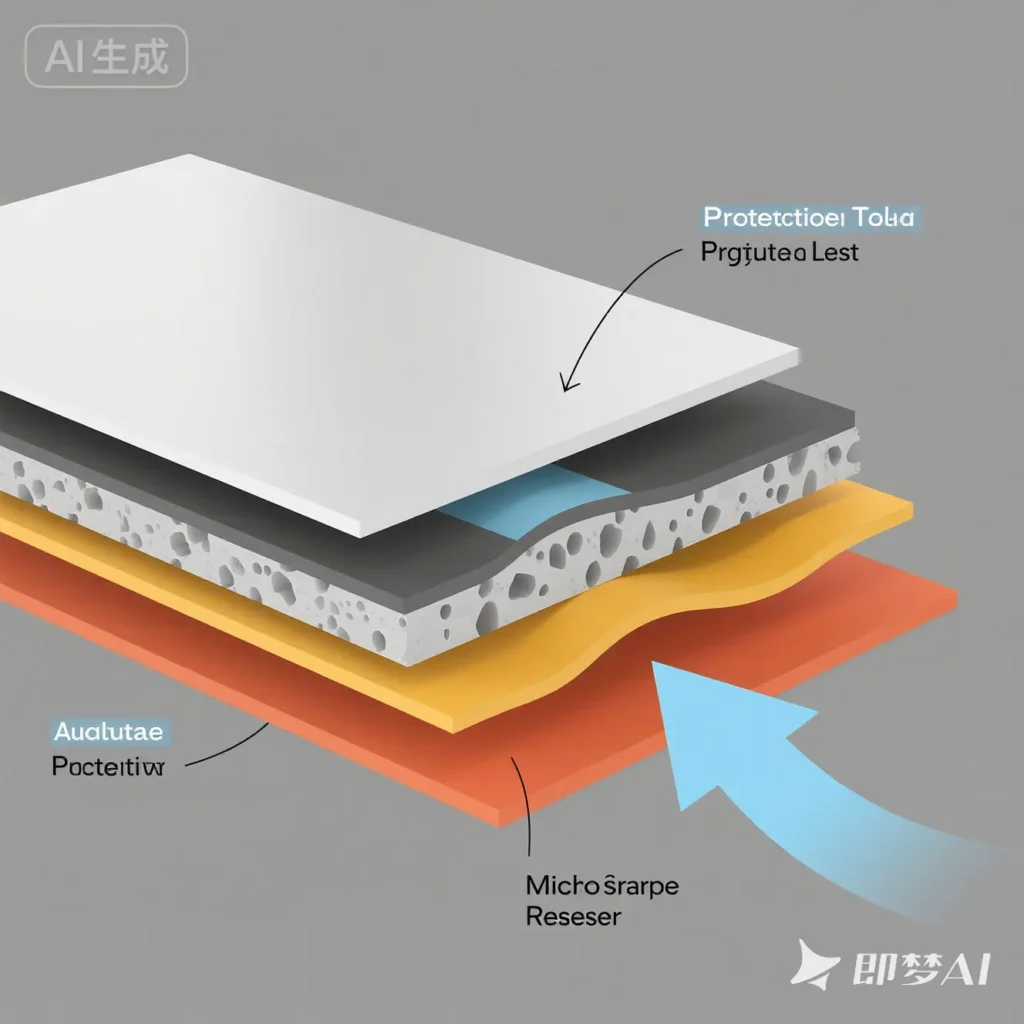
Acrylic PSA is the most widely used adhesive type for traffic sign and safety sheeting. It offers excellent UV resistance, long-term bond stability, and good performance across a wide temperature range. Most sheeting from major manufacturers (3M, Avery Dennison, Orafol) uses acrylic adhesive for outdoor applications because it resists yellowing and maintains bond strength over the rated durability period — typically 7 to 12+ years depending on the sheeting grade.
Rubber-based PSA offers higher initial tack (stickiness on contact), which can make it easier to apply. However, rubber adhesives generally have lower UV resistance and may degrade faster in outdoor environments, particularly in high-UV or high-heat climates. Rubber-based adhesives are more commonly found on lower-cost sheeting intended for short-term or indoor applications.
Why does this matter practically?
Because the adhesive determines:
Whether the sheeting stays bonded for the full rated lifespan of the reflective layer.
Whether edges lift or curl in temperature cycling (hot days, cold nights).
Whether bubbles form under the sheeting due to trapped air or moisture.
Whether the sheeting can be cleanly removed and replaced when the sign reaches end of life.
A reflective sheeting product with excellent retroreflectivity but poor adhesive will fail in the field — and the failure mode is usually ugly, gradual, and difficult to repair without replacing the entire sign face.
Adhesive failure is the most common non-retroreflective cause of premature sign replacement. In hot and humid climates, adhesive quality matters as much as reflective performance.
What Is the Best Way to Get Reflective Sheeting to Stick Properly and Stay Bonded?
Application technique is at least as important as adhesive quality. Even premium sheeting with excellent adhesive will fail if the substrate isn’t prepared correctly or the application conditions are wrong.
Proper adhesion requires three things: a clean, dry, and compatible substrate surface; application within the manufacturer’s recommended temperature range (typically 10°C to 38°C / 50°F to 100°F); and firm, uniform pressure applied across the entire sheeting surface using a squeegee or laminating roller.
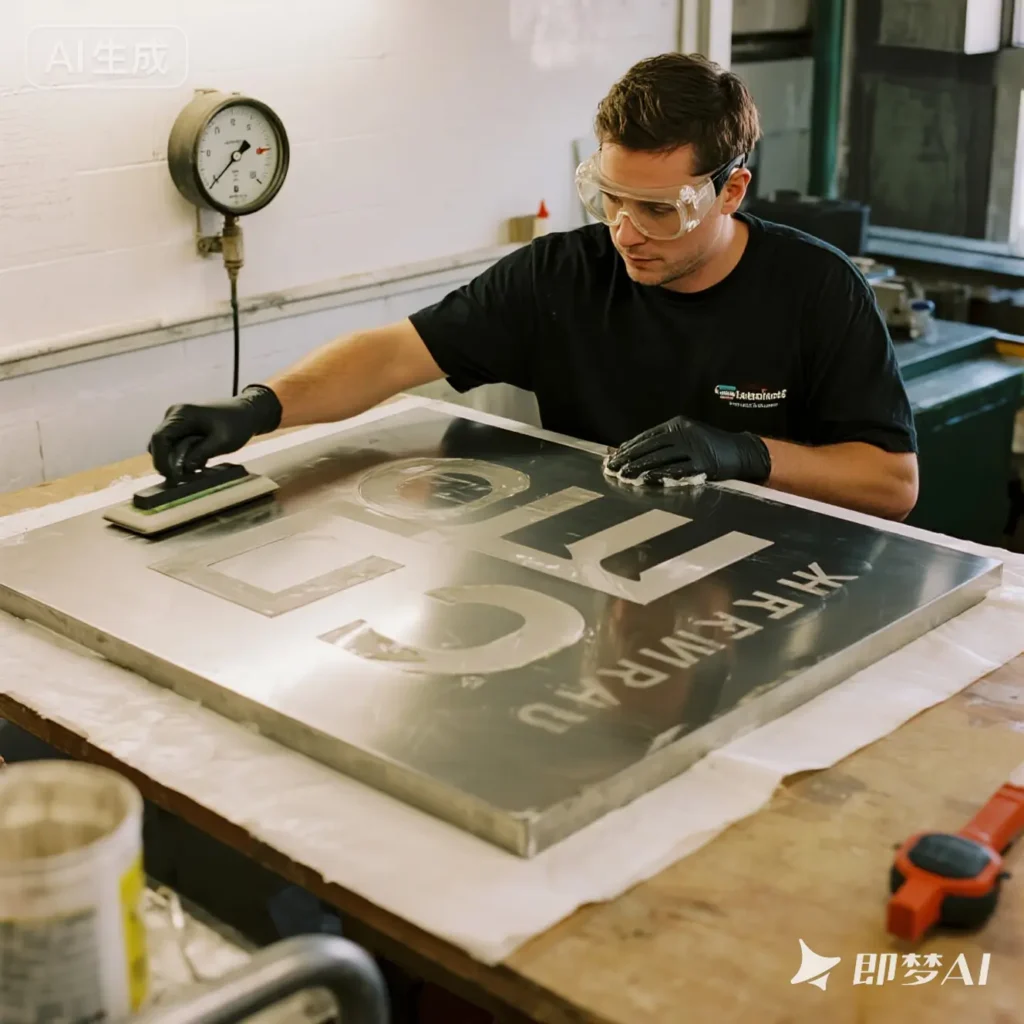
Here are the key steps that experienced sign fabricators follow:
- Surface preparation. The substrate (usually aluminum sign blank) must be clean, dry, and free of oil, dust, oxidation, and moisture. Wipe the surface with isopropyl alcohol (IPA) or a manufacturer-recommended cleaning solvent and let it dry completely before applying sheeting. Skipping this step is the single most common cause of adhesive failure.
- Temperature control. Most reflective sheeting adhesives have a minimum application temperature — typically around 10°C (50°F). Applying sheeting in cold conditions means the adhesive won’t flow properly into the substrate surface texture, resulting in weak initial bond. If you must apply in cold conditions, pre-warm both the sheeting and the substrate. High temperatures (above 38°C / 100°F) can cause the adhesive to become too aggressive, making repositioning impossible and trapping air bubbles.
- Pressure application. After positioning the sheeting, apply firm, uniform pressure using a squeegee or laminating roller. Work from the center outward to push trapped air toward the edges. Insufficient pressure leaves microscopic gaps between the adhesive and the substrate, which become delamination points over time.
- Edge sealing. Pay extra attention to edges and corners. These are the highest-stress areas where wind, water, and temperature cycling first attack the bond. Some applicators use a heat gun to lightly warm edges after application, which helps the adhesive flow into tight contact with the substrate edge.
- Dwell time. Adhesive bond strength increases over the first 24–72 hours after application as the PSA flows and builds full contact with the substrate. Avoid stressing the bond (handling, stacking, or installing the sign outdoors) during this dwell period if possible.
Over 80% of adhesive-related field failures can be traced back to improper surface preparation or application below the minimum recommended temperature.
How Long Does Self-Adhesive Reflective Sheeting Last — and What Causes It to Fail Early?
Buyers need to understand that the “rated lifespan” on a data sheet refers to optimal conditions — and real-world durability depends heavily on environment, substrate, and application quality.
Engineer Grade (EGP) reflective sheeting with adhesive typically lasts 5–7 years outdoors. High Intensity Prismatic (HIP) is rated for 10–12 years. Diamond Grade (DG) can last 12+ years. These ratings assume temperate climate, proper surface preparation, and correct application technique.
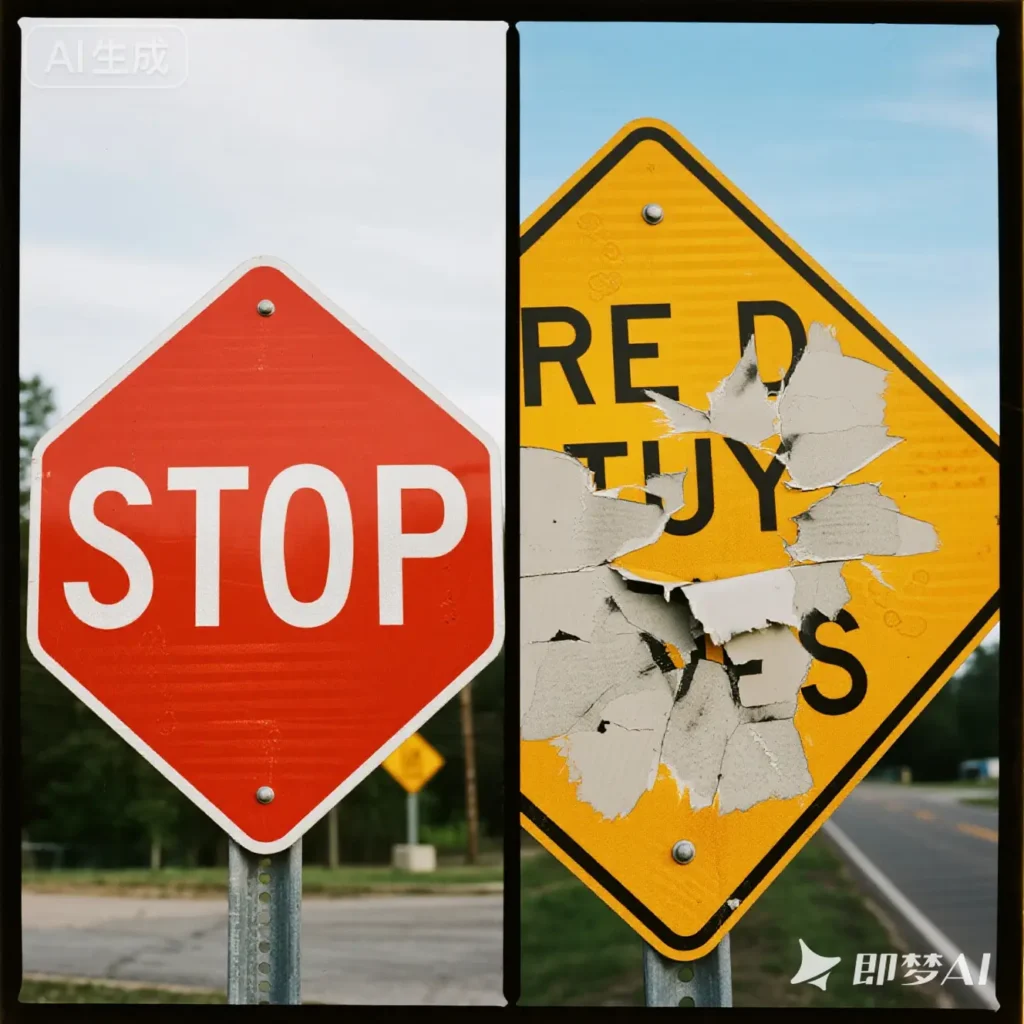
What causes reflective sheeting adhesive to fail before its rated lifespan:
UV degradation. In high-UV environments (tropical, desert, high-altitude), the adhesive layer degrades faster than in temperate climates. Acrylic adhesives resist UV better than rubber-based adhesives, but even acrylic will degrade faster under extreme exposure. Signs facing south or west in the Northern Hemisphere receive the most UV load.
Temperature cycling. Repeated expansion and contraction from daily temperature swings stress the adhesive bond, particularly at edges and corners. In desert climates where daytime temperatures exceed 50°C and nighttime drops below 10°C, this cycling can accelerate edge lifting significantly.
Moisture intrusion. If the substrate surface wasn’t perfectly dry during application, or if water wicks under the sheeting edge over time, it can break the adhesive bond from within. This is especially common on signs installed near coastlines (salt spray), in tropical humidity, or in regions with heavy rainfall.
Substrate incompatibility. Reflective sheeting adhesive is formulated for specific substrates — most commonly aluminum sign blanks. Applying it to painted surfaces, galvanized steel, plastic, or powder-coated substrates without confirming compatibility can result in poor bond strength. Some manufacturers offer specific adhesive variants for non-standard substrates.
Poor initial application. As covered above — insufficient surface cleaning, application below minimum temperature, or inadequate pressure during application all create weak bonds that eventually fail.
For buyers evaluating suppliers: always ask for the specific adhesive type (acrylic or rubber-based), the recommended substrate list, the minimum and maximum application temperature range, and accelerated aging test data for the adhesive bond — not just the reflective layer.
A sheeting product rated for 10 years can fail in 2–3 years if applied to a poorly prepared substrate in extreme climate conditions. Adhesive durability is always conditional on application quality and environment.
What Should Buyers Specify When Ordering Reflective Sheeting With Adhesive?
If you’re purchasing reflective sheeting for sign production, vehicle marking, or safety applications, the adhesive specification deserves as much attention as the reflective grade.
Buyers should specify five adhesive-related requirements: adhesive type (acrylic vs. rubber-based), compatible substrate list, application temperature range, peel adhesion strength values, and outdoor durability rating for the adhesive bond.
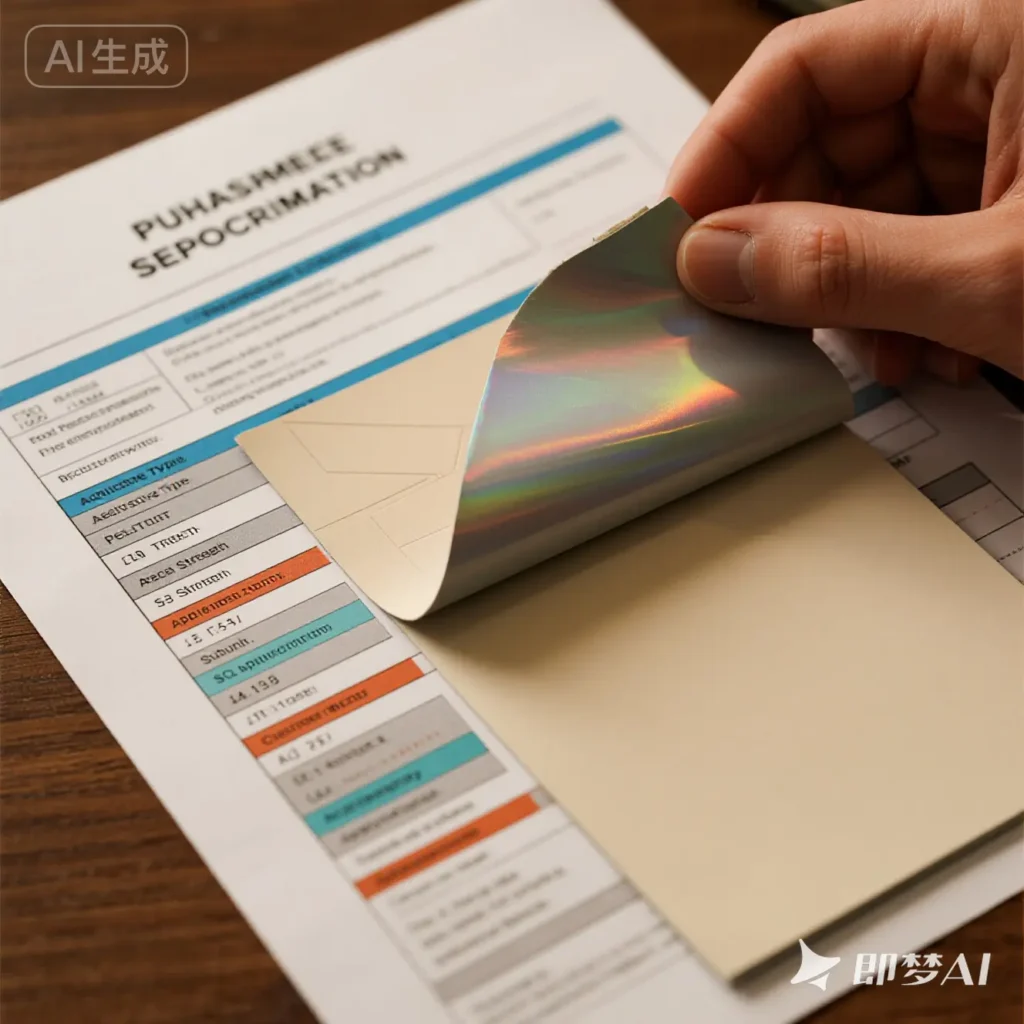
Here’s what to include in your specification or RFQ:
- Adhesive type. Specify acrylic PSA for any outdoor, long-term application. Rubber-based adhesives are acceptable only for indoor, short-term, or temporary uses. If your supplier’s data sheet doesn’t state the adhesive type, ask directly.
- Substrate compatibility. List the specific substrates you use — aluminum (mill finish or anodized), galvanized steel, stainless steel, plastic (ABS, polycarbonate), or painted surfaces. Confirm that the adhesive is tested and rated for each substrate you intend to use. Don’t assume compatibility.
- Application temperature range. Confirm the minimum and maximum application temperatures. If your production environment or field installation conditions include cold weather (below 10°C), you may need a cold-weather adhesive formulation.
- Peel adhesion strength. Request the 180° peel adhesion test value (typically reported in N/25mm or oz/in) per ASTM D3330 or equivalent. This tells you how aggressively the adhesive bonds after the specified dwell time. Higher isn’t always better — very aggressive adhesives can make sign face replacement difficult at end of life.
- Outdoor adhesive durability. The adhesive bond should be rated for at least the same duration as the reflective layer. If the sheeting is rated for 10 years but the adhesive bond is only tested to 5 years, you have a mismatch that will cause problems in the field. Bonus: release liner quality.
The release liner (the backing you peel off before application) should separate cleanly and consistently. Poor-quality liners can tear during application, leave adhesive residue on the work surface, or make precise positioning difficult. This is a small detail that significantly affects production efficiency in high-volume sign shops.
Specifying adhesive performance is as important as specifying retroreflective performance. A sign with perfect reflectivity that delaminates in 3 years is a warranty claim, a safety risk, and a cost you’ll pay twice.
Conclusion
Reflective sheeting with adhesive is the standard product format for traffic signs, vehicle markings, and safety applications worldwide. The reflective layer determines how well the sign is seen — but the adhesive determines how long it stays on the sign.
The practical takeaway for buyers: always specify acrylic PSA for outdoor applications, verify substrate compatibility before ordering, ensure proper surface preparation and application temperature during production, and request adhesive peel strength and outdoor durability data alongside reflective performance specifications.
Getting the adhesive right isn’t the glamorous part of reflective sheeting procurement. But it’s the part that prevents callbacks, warranty claims, and premature sign replacements — and that makes it one of the most cost-effective quality decisions you can make.
ASTM D4956 Standard Specification for Retroreflective Sheeting
ASTM D3330 Standard Test Method for Peel Adhesion
3M Traffic Sign Sheeting Application Guide
FAQs
Does reflective tape with adhesive actually work for outdoor applications?
Yes — self-adhesive reflective sheeting is the standard product format used on millions of traffic signs, vehicle markings, and safety devices worldwide. When applied correctly to a clean, compatible substrate within the recommended temperature range, pressure-sensitive adhesive provides reliable outdoor bond strength for the full rated lifespan of the sheeting — typically 7 to 12+ years depending on grade. Failures are almost always caused by improper surface preparation, cold-temperature application, or adhesive-substrate incompatibility, not by inherent product limitations.
Is it legal to apply reflective tape or sheeting on cars and trucks?
Regulations vary by country and jurisdiction. In most markets, reflective conspicuity tape on commercial vehicles (trucks, trailers, buses) is not only legal but required — typically per ECE R104 in Europe or FMVSS 108 in the US. For passenger cars, rules differ. Some jurisdictions allow or encourage supplementary reflective markings for safety, while others restrict specific colors (especially red and blue, which are reserved for emergency vehicles). Always check local vehicle modification regulations before applying reflective sheeting to any vehicle.
What is the difference between EGP and HIP reflective sheeting with adhesive?
EGP (Engineer Grade Prismatic) is the entry-level grade using glass bead or basic prismatic technology, typically rated for 5–7 years outdoor durability. HIP (High Intensity Prismatic) uses microprismatic or enclosed lens technology, offering roughly 2–3x the retroreflective brightness and 10–12 year durability. Both come with pressure-sensitive adhesive, but HIP products from reputable manufacturers generally use higher-performance acrylic adhesives designed for longer outdoor exposure. For highway-grade signs, HIP is usually the minimum acceptable standard.
How do you remove old reflective sheeting from a sign blank without damaging the substrate?
Heat is the most effective method. Use a heat gun to warm the sheeting to approximately 65–80°C (150–175°F), which softens the adhesive and allows the sheeting to be peeled off in large sections. After removal, clean residual adhesive from the substrate using a citrus-based adhesive remover or isopropyl alcohol. Avoid aggressive scraping with metal tools, which can scratch aluminum sign blanks and create uneven surfaces that compromise the bond of the replacement sheeting.
How long does 3M reflective sheeting adhesive last outdoors?
3M rates their reflective sheeting products with specific outdoor durability periods that include both reflective performance and adhesive bond. For example, 3M Engineer Grade Prismatic (EGP) Series 3200 is rated for 7 years, while 3M Diamond Grade DG3 Series 4000 is rated for 12 years. These ratings assume application to recommended substrates (typically aluminum sign blanks) with proper surface preparation and application technique. Actual lifespan can be shorter in extreme UV, tropical, or coastal environments.