
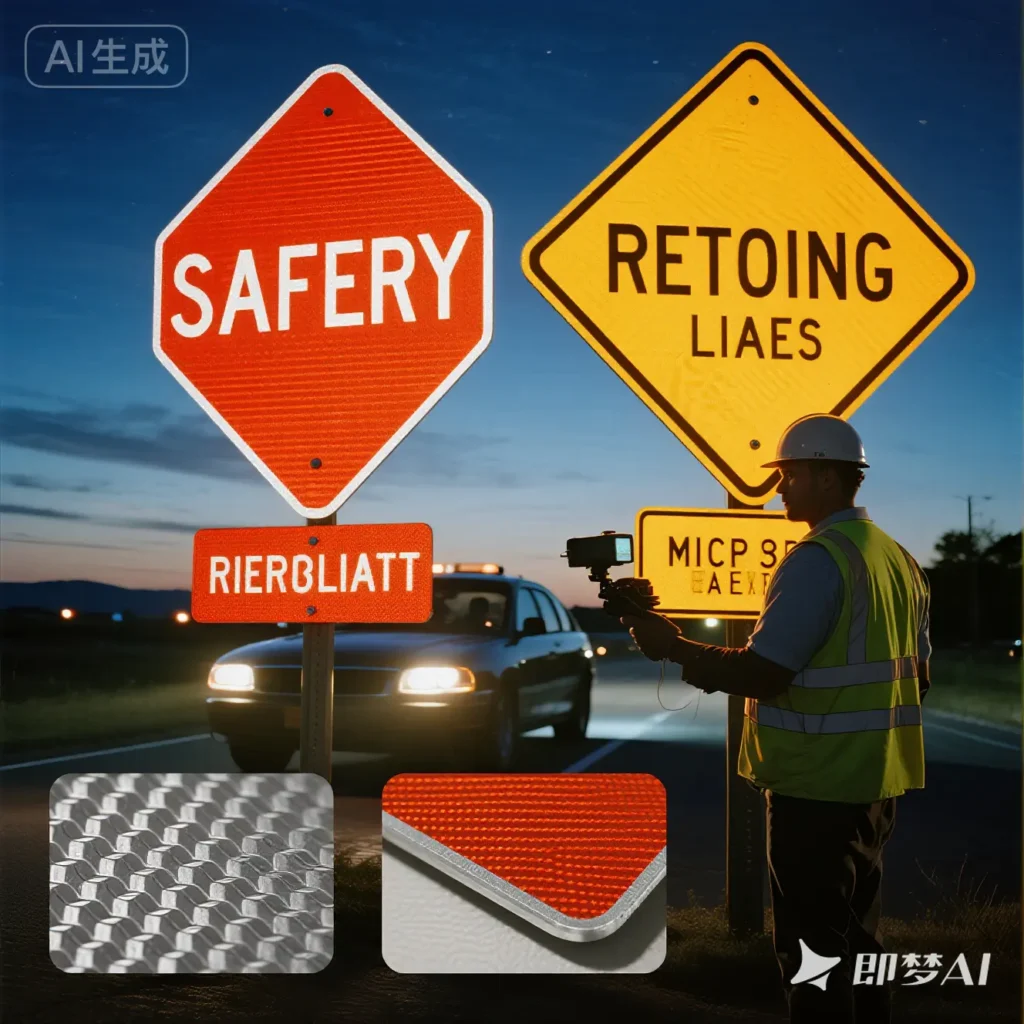
If you are buying reflective sheeting for traffic signs, vehicle markings, or safety applications, terms like micro prismatic, high intensity prismatic, and diamond grade can quickly become confusing. Many suppliers use these terms in product names, but they do not always explain what the technology means, how it performs, or which grade is right for your project.
Micro prismatic reflective sheeting uses tiny prism structures to return vehicle headlight beams back toward the driver, while High Intensity Prismatic (HIP) reflective sheeting is a specific mid-to-high performance grade that typically meets ASTM D4956 Type III or Type IV requirements. In simple terms, micro prismatic describes the optical structure, while high intensity prismatic describes a performance grade commonly used for road signs, warning signs, and work-zone safety signs.
For sign manufacturers, importers, and procurement teams, this distinction matters. Choosing the wrong material can lead to underperforming signs, failed compliance checks, or unnecessary overspending on a higher grade than the application requires. This guide explains what both terms mean, how HIP compares with engineer grade and diamond grade, and what buyers should verify before ordering.
This article is based on practical experience with reflective sheeting grades, prismatic film structures, and B2B procurement concerns in traffic sign, vehicle marking, and industrial safety applications.
What Does High Intensity Prismatic Reflective Sheeting Mean?
High Intensity Prismatic reflective sheeting, often shortened to HIP, is a durable prismatic reflective film designed to provide higher nighttime brightness than engineer grade sheeting. It is commonly used for traffic signs, warning signs, guide signs, and road safety devices where stronger retroreflection is needed without moving up to premium diamond grade material.
High Intensity Prismatic means a reflective sheeting grade that uses prism-based optical elements to deliver brighter retroreflection than standard engineer grade glass bead sheeting. In most traffic sign applications, HIP corresponds to ASTM D4956 Type III or Type IV and is used when signs need better visibility, longer viewing distance, and reliable outdoor durability.
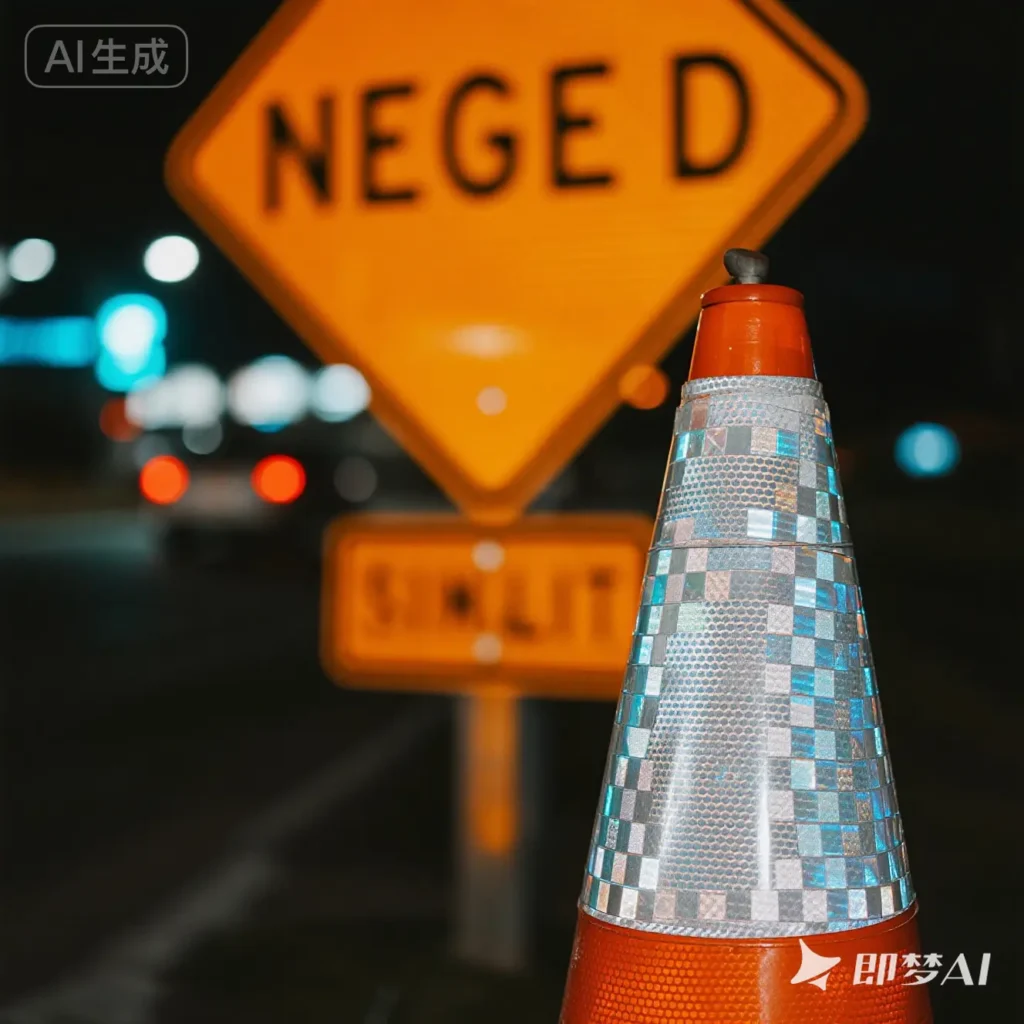
The key word is prismatic. Instead of relying mainly on glass beads, HIP sheeting uses small prism structures that redirect incoming light back toward the source. When headlights hit the sign face, these prism elements return a larger amount of light to the driver compared with basic engineer grade material.
This is why high intensity prismatic sheeting is widely specified for public road signs. It provides better visibility in low-light and nighttime conditions, especially on roads with higher speeds where drivers need more time to recognize and react to signs.
Typical applications include:
- Stop signs and yield signs
- Speed limit signs
- Curve warning signs
- School zone signs
- Construction and work-zone signs
- Roadway guide signs
- Industrial warning signs
Compared with engineer grade, HIP usually offers stronger brightness, better weather resistance, and longer useful life. Many HIP products are rated for around 10 years of outdoor durability, depending on the manufacturer, color, climate, and installation conditions.
However, HIP is not always the highest grade available. It sits between basic engineer grade and premium diamond grade. For many standard road signs, that middle position is exactly why it is popular: it offers a good balance of performance, cost, and compliance.
HIP is often the best-value grade for standard traffic signs because it delivers a major visibility upgrade over engineer grade without the higher cost of diamond grade sheeting.
How Is Micro Prismatic Different From Glass Bead Reflective Sheeting?
Micro prismatic and glass bead reflective sheeting both return light toward drivers, but they use different optical structures. Glass bead sheeting uses tiny spherical beads, while micro prismatic sheeting uses engineered prism patterns that reflect light more efficiently.
Micro prismatic sheeting generally reflects more light than glass bead sheeting because its cube-corner prism structures control light return more precisely. Glass bead sheeting is usually lower cost and suitable for lower-speed or less critical applications, while micro prismatic sheeting is preferred when stronger brightness, sharper daytime color, and better long-distance visibility are required.
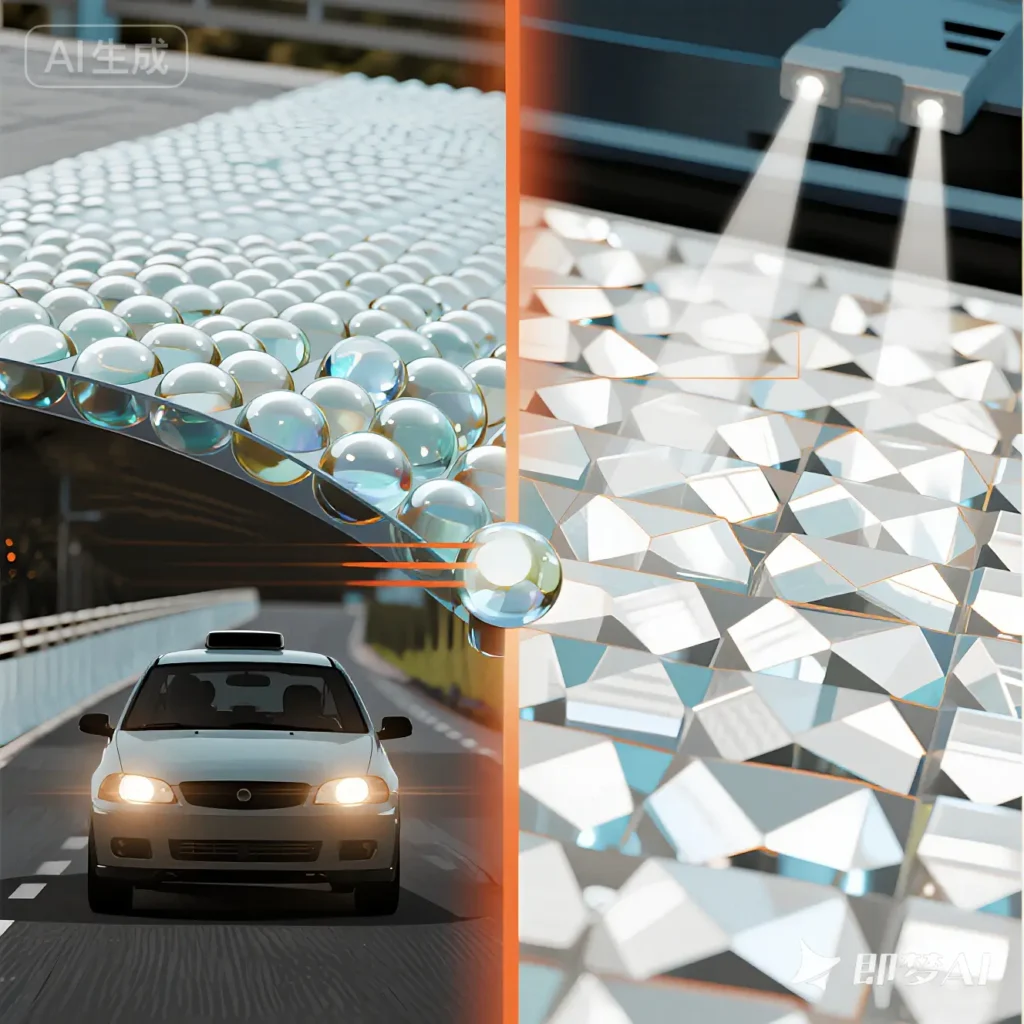
Glass bead reflective sheeting has been used for decades. It works by embedding thousands of tiny glass spheres into the film. These beads bend and return light, creating retroreflection. This technology is reliable, simple, and cost-effective, which is why engineer grade sheeting is still common for parking signs, low-speed roads, temporary markers, and private property signs.
Micro prismatic sheeting uses a more engineered structure. Instead of round beads, it contains microscopic prism cells, often arranged in repeated cube-corner patterns. These prisms are designed to redirect light back toward the source with less optical loss. The result is stronger retroreflective performance, especially for traffic signs that must be seen from farther away.
There are several practical differences:
- Feature Glass Bead Sheeting Micro Prismatic Sheeting
- Optical structure Round glass beads Cube-corner prism cells
- Typical grade Engineer grade, some older high intensity grades HIP, diamond grade, fluorescent grades
- Brightness Lower to medium Medium to very high
- Daytime color Usually acceptable Often brighter and cleaner
- Long-distance visibility Limited Better
- Typical cost Lower Higher
- Common applications Parking, low-speed signs, basic safety labels Road signs, warning signs, vehicle markings, high-visibility safety uses
One important point: “micro prismatic” is not a single grade by itself. It is a technology family. Both High Intensity Prismatic and Diamond Grade can be micro prismatic, but their prism design, retroreflective values, viewing-angle performance, and standards classification can be very different.
That is why buyers should avoid selecting materials based only on the word “prismatic.” Always check the actual standard designation, such as ASTM D4956 Type IV, Type VIII, Type IX, or Type XI.
Micro prismatic describes the optical technology, not automatically the quality level. A buyer still needs to verify the ASTM type, measured retroreflectivity, warranty, adhesive quality, and outdoor durability.
When Should Buyers Choose High Intensity Prismatic Instead of Engineer Grade or Diamond Grade?
High Intensity Prismatic is usually the right choice when engineer grade is not bright enough, but diamond grade is more performance than the project needs. It is especially useful for standard road signs where visibility, compliance, and cost balance are all important.
Buyers should choose High Intensity Prismatic for public road signs, warning signs, and work-zone signs that require stronger nighttime visibility than engineer grade but do not require the wide-angle performance of diamond grade. For low-speed private signs, engineer grade may be enough; for overhead highway signs, large guide signs, or critical high-speed locations, diamond grade or Type XI may be required.
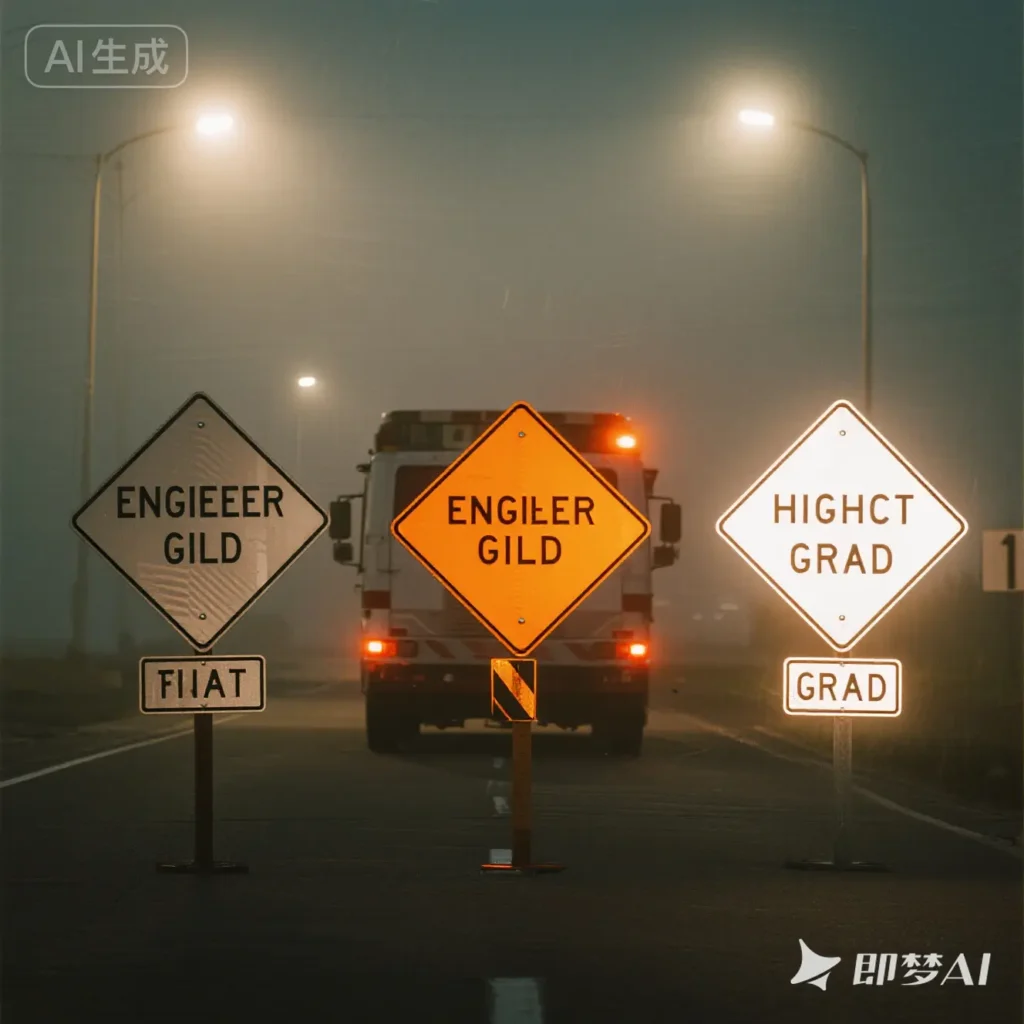
A practical way to choose is to match the sheeting grade to the risk level of the application.
Engineer Grade is generally suitable for low-speed, lower-risk environments. Examples include parking lots, private roads, warehouse signs, low-speed residential signs, and temporary labels. It is affordable, but its brightness and long-distance readability are limited.
High Intensity Prismatic is suitable for most standard public road applications. If the sign must be clearly visible at night, read by drivers at moderate to high speeds, and perform reliably outdoors for many years, HIP is usually the better choice. It is often used for regulatory signs, warning signs, and many guide signs.
Diamond Grade is used when maximum visibility is required. This includes overhead guide signs, large-format signs, complex intersections, highway ramps, and locations where trucks or vehicles approach from wider angles. Diamond grade materials, especially Type XI full cube sheeting, are designed for stronger wide-angle retroreflection.
A simple selection framework:
- Choose Engineer Grade for low-speed, non-critical, budget-sensitive signs.
- Choose High Intensity Prismatic for standard traffic signs and safety signs where strong visibility is required.
- Choose Diamond Grade for overhead signs, high-speed roads, large panels, and critical visibility locations.
- The cost difference matters too. HIP is more expensive than engineer grade but significantly more affordable than diamond grade. For many sign producers and importers, this makes HIP the best commercial balance between compliance, safety, and price.
HIP is not always the “best” material, but it is often the most practical material when the project needs reliable road-sign visibility without premium diamond-grade cost.
What Should Buyers Verify Before Ordering Micro Prismatic or High Intensity Prismatic Sheeting?
Before ordering prismatic reflective sheeting, buyers should verify more than just the product name. The most important checks are standards compliance, measured retroreflectivity, durability rating, adhesive performance, and supplier quality documentation.
Buyers should ask suppliers for the exact ASTM D4956 type, third-party retroreflectivity test reports, outdoor weathering data, adhesive specifications, sample rolls, and warranty terms before placing a bulk order. These checks help confirm whether the sheeting truly performs as high intensity prismatic or micro prismatic material, rather than only being marketed that way.

Here is the supplier verification checklist I recommend:
- Ask for the exact ASTM D4956 type.
Do not accept vague descriptions like “high reflective,” “super grade,” or “prismatic quality.” Ask whether the product meets Type III, Type IV, Type VIII, Type IX, Type XI, or another specific classification. For European projects, ask for EN 12899 RA1, RA2, or RA3 classification.
- Request retroreflectivity test data.
A serious supplier should provide measured values in cd/lx/m² at standard observation and entrance angles. For traffic sign materials, values at 0.2° observation and −4° entrance angle are commonly referenced. These numbers matter more than marketing claims.
- Check outdoor durability and weathering data.
HIP products are often sold with 10-year durability claims, but the claim should be backed by weathering tests. UV exposure, humidity, salt spray, and temperature cycling can all affect performance.
- Verify adhesive performance.
The reflective layer can be excellent, but poor adhesive can still ruin a sign. Ask about peel strength, application temperature, substrate compatibility, and edge-lifting resistance. If you manufacture signs, test the material on your actual aluminum or steel blanks.
- Compare samples under real conditions.
Do not judge only in office lighting. View samples at night with vehicle headlights, and if possible, test them with a retroreflectometer. Compare engineer grade, HIP, and diamond grade side by side. The difference becomes much clearer in real use.
- Evaluate the supplier, not only the material.
For importers and sign manufacturers, stable supply matters. Ask about production capacity, batch consistency, lead time, quality control process, certifications, and after-sales support. A cheaper roll is not cheaper if it causes project delays or rejected signs.
The safest buying decision is based on measured retroreflective performance, not product names. “High intensity prismatic” should be proven by test reports, samples, and compliance documents.
Conclusion
Micro prismatic and High Intensity Prismatic reflective sheeting are closely related, but they are not the same thing. Micro prismatic describes the optical structure: tiny prism cells that return light efficiently. High Intensity Prismatic describes a performance grade commonly used for road signs and safety applications, usually positioned above engineer grade and below diamond grade.
For buyers, the key is not to rely on product names alone. Check the exact ASTM D4956 type, compare measured retroreflectivity values, verify outdoor durability, test adhesive performance, and evaluate supplier reliability before placing a bulk order.
If you are making standard traffic signs, HIP is often the most practical choice. If you are making low-speed private signs, engineer grade may be enough. If you are making overhead signs, large guide signs, or critical high-speed safety signs, diamond grade or Type XI material may be the safer requirement.
ASTM D4956 Standard Specification for Retroreflective Sheeting
FHWA Manual on Uniform Traffic Control Devices
3M High Intensity Prismatic Reflective Sheeting Series 3930
3M Diamond Grade Reflective Sheeting
FAQs
What does high intensity prismatic mean?
High intensity prismatic means reflective sheeting that uses prism-based optical structures to provide higher retroreflective brightness than basic engineer grade material. It is commonly used for traffic signs, warning signs, and road safety devices where stronger nighttime visibility is needed. In many applications, it corresponds to ASTM D4956 Type III or Type IV.
What is 3M High Intensity Prismatic Reflective Sheeting?
3M High Intensity Prismatic Reflective Sheeting, such as 3M Series 3930, is a prismatic reflective sheeting product designed for traffic signs and work-zone applications. It uses microprismatic technology to deliver higher brightness than engineer grade sheeting and is commonly specified for regulatory, warning, and guide signs. Buyers comparing alternative brands should check whether the product meets the same ASTM type, retroreflective values, color requirements, and durability expectations.
What are the different grades of reflective tape or reflective sheeting?
The common grades include engineer grade, high intensity grade, high intensity prismatic, diamond grade, and full cube Type XI materials. Engineer grade is usually the lowest-cost option for low-speed applications. High intensity prismatic is the mid-to-high performance option for standard road signs. Diamond grade and Type XI materials provide the highest brightness and wide-angle performance for critical signs, overhead panels, and high-speed roads.
What is the strongest reflective material for traffic signs?
For traffic signs, the strongest commonly specified reflective sheeting is usually diamond grade or ASTM D4956 Type XI full cube microprismatic sheeting. Type XI is designed to provide very high retroreflectivity and strong wide-angle performance, making it suitable for overhead signs, large guide signs, and critical highway applications. However, it is not always necessary for standard signs where high intensity prismatic may be sufficient.
Is micro prismatic the same as high intensity prismatic?
Not exactly. Micro prismatic refers to the optical technology — tiny prism structures inside the sheeting. High Intensity Prismatic refers to a performance grade that uses prismatic technology and is commonly used for traffic signs. A micro prismatic product can be HIP, diamond grade, fluorescent construction grade, or another prismatic category depending on its design and certified performance.