

What Is Reflective Sheeting for Traffic Signs and Why Does Every Road Sign Need It?
If you’ve ever wondered why traffic signs glow in your headlights at night even though they have no power source, the answer is reflective sheeting. It’s the material bonded to the face of virtually every road sign you see, and it’s the single most important factor in whether a sign is visible after dark.
Reflective sheeting for traffic signs is a retroreflective material — typically made with embedded glass beads, microprismatic elements, or full cube corner prisms — that redirects vehicle headlight beams back toward the driver’s eyes. It is classified into grades under ASTM D4956 (Types I through XI) and EN 12899 (RA1, RA2, RA3), with each grade offering different levels of brightness, wide-angle performance, and outdoor durability suited to specific sign types and road conditions.
For sign manufacturers, transportation agencies, and reflective material buyers, understanding what reflective sheeting is, how it works, and which grade fits which application is essential — because the wrong choice means signs that fail inspections, degrade prematurely, or simply don’t protect drivers when visibility matters most. This guide covers the fundamentals, the grade system, the standards, and what to look for when sourcing.
This article is written from direct experience in the reflective sheeting industry, covering material science, standards compliance, and practical buyer guidance for traffic sign applications.
What Is the Reflective Material on Road Signs and How Does It Actually Work?
This is the most basic question, and getting the answer right sets up everything else.
The reflective material on road signs is retroreflective sheeting — a thin, engineered film that bounces light from vehicle headlights back toward the driver rather than scattering it in all directions. It uses one of three optical technologies: glass beads, microprismatic elements, or full cube corner prisms, each offering different retroreflective efficiency.
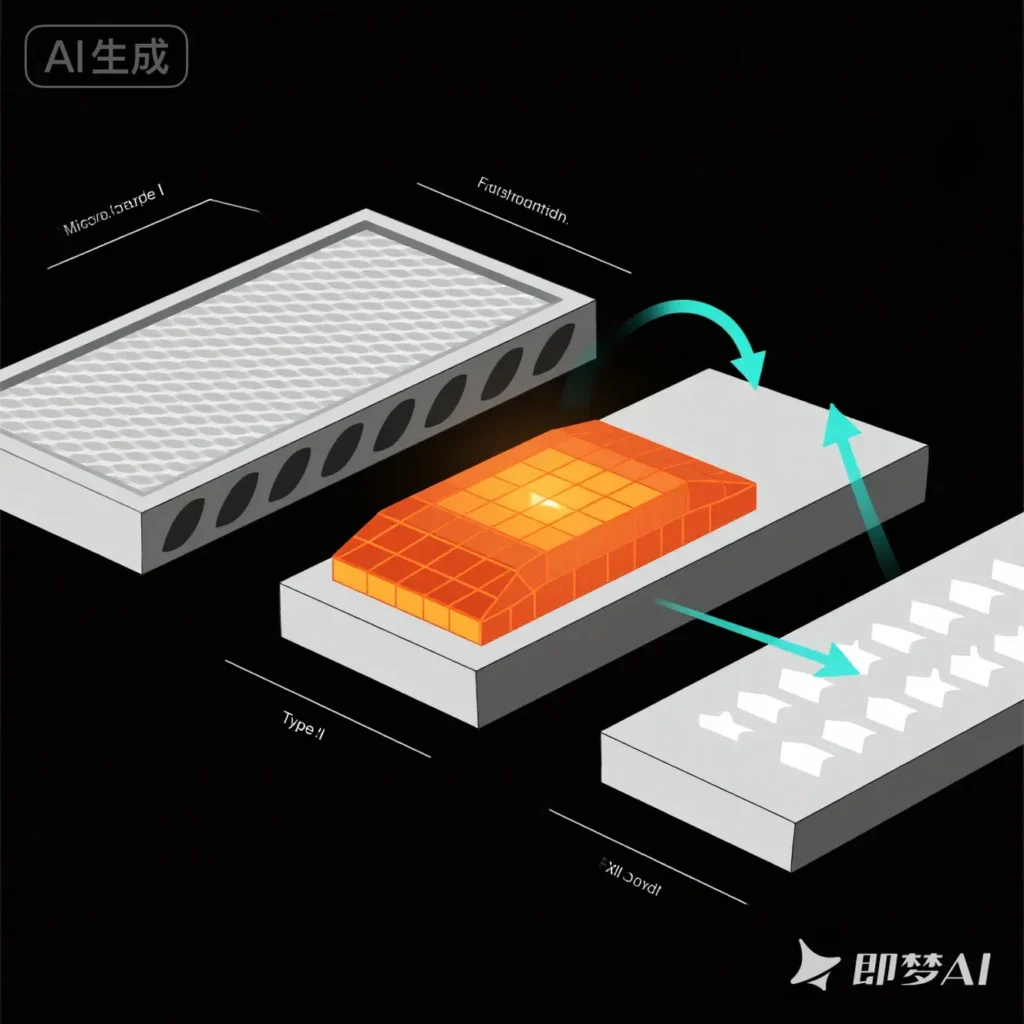
To understand why this matters, think about the difference between a mirror and retroreflective sheeting. A mirror reflects light at the same angle it arrives — so if your headlights hit a mirror at an angle, the light bounces away from you, not back to your eyes. Retroreflective sheeting is different. It redirects light back along the same path it came from, regardless of the angle. That’s why a sign 200 meters ahead glows brightly in your headlights even though it’s angled slightly away from your car.
The three technologies work differently:
Glass bead (enclosed lens) sheeting uses tiny glass spheres partially embedded in a reflective layer. Light enters the bead, focuses on the reflective backing, and bounces back out. This is the oldest and least efficient technology — a significant portion of light is lost inside the bead. It’s used in engineer grade (ASTM D4956 Type I) sheeting, which is acceptable for low-speed, well-lit roads but not for highways.
Microprismatic sheeting uses arrays of tiny prisms molded into a polymer layer. These prisms are far more efficient than glass beads at redirecting light, resulting in significantly higher retroreflective brightness. Microprismatic technology is used in high intensity prismatic (Type III/IV) and diamond grade (Type IX) sheeting, which are the standard for highway signs.
Full cube corner sheeting is the most advanced. Unlike truncated microprismatic designs that lose some light to internal reflection inefficiency, full cube prisms return nearly all incident light to the driver. This technology powers Type XI sheeting — the brightest grade available — used for large overhead highway signs and critical warning signs where maximum visibility at long range and wide angles is essential.
The optical efficiency difference between glass bead and full cube technology is dramatic — full cube sheeting can return 5x to 10x more light to the driver than glass bead sheeting at the same measurement angles.
Do All Road Signs Need to Be Reflective — and What Happens When They’re Not?
This seems like an obvious question, but the answer has real implications for sign manufacturers and procurement decisions.
Yes — in virtually all jurisdictions, permanent road signs on public roads are required to use retroreflective sheeting that meets minimum performance standards. In the US, the FHWA Manual on Uniform Traffic Control Devices (MUTCD) mandates retroreflectivity for all regulatory, warning, and guide signs. Similar requirements exist under EN 12899 in Europe and equivalent national standards worldwide.
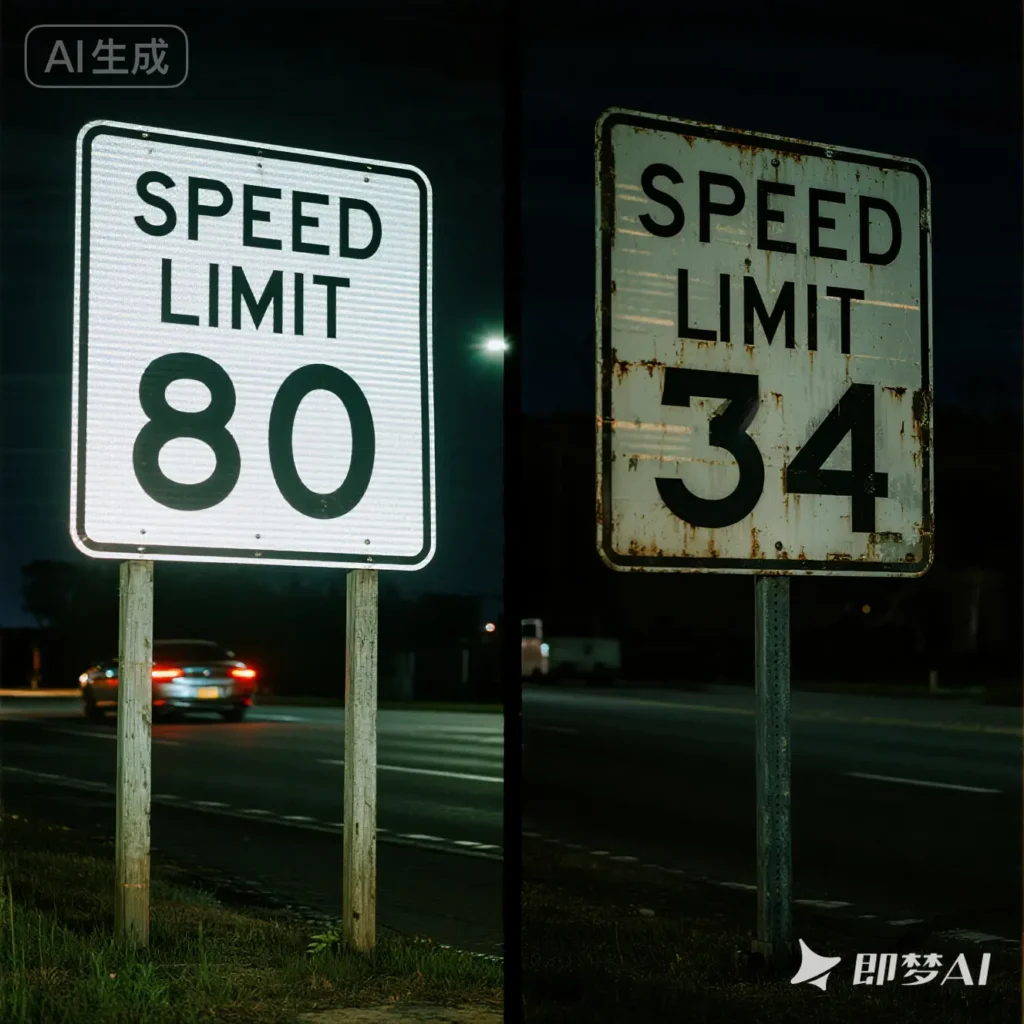
The reason is straightforward: road signs without adequate retroreflectivity are effectively invisible at night. Drivers depend on headlight-activated sign visibility to navigate, respond to warnings, and comply with regulations. When retroreflectivity falls below readable levels — because the sheeting has degraded, been damaged, or was never adequate to begin with — crash risk increases.
The US FHWA has established minimum maintained retroreflectivity levels for signs. For example, a white-on-green guide sign must maintain a minimum retroreflectivity of 7 cd/lx/m² throughout its service life. When it drops below that threshold, the sign is considered non-compliant and should be replaced. Similar maintained minimums exist for other sign types and colors.
For sign manufacturers and material buyers, this means: Choosing the right sheeting grade matters at installation. A sign made with low-grade sheeting may meet minimum retroreflectivity when new but fall below the threshold years before the sign is scheduled for replacement.
Outdoor durability is directly tied to compliance lifespan. A sheeting product rated for 7 years of outdoor use in temperate climates may degrade faster in tropical, desert, or coastal environments — pushing it below minimum retroreflectivity thresholds sooner than expected.
Using non-retroreflective or under-performing materials creates liability. If a sign fails to meet retroreflectivity requirements and contributes to an accident, the sign owner and potentially the material supplier face legal exposure. The practical takeaway: reflective sheeting isn’t optional for road signs, and the grade chosen must match both the application (sign type, size, mounting height, road speed) and the expected service environment.
The FHWA estimates that maintaining adequate sign retroreflectivity is one of the lowest-cost, highest-impact safety interventions available to road agencies — far cheaper per life saved than most infrastructure upgrades.
Which Grade of Reflective Sheeting Should You Use for Each Type of Traffic Sign?
This is where the decision gets practical — and where most specification mistakes happen.
Engineer grade (Type I) is suited for low-speed, supplementary signs. High intensity prismatic (Type III/IV) is the standard for most highway regulatory and warning signs. Diamond grade (Type IX/XI) is required for overhead guide signs, large-format panels, and critical visibility locations. The correct choice depends on sign type, mounting height, road speed, and viewing distance.

Here’s how experienced sign specifiers match grade to application:
Low-speed and supplementary signs — Engineer Grade (Type I / RA1) Parking lot signs Property identification signs Residential street name signs Temporary event signage Low-traffic rural supplementary signs Type I sheeting is the most affordable option. Its glass bead technology provides adequate visibility at close range and low approach speeds. Typical outdoor lifespan is around 7 years. It should not be used on high-speed roads or signs that need to be read from long distances.
Standard highway signs — High Intensity Prismatic (Type III/IV / RA2) Speed limit signs Stop signs and yield signs Curve warning signs Regulatory prohibition signs
Standard guide signs at driver-level mounting height Type III/IV sheeting is the baseline standard for most public road signs in the US and Europe. It delivers roughly 2–3x the retroreflective brightness of Type I and carries a 10–12 year outdoor durability rating. Most state DOTs and national road authorities specify Type III or Type IV as the minimum for these applications. Overhead and critical signs — Diamond Grade (Type IX/XI / RA3) Overhead guide signs on highways and motorways Large-format direction signs Signs in complex interchange areas Signs mounted at significant height above the road Work zone signs where maximum conspicuity is needed
Type IX and Type XI sheeting are essential where signs must be read from 200+ meters or at steep vertical viewing angles — such as truck drivers looking up at overhead signs. Type XI’s full cube technology provides the widest-angle performance and the highest brightness, making it the top choice for the most critical applications. Durability ratings reach 12+ years.
Vehicle conspicuity markings — ECE R104 compliant sheeting For truck and trailer markings, sheeting must meet ECE R104 (or equivalent national regulations). This is a separate specification from ASTM D4956 and requires specific retroreflective performance, color, and conspicuity pattern requirements.
Specifying Type I where Type III/IV is required — or Type III/IV where Type IX/XI is needed — is the most common and most preventable cause of sign performance failure. Always verify the specification before ordering.
How Long Does Reflective Sheeting Last on Road Signs — and What Causes It to Fail?
This question directly affects total cost of ownership and replacement planning for every sign on the road.
Reflective sheeting lasts 7 to 12+ years depending on grade, manufacturing quality, and installation environment. Engineer grade typically lasts around 7 years, high intensity prismatic 10–12 years, and diamond grade 12 years or more. The primary degradation factors are UV exposure, moisture, temperature cycling, and physical damage.
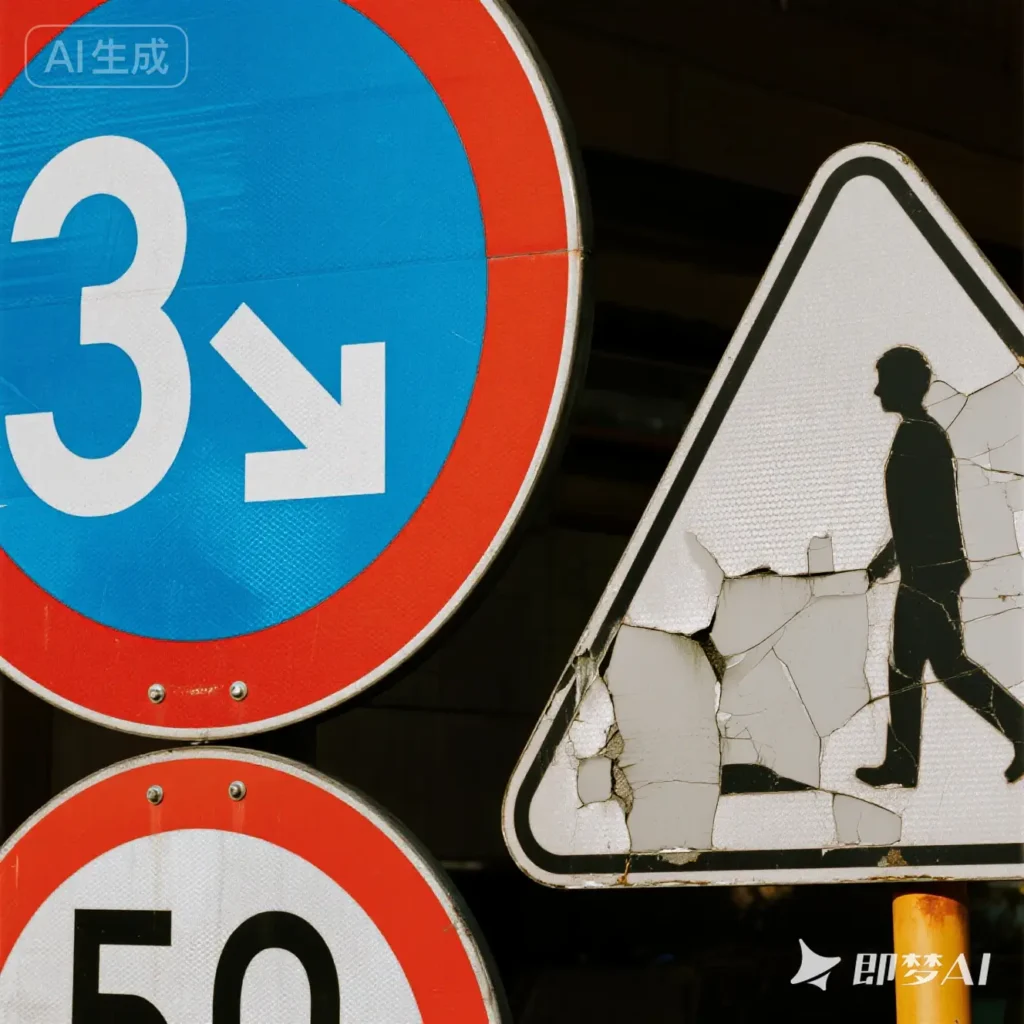
The specified durability on a product data sheet is based on accelerated weathering tests — typically conducted per ASTM G154 or equivalent — and assumes standard temperate-climate conditions. In the real world, several factors accelerate degradation:
UV radiation. This is the biggest factor. Sustained UV exposure breaks down the polymers in the sheeting, causing color fading, reduced retroreflectivity, and eventual surface cracking. Signs in tropical, equatorial, and high-altitude locations degrade significantly faster than the same sheeting in northern Europe or the northern US.
Moisture and humidity. Prolonged exposure to high humidity or standing water can penetrate seams and edges, causing delamination — where the reflective layer separates from the sign substrate. This is particularly problematic for signs in coastal and tropical environments.
Temperature cycling. Extreme daily or seasonal temperature swings cause the sheeting and the sign substrate (typically aluminum) to expand and contract at different rates, stressing adhesive bonds and potentially causing edge lifting or bubbling.
Physical damage. Vandalism, impact from debris or vegetation, and improper cleaning methods (pressure washing at too-close range, abrasive cleaners) can physically damage the reflective layer. Once the prismatic or glass bead structure is disrupted, retroreflectivity in that area drops to near zero.
Air pollution and chemical exposure. Industrial pollutants, salt spray, and road de-icing chemicals can accelerate surface degradation, particularly for engineer grade sheeting which has less robust surface protection than microprismatic grades.
For sign managers and procurement teams, the practical implication is clear: the stated durability rating is a starting point, not a guarantee. Actual lifespan depends on the installation location, and signs in harsh environments may need replacement 2–3 years sooner than the data sheet suggests. Regular retroreflectivity measurement — using a handheld retroreflectometer — is the most reliable way to determine when a sign has dropped below the minimum maintained level and needs replacement.
A sign that meets minimum retroreflectivity when installed but is not monitored can fall below safe visibility thresholds years before anyone notices — creating a silent safety risk that only systematic inspection catches.
Conclusion
Reflective sheeting is the reason traffic signs work at night. Without it, every regulatory, warning, and guide sign on the road would be invisible to drivers after dark — and nighttime driving would be dramatically more dangerous.
The technology ranges from basic glass bead engineer grade through to advanced full cube diamond grade, with each tier delivering higher brightness, wider-angle performance, and longer durability. The ASTM D4956 type system and EN 12899 RA classification give buyers and specifiers a clear framework for matching sheeting to application.
The practical rules for anyone manufacturing, specifying, or purchasing reflective sheeting for traffic signs are simple: match the grade to the sign type and road conditions, verify compliance against the applicable standard (ASTM or EN), confirm durability with real weathering test data, and monitor installed signs for retroreflectivity decline over time.
ASTM D4956 Standard Specification
FHWA Retroreflectivity Requirements for Traffic Signs
EN 12899-1 European Standard for Fixed Traffic Signs
FHWA Sign Retroreflectivity Guidebook:
FAQs
What is reflective sheeting used for beyond traffic signs?
While traffic signs are the largest application, reflective sheeting is also used on vehicle conspicuity markings (truck and trailer striping per ECE R104), license plates, construction zone barricades, delineator posts, guardrail reflectors, emergency vehicle markings, and industrial safety signage. Each application has its own performance and compliance requirements, so the sheeting grade and specification must be matched to the specific use case.
What is the difference between 3M reflective sheeting grades?
3M uses brand names that correspond to ASTM D4956 types: Engineer Grade (EGP) is Type I, High Intensity Prismatic (HIP) is Type III/IV, and Diamond Grade DG3 is Type XI (full cube). 3M’s Diamond Grade DG3 is widely regarded as the industry benchmark for high-performance retroreflective sheeting. Other manufacturers — including Avery Dennison and Orafol — offer equivalent products that meet the same ASTM type designations.
What standards govern reflective sheeting for traffic signs?
In the US, ASTM D4956 is the primary standard, classifying sheeting into Types I through XI based on retroreflective performance. The FHWA MUTCD mandates minimum retroreflectivity for signs on public roads. In Europe, EN 12899-1 uses RA1, RA2, and RA3 classes. Other markets may follow additional national standards. For vehicle markings, ECE R104 applies in most countries outside North America. Always confirm which standard governs your specific project and jurisdiction.
What is the traffic sign material specification for sign blanks?
The sign blank (substrate) is typically aluminum sheet — usually 5052-H38 or 6061-T6 alloy — in thicknesses ranging from 0.063″ to 0.125″ depending on sign size. The reflective sheeting is applied to the prepared aluminum surface using pressure-sensitive adhesive. Sign material specifications are defined by standards such as ASTM D4956 (for the sheeting) and individual DOT specifications (for the complete sign assembly including substrate, sheeting, and mounting hardware).
Can faded reflective sheeting be restored, or does the sign need to be replaced?
Once reflective sheeting has degraded below minimum retroreflectivity standards, it cannot be effectively restored. Applying new reflective sheeting over degraded material is generally not recommended because the old surface creates adhesion and flatness problems. The standard practice is to replace the sheeting entirely — either by resurfacing the sign blank with new sheeting or replacing the entire sign. Regular retroreflectivity measurement helps identify signs that are approaching the end of their service life before they become a safety issue.