
What Is a Reflective Sheeting Sticker and How Do You Choose the Right One for Your Application?
Reflective sheeting stickers show up everywhere — on vehicle bumpers, helmets, construction equipment, warehouse pillars, trailers, bicycles, and emergency vehicles. But for buyers who need to source them at scale, the terminology can be confusing.
What exactly is a “reflective sheeting sticker”? How is it different from reflective tape? And how do you know which type actually meets the performance and compliance requirements your application demands?
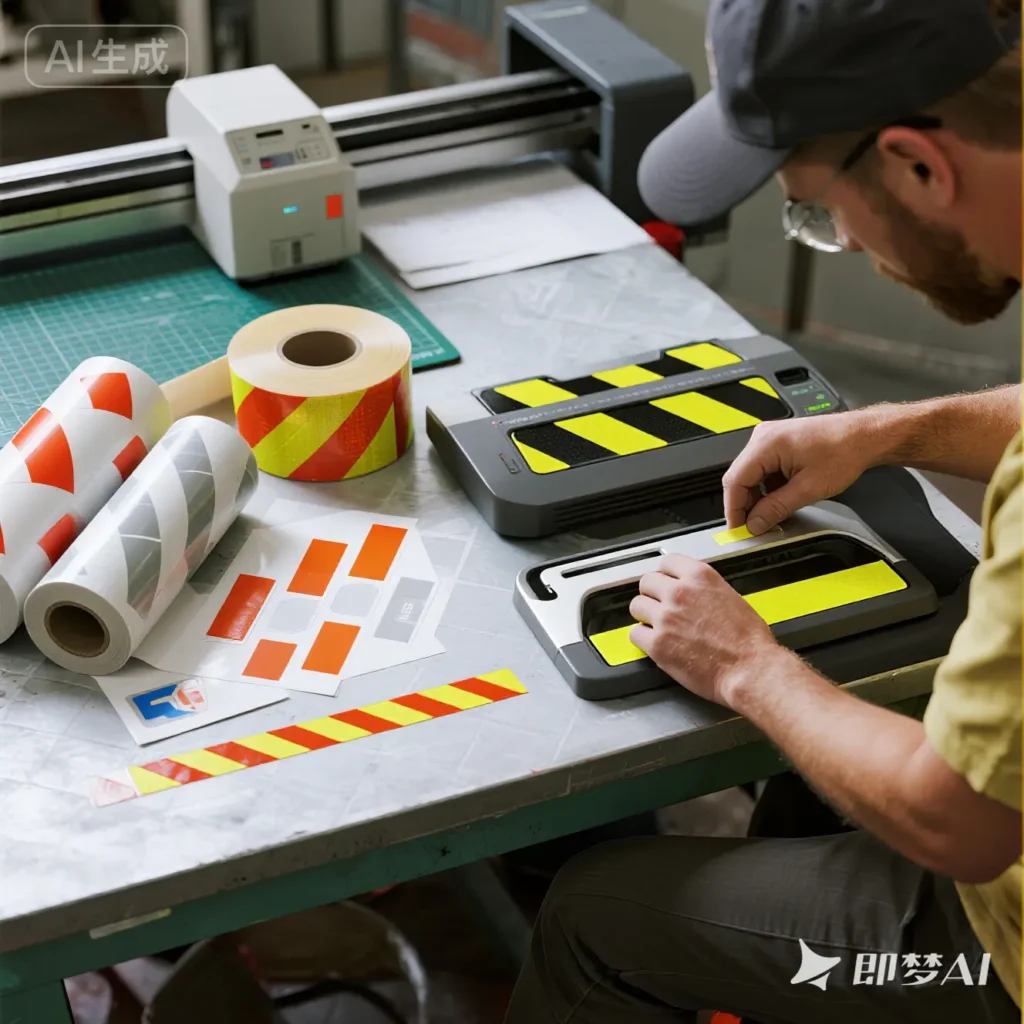
A reflective sheeting sticker is a die-cut or pre-cut piece of retroreflective sheeting with a pressure-sensitive adhesive backing, designed for direct application to surfaces without additional mounting hardware. The reflective layer uses glass bead, microprismatic, or full cube technology to bounce light from headlights or flashlights back toward the source, making the sticker highly visible at night. Reflective sheeting stickers range from small consumer-grade dots and shapes to large custom-cut decals used on commercial vehicles, traffic devices, and industrial safety markings.
Whether you’re a sign manufacturer cutting reflective sheeting into custom shapes, a fleet operator applying conspicuity markings to trailers, or an importer sourcing reflective stickers for retail or industrial distribution, this guide covers what you need to know — materials, grades, standards, durability, and how to evaluate what you’re actually buying.
This article is based on hands-on experience working with retroreflective materials across traffic safety, vehicle marking, and industrial applications.
What Are Reflective Sheeting Stickers Used For — and Why Does the Grade Matter?
Most people think of reflective stickers as simple safety accessories, but the range of applications is far broader than that — and each application demands a specific performance level.
Reflective sheeting stickers are used for vehicle conspicuity markings (truck and trailer reflective striping), traffic sign overlays and repairs, personal safety (bicycle, helmet, and clothing stickers), industrial hazard marking (warehouse pillars, equipment, barriers), and custom branding (reflective logos and decals). The grade of reflective sheeting determines how bright the sticker appears at night, how long it lasts outdoors, and whether it meets the relevant safety standard.
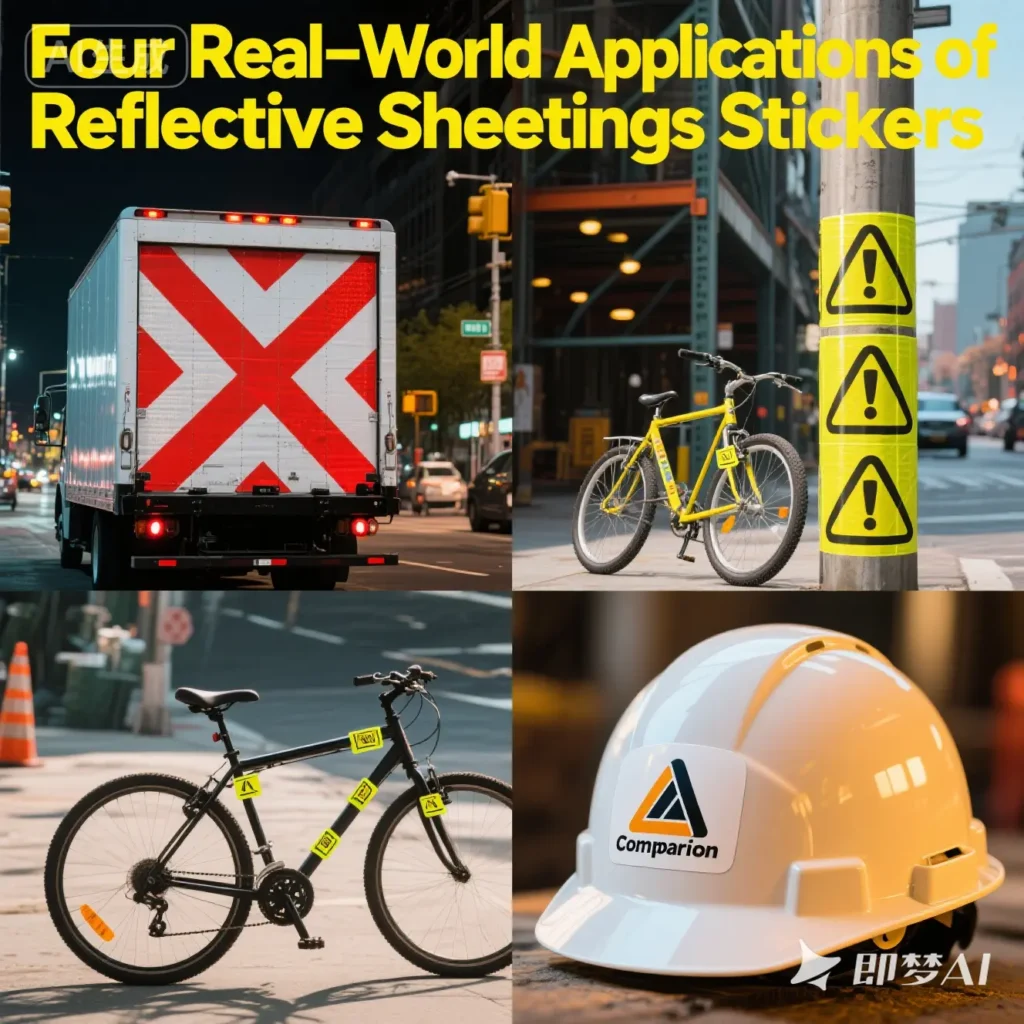
Engineer Grade (ASTM D4956 Type I) stickers use glass bead technology and offer basic retroreflectivity. They’re adequate for personal safety stickers, bicycle reflectors, property markers, and low-risk indoor or sheltered signage. Typical outdoor lifespan is around 5–7 years. Cost is the lowest of all grades.
High Intensity Prismatic (Type III/IV) stickers use microprismatic technology and are roughly 2–3x brighter than engineer grade. They’re suitable for vehicle reflective markings, construction zone devices, parking lot signs, and any application where higher nighttime visibility is needed. Outdoor durability is typically 10–12 years.
Diamond Grade (Type IX/XI) stickers are the highest-performing option, using full cube microprismatic technology. They’re specified for critical vehicle conspicuity markings on commercial trucks and trailers (ECE R104 compliance), emergency vehicle markings, and any situation where maximum retroreflective brightness and wide-angle performance are required. Durability ratings reach 12+ years.
The grade matters because using the wrong one can mean the difference between a sticker that’s visible from 200 meters at night and one that’s barely noticeable at 50 meters. For commercial vehicle markings and traffic devices, using a grade that doesn’t meet the applicable standard creates both a safety risk and a compliance failure.
A diamond grade reflective sticker can be 6–10x brighter than an engineer grade sticker of the same size. For safety-critical applications, grade selection is not a cost decision — it’s a visibility decision.
How Long Do Reflective Stickers Last — and What Affects Their Durability?
This is one of the most common questions buyers ask, and the answer depends on three things: the sheeting grade, the adhesive quality, and the installation environment.
Engineer grade reflective stickers typically last 5–7 years outdoors. High intensity prismatic stickers last 10–12 years. Diamond grade stickers can last 12+ years. However, these ratings assume moderate climates, proper surface preparation, and clean application — real-world conditions can shorten or extend these numbers significantly.
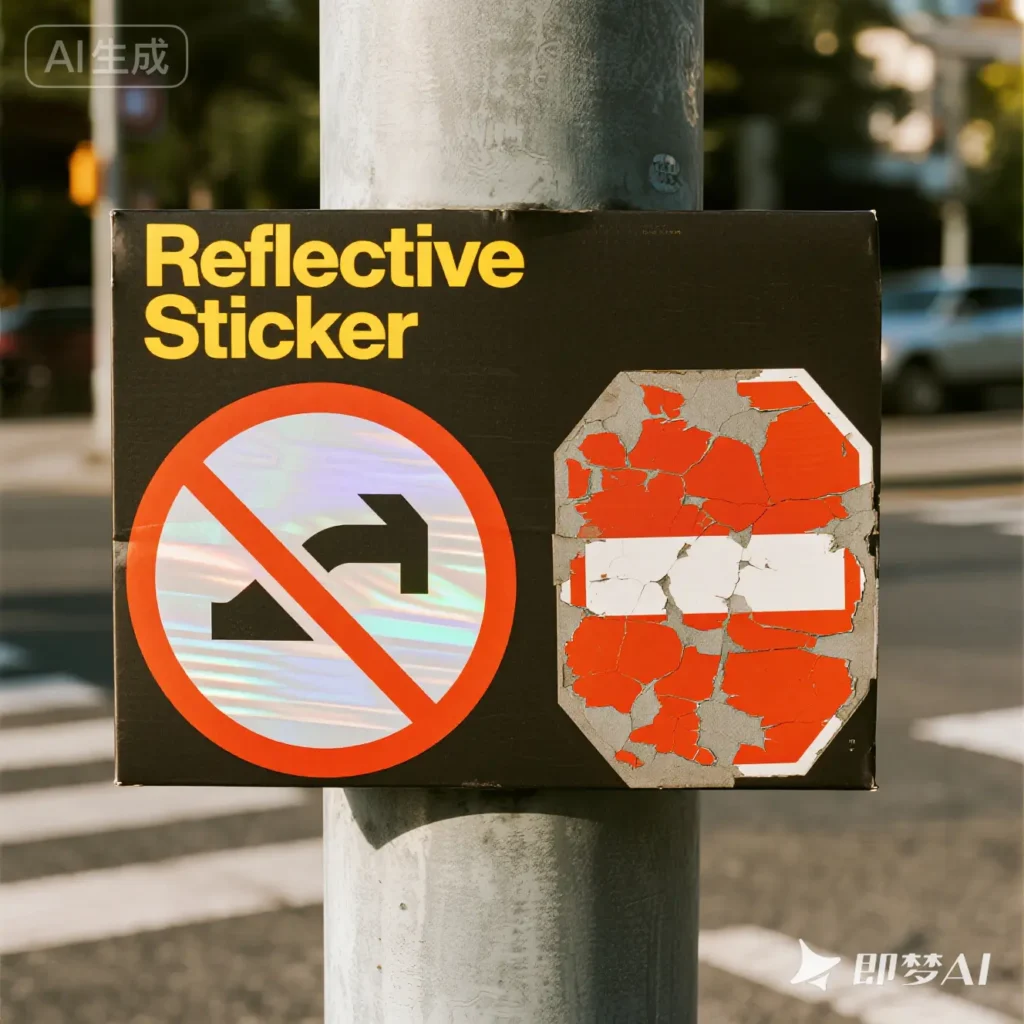
Several factors reduce reflective sticker lifespan in practice:
UV exposure. Reflective sheeting degrades under sustained ultraviolet radiation. Stickers on south-facing surfaces in tropical or desert climates degrade faster than those in temperate regions or shaded locations. High-quality sheeting uses UV stabilizers in the top film layer to slow this process, but no material is immune.
Heat and humidity. Sustained high temperatures soften adhesive, which can lead to edge lifting and eventual delamination. In humid tropical environments, moisture can penetrate between the sheeting and the substrate if the adhesive bond is compromised. This is why adhesive quality matters as much as the reflective layer itself.
Surface preparation. A reflective sticker applied to a dirty, oily, or oxidized surface will fail prematurely regardless of the sheeting grade. Proper surface cleaning (typically with isopropyl alcohol or a similar solvent) and firm pressure during application are essential for long-term adhesion.
Chemical exposure. Stickers on vehicles, industrial equipment, or marine environments may be exposed to fuels, solvents, salt spray, or cleaning chemicals that degrade the adhesive or the reflective surface. If chemical exposure is expected, confirm with the sheeting manufacturer that the specific product is rated for that environment.
Mechanical abrasion. Stickers on surfaces that are regularly brushed, scraped, or pressure-washed will lose reflectivity faster than those in protected locations. Vehicle conspicuity tape on trailer sides, for example, takes more mechanical wear than a sticker on a sign face.
For buyers sourcing reflective stickers at volume: always ask the supplier for accelerated weathering test data (per ASTM G154 or equivalent) and adhesive peel test results. A claimed lifespan without supporting data is a marketing claim, not a performance guarantee.
The most common cause of premature reflective sticker failure is not the sheeting itself — it’s poor surface preparation during application or inadequate adhesive performance in the actual operating environment.
Are Reflective Decals Legal for Vehicles — and What Standards Apply?
Legality and compliance are two separate questions, and buyers need to understand both before specifying reflective stickers for vehicle or road-related applications.
Reflective decals are legal on vehicles in most jurisdictions, but the specific rules vary by country and by where on the vehicle the decal is applied. In many markets, reflective conspicuity markings on commercial vehicles are not just legal — they’re mandatory. The key standards are ECE R104 (international vehicle conspicuity), FMVSS 108 (US), and various national regulations that reference these or equivalent requirements.
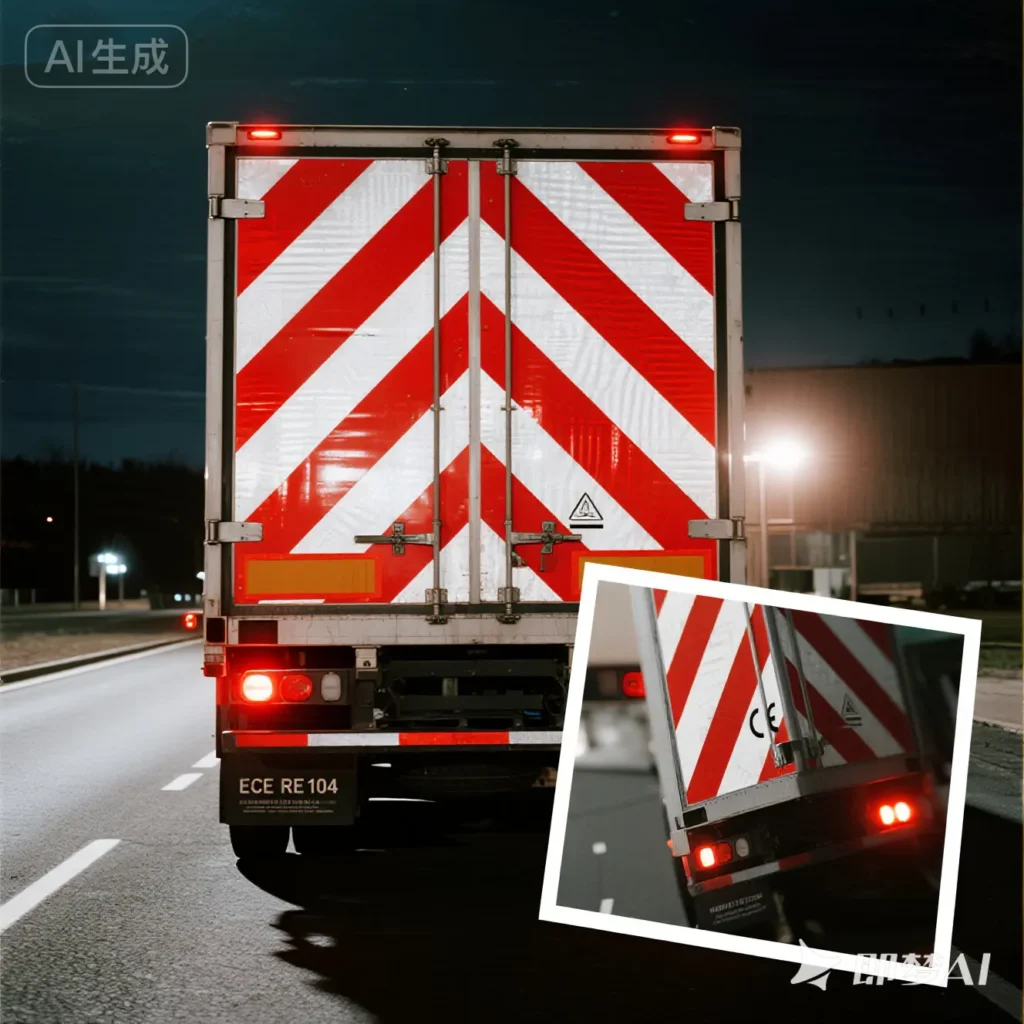
Here’s the practical breakdown by application:
Commercial trucks and trailers. In the EU, ECE R104 requires retroreflective conspicuity markings on heavy commercial vehicles. In the US, FMVSS 108 mandates conspicuity tape on trailers over 10,000 lbs GVWR and most truck tractors. The reflective tape must meet specific retroreflectivity minimums, use approved color patterns (typically alternating red and white), and carry the relevant certification mark. Using non-certified reflective stickers on these vehicles is a compliance violation.
Passenger cars. Rules vary widely. In most countries, small reflective stickers on personal vehicles (bumpers, fenders, helmets) are legal as long as they don’t obscure license plates, lights, or signals, and don’t mimic emergency vehicle markings. Some jurisdictions restrict reflective colors (for example, blue reflective markings may be reserved for emergency vehicles).
Bicycles and personal mobility devices. Reflective stickers on bicycles, e-scooters, and helmets are generally encouraged and legal everywhere. Many safety organizations recommend using high intensity or diamond grade reflective stickers on two-wheeled vehicles for maximum nighttime visibility.
Traffic signs and devices. Reflective sheeting on traffic signs must meet ASTM D4956 (US) or EN 12899 (Europe) requirements. Using non-compliant reflective stickers to repair or overlay official traffic signs is not acceptable in any regulated jurisdiction.
For B2B buyers: if you’re supplying reflective stickers for vehicle conspicuity or traffic applications, always confirm which standard applies in the end-use market. A sticker that’s legal and compliant in one country may not be in another.
For commercial vehicle conspicuity markings, using non-certified reflective tape or stickers is not just a quality issue — it’s a regulatory violation that can result in vehicle inspection failure, fines, and liability exposure in the event of an accident.
How Should Buyers Evaluate Reflective Sheeting Stickers Before Ordering at Volume?
Whether you’re buying pre-cut reflective stickers or rolls of self-adhesive reflective sheeting for custom cutting, the evaluation process is the same — and skipping it is how procurement problems happen.
Buyers should verify four things before committing: the specific reflective grade (ASTM or EN type), retroreflectivity test data at standard angles, adhesive performance specifications, and the supplier’s ability to provide consistent quality at the required volume and cut dimensions.

Here’s what experienced buyers check:
- Reflective grade verification. Ask for the specific ASTM D4956 type or EN 12899 RA class. If the supplier describes the product as “highly reflective” or “premium grade” without citing a specific standard type, press for the actual designation. Legitimate manufacturers always know and state the ASTM type their product meets.
- Retroreflectivity test data. Request measured values at standard observation and entrance angles (0.2° / −4° for ASTM). Compare these against the minimum values defined in ASTM D4956 for the claimed type. If the product claims Type IV performance but the test values fall below Type IV minimums, the product is mislabeled.
- Adhesive performance. Reflective stickers are only as good as their adhesive. Request peel strength data (typically tested per ASTM D3330 or equivalent), and ask about the adhesive’s temperature range, resistance to moisture, and suitability for the intended substrate (aluminum, steel, plastic, painted surfaces, or glass). If the stickers will be applied to curved surfaces, confirm that the adhesive and sheeting are flexible enough to conform without edge lifting.
- Die-cutting and dimensional accuracy. If you’re ordering pre-cut stickers, verify the supplier’s cutting capability. Laser cutting and precision die-cutting produce clean edges that resist peeling. Rough-cut edges trap moisture and are more likely to lift over time. Request samples of the actual cut shape and size before placing a bulk order.
- Packaging and shelf life. Reflective sheeting stickers should be stored flat, away from direct sunlight, in controlled temperature and humidity. Ask the supplier about shelf life for the adhesive (typically 1–2 years if stored properly) and confirm that packaging protects the material during shipping.
The most cost-effective quality assurance step is testing supplier samples with a retroreflectometer and performing a real-world adhesion test on your actual substrate before placing a volume order. This single step prevents more returns and complaints than any amount of paperwork review.
Conclusion
Reflective sheeting stickers serve a wide range of applications — from small safety decals on bicycles and helmets to large-format conspicuity markings on commercial trucks. But not all reflective stickers are created equal. The grade of reflective sheeting, the quality of the adhesive, and the compliance with relevant standards (ASTM D4956, EN 12899, ECE R104) determine whether a sticker actually performs when it matters — at night, in rain, at highway speed.
For buyers sourcing at volume: specify the exact reflective grade you need, verify performance with test data, test adhesive compatibility on your actual substrate, and confirm regulatory compliance for your end-use market. These steps take minimal time upfront and prevent significant quality and compliance problems downstream.
A reflective sticker that looks bright in your hand but fails on the road isn’t a bargain — it’s a liability.
ASTM D4956 Standard Specification
ECE R104 Vehicle Conspicuity Markings
FMVSS 108 Lamps, Reflective Devices, and Associated Equipment
FHWA Retroreflectivity Requirements
FAQs
What is a reflective sticker and how is it different from reflective tape?
A reflective sticker is a pre-cut piece of retroreflective sheeting with pressure-sensitive adhesive backing, designed for direct peel-and-stick application. Reflective tape is the same material supplied in continuous rolls, typically in standard widths, and cut to length during application. The reflective technology and performance are identical — the difference is only in the form factor and how the product is supplied. Stickers are more convenient for individual placement; tape is more efficient for linear applications like vehicle conspicuity striping.
Are reflective stickers legal on cars?
In most jurisdictions, small reflective stickers on passenger vehicles are legal as long as they don’t obstruct license plates, headlights, taillights, or turn signals, and don’t imitate emergency vehicle markings (particularly blue or red flashing patterns). For commercial trucks and trailers, reflective conspicuity markings are typically mandatory — not optional — under ECE R104 (international), FMVSS 108 (US), or equivalent national regulations. Always check local vehicle regulations for specific restrictions on placement, color, and size.
What is the difference between 3M reflective stickers and generic reflective stickers?
3M reflective products (such as the Scotchlite and Diamond Grade lines) are manufactured to consistently meet or exceed ASTM D4956 specifications, with published retroreflectivity values, defined warranty periods, and global certifications. Generic or unbranded reflective stickers may or may not meet these same standards. The key difference for buyers is verifiability — 3M publishes full technical data sheets and warranty terms, while some generic suppliers provide limited or no performance documentation. Independent retroreflectometer testing is the most reliable way to compare actual performance regardless of brand.
Can reflective sheeting stickers be custom cut to any shape?
Yes. Self-adhesive reflective sheeting can be die-cut, laser-cut, or plotter-cut into virtually any shape — circles, arrows, logos, text, and custom outlines. However, very intricate cuts with small points or tight internal corners may be prone to edge lifting over time. For complex custom shapes, laser cutting or precision die-cutting produces the cleanest edges and best long-term adhesion. Always request cut samples before committing to a large custom order to verify edge quality and dimensional accuracy.
How should reflective stickers be stored to maintain quality?
Store reflective sheeting stickers flat (not rolled tightly) in their original packaging, in a clean, dry environment at 15–25°C (59–77°F) and below 65% relative humidity. Keep them away from direct sunlight, heat sources, and chemical fumes. Most pressure-sensitive adhesive reflective products have a shelf life of 1–2 years when stored properly. Using stickers beyond their adhesive shelf life can result in poor initial tack, weak long-term bonding, and premature edge lifting after application.