
Should You Source Reflective Sheeting From China — and How Do You Find a Reliable Supplier?
China is now one of the largest producers of reflective sheeting in the world, supplying sign manufacturers, government agencies, and importers across every continent. But for international buyers, the real question was never “can I buy reflective sheeting from China” — it’s “how do I find a supplier I can actually trust.”
China-made reflective sheeting covers the full range of grades — from Engineer Grade (ASTM D4956 Type I) and High Intensity Prismatic (Type III/IV) to Diamond Grade (Type IX/XI) — and is available for traffic signs, vehicle markings, license plates, and industrial safety applications. Chinese manufacturers typically offer significant price advantages over Western brands like 3M, Avery Dennison, and Orafol, but product quality, standards compliance, and supplier reliability vary widely across the market.
This guide is written for sign manufacturers, reflective sheeting importers, and procurement teams who are evaluating Chinese suppliers for the first time — or who’ve been burned before and want a more systematic approach. We’ll cover what to look for, what to test, what questions to ask, and how to avoid the most common sourcing mistakes.
This article draws on direct experience working with Chinese reflective sheeting manufacturers and helping international buyers navigate supplier evaluation, quality verification, and standards compliance in this industry.
What Types and Grades of Reflective Sheeting Are Manufactured in China?
Many buyers assume Chinese factories only produce low-end reflective sheeting. That hasn’t been true for years. Chinese manufacturers now produce all major grades defined by ASTM D4956 — including Type I (engineer grade), Type III/IV (high intensity prismatic), Type IX (diamond grade), and in some cases Type XI (full cube). They also manufacture sheeting that meets European EN 12899 classes (RA1, RA2, RA3) and other regional standards.
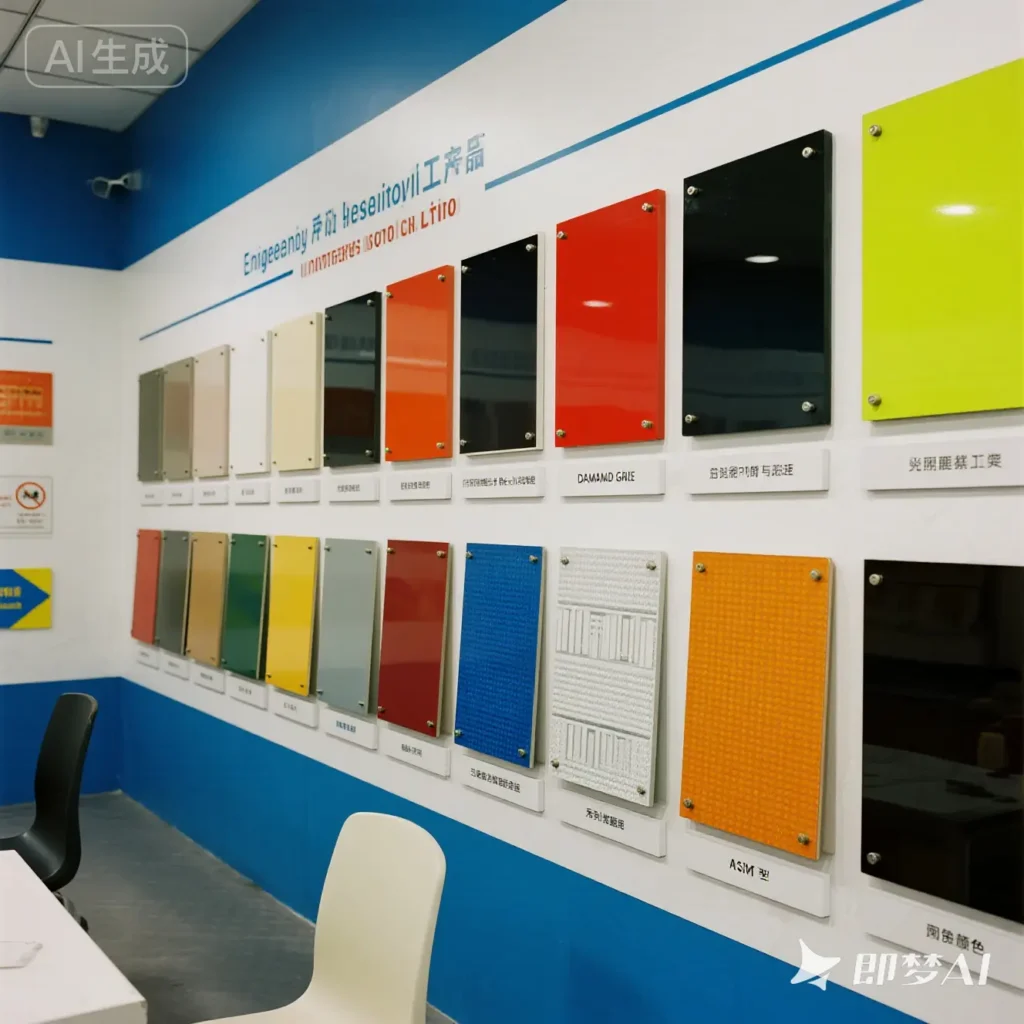
Here’s what’s typically available from established Chinese suppliers:
Grade ASTM D4956 Type Common China Factory Names Typical Applications
Engineer Grade Type I “EG,” “advertising grade” Parking signs, low-speed road signs, property markers
High Intensity Prismatic Type III / IV “HIP,” “super engineer grade” Highway regulatory signs, warning signs
Diamond Grade Type IX / XI “DG,” “full cube prismatic” Overhead guide signs, critical warning signs
Fluorescent Type VIII “Fluorescent prismatic” Construction zones, school zones
Vehicle Marking Varies “Conspicuity tape,” “ECE R104” Truck reflective striping, trailer markings
License Plate Grade Varies “LP grade,” “plate sheeting” Vehicle registration plates
One important thing to watch: Chinese suppliers sometimes use their own naming conventions that don’t map cleanly to ASTM types. “Super engineer grade” might mean Type III in one factory and something between Type I and Type III in another. Always ask for the specific ASTM D4956 type designation and supporting test data — not just the factory’s internal product name.
The manufacturing base is concentrated in a few key regions, particularly Zhejiang, Jiangsu, and Guangdong provinces. Some factories specialize in a single grade (often engineer grade at very high volume), while others offer a full product line from engineer grade through diamond grade.
China’s reflective sheeting manufacturing capability now spans the full ASTM D4956 range, but product naming inconsistency means buyers must always verify grade claims against actual test data.
How Does China-Made Reflective Sheeting Compare to 3M, Avery, and Orafol on Quality?
This is the question every international buyer eventually asks — and the honest answer is “it depends entirely on which Chinese supplier you’re comparing.”
Top-tier Chinese manufacturers produce reflective sheeting that meets or exceeds ASTM D4956 and EN 12899 minimum performance thresholds, with retroreflectivity values, color consistency, and outdoor durability that are competitive with multinational brands. Lower-tier factories may produce sheeting that looks similar in daylight but falls short on measured retroreflectivity, wide-angle performance, or accelerated weathering results.
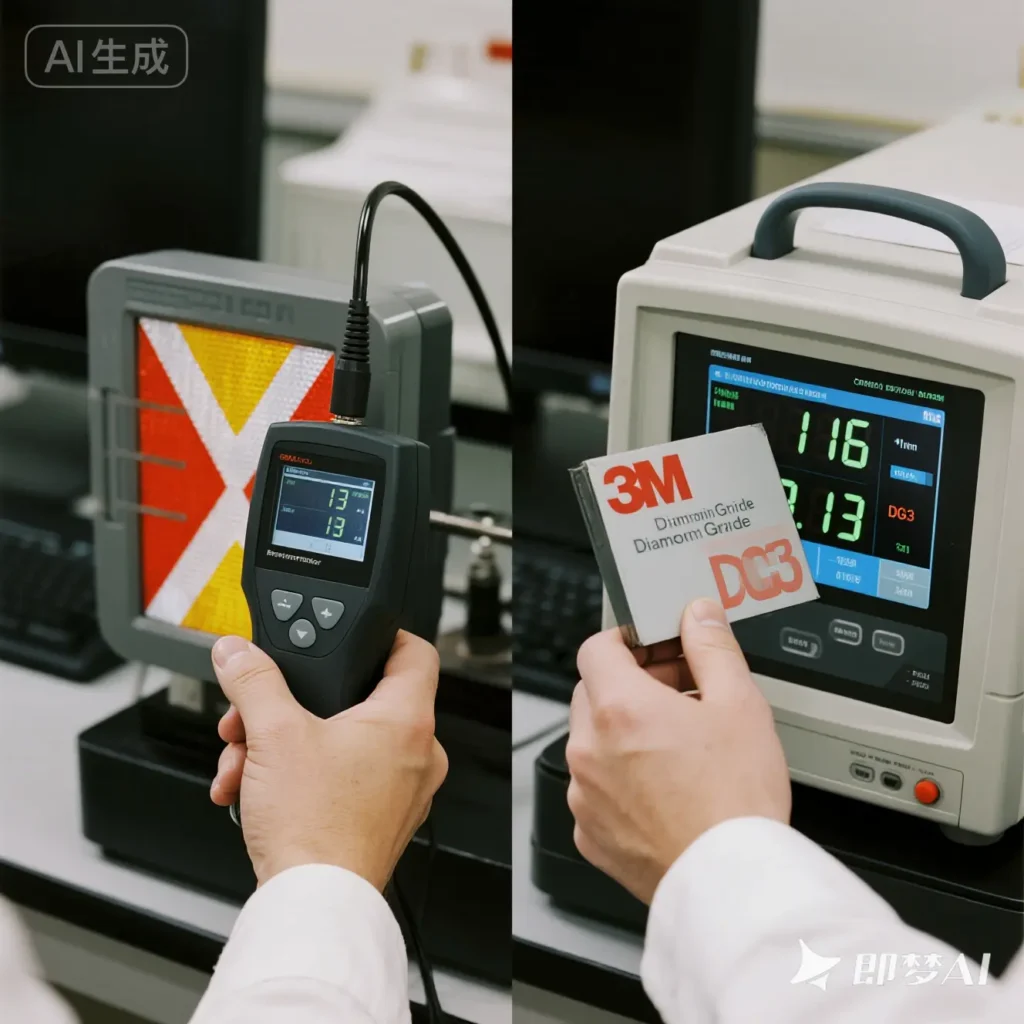
Here’s what actually separates the quality tiers in the Chinese market:
Retroreflective brightness. This is the most measurable difference. A reputable Chinese manufacturer will provide test reports showing retroreflectivity values (cd/lx/m²) at standard ASTM angles (0.2° observation / −4° entrance). If their Type IV product measures 250+ cd/lx/m² for white at these angles, it’s genuinely competitive. If they can’t or won’t provide measured values, that’s a signal.
Color accuracy and consistency. ASTM D4956 defines chromaticity requirements for each sheeting color. Batch-to-batch color variation is a known issue with some lower-cost Chinese suppliers, particularly for fluorescent colors and retroreflective yellow. Requesting a color measurement report (CIE chromaticity coordinates) helps verify consistency.
Outdoor durability. This is where the gap between top-tier and low-tier Chinese suppliers is most significant. Accelerated weathering test data (per ASTM D4956 or equivalent) should back up any claimed outdoor lifespan. A factory that claims 10-year durability for their HIP sheeting but cannot provide weathering test results is making an unverifiable claim.
Adhesive quality. Reflective sheeting is typically supplied with pressure-sensitive adhesive for application to sign blanks. Adhesive performance — initial tack, long-term bond strength, and resistance to edge lifting — varies significantly across Chinese manufacturers. Request adhesive peel test data and, ideally, apply samples to actual sign blanks for a real-world check.
The bottom line: the best Chinese suppliers deliver genuine quality at lower cost. The worst deliver something that looks right but doesn’t perform. The difference is entirely in how rigorously you verify.
Price alone does not indicate quality tier. Some mid-priced Chinese manufacturers outperform higher-priced competitors on measured retroreflectivity, while some premium-priced options underperform. Independent testing is the only reliable differentiator.
What Should Buyers Ask Chinese Suppliers Before Placing an Order?
Most sourcing failures with Chinese reflective sheeting don’t happen because the product is bad — they happen because the buyer didn’t ask the right questions early enough. Before placing any order, buyers should verify five things: the specific ASTM or EN type designation, third-party test reports with measured values, outdoor weathering data, production capacity and lead time commitments, and the supplier’s actual export history.

1. “What ASTM D4956 type or EN 12899 RA class does this product meet?”
If the answer is vague — “it’s high intensity” or “it’s similar to 3M” — press for specifics. A factory that genuinely produces Type IV sheeting will have no hesitation stating that clearly and providing the data sheet with the type number on it.
2. “Can you provide third-party retroreflectivity test reports?”
Not the factory’s own internal QC report — an independent lab report from a recognized testing institution. In China, credible testing labs include CNAS-accredited facilities. The report should show measured retroreflectivity at standard ASTM observation and entrance angles.
3. “What is the tested outdoor durability, and can you provide accelerated weathering data?”
A claimed 10-year lifespan is meaningless without supporting data. Ask for accelerated weathering test results per ASTM G154 or equivalent. This is especially critical if the sheeting will be used in tropical, desert, or high-UV environments.
4. “What is your monthly production capacity for this grade, and what is the realistic lead time?”
Capacity mismatches are common. A factory may quote 30-day lead time during negotiation but deliver in 60–90 days because they’re running multiple customer orders on limited production lines. Ask for actual monthly output figures for the specific grade you need.
5. “Which countries have you exported to, and can you provide references?”
A supplier with genuine export experience to DOT-compliant markets (US, Europe, Australia, Middle East) has already navigated the standards and documentation requirements that trip up first-time exporters. Ask for specific country references and, if possible, contact details for existing customers willing to speak.
6. “What certifications do you hold?”
Look for ISO 9001 (quality management), and product-level certifications relevant to the target market — such as CE marking for Europe, or DOT approval documentation for US highway applications. ECE R104 certification matters if the product is vehicle conspicuity tape.
[Sub-heading claims] The single most effective supplier qualification step is requesting samples and testing them independently with a retroreflectometer before placing any volume order. This one action prevents more procurement failures than all other verification steps combined.
What Are the Biggest Risks When Importing Reflective Sheeting From China — and How Do You Mitigate Them?
Sourcing reflective sheeting from China can deliver significant cost savings, but the risks are real and specific. Understanding them upfront lets you build mitigation into your procurement process rather than reacting after problems arrive. The most common risks are quality inconsistency between sample and bulk orders, standards non-compliance, adhesive failure in the field, and communication gaps around specifications and tolerances.
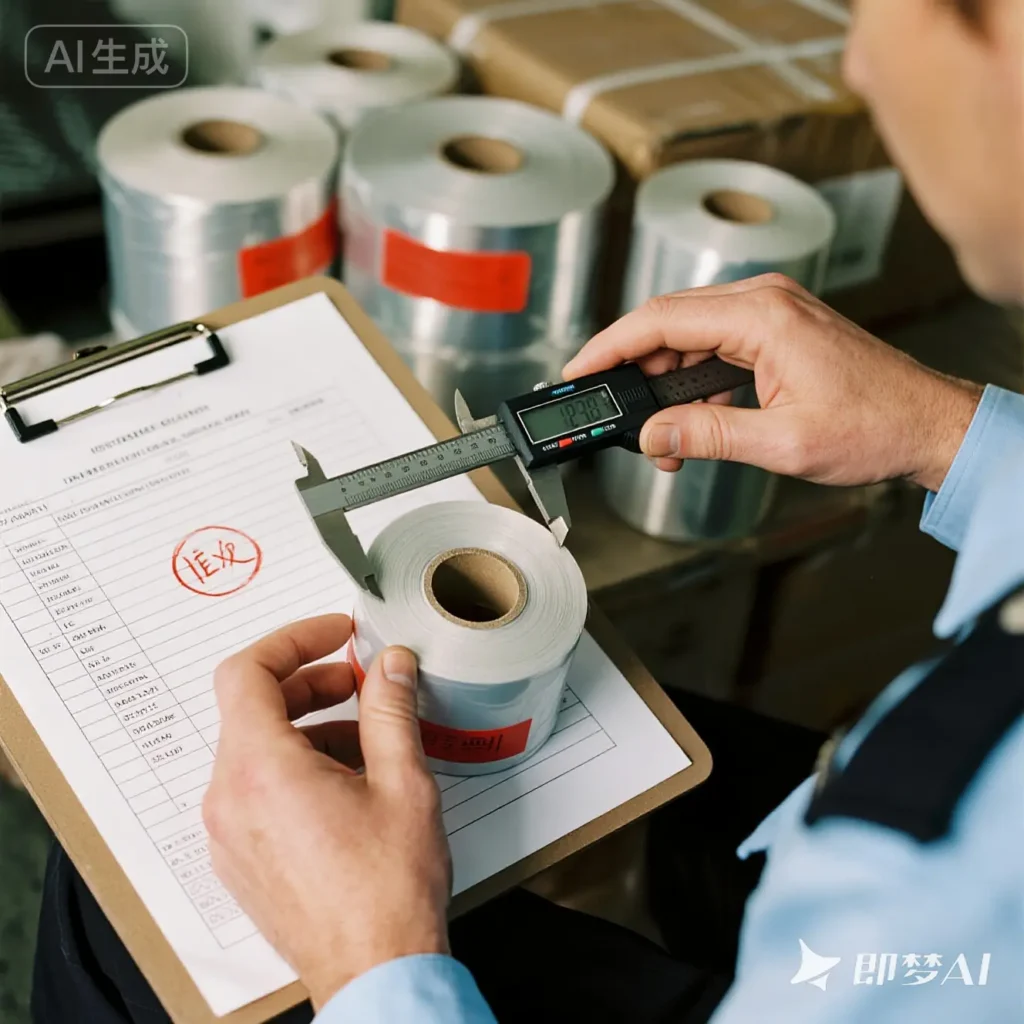
Risk 1: Sample-to-bulk quality drop. This is the most frequently reported problem. The factory sends excellent samples during the qualification phase, then ships bulk production with lower-grade materials or reduced quality control. Mitigation: include retroreflectivity specifications and tolerances in your purchase contract, and arrange pre-shipment inspection by a third-party quality auditor (SGS, Bureau Veritas, or equivalent) who measures actual retroreflectivity on randomly pulled production rolls.
Risk 2: Standards non-compliance. The sheeting may be sold as “ASTM D4956 Type IV” but actually fall below the minimum retroreflectivity values required by the standard. This creates liability if signs made with the material fail DOT inspections or if vehicle markings don’t meet ECE R104. Mitigation: always verify against the actual standard requirements, not just the supplier’s claim. Request the specific ASTM or EN minimum values in your RFQ and require the supplier to guarantee compliance in writing.
Risk 3: Adhesive problems. Even if the reflective layer performs well, poor adhesive can cause edge lifting, bubbling, or delamination within months of sign installation. This is more common with lower-cost Chinese sheeting and is especially problematic in hot/humid climates. Mitigation: request adhesive specification data (peel strength, shear strength, temperature range), and perform your own application testing on actual sign blanks under realistic conditions before committing to volume.
Risk 4: Communication and specification gaps. Chinese factories may interpret product specifications differently than what the buyer intended, especially when ASTM and EN terminology is translated loosely. Mitigation: provide a written specification sheet in English with exact ASTM or EN type numbers, minimum retroreflectivity values at specified angles, required colors with CIE chromaticity coordinates, and adhesive performance requirements. Don’t rely on verbal agreements or vague product descriptions.
Risk 5: Logistics and MOQ pressure.
Minimum order quantities for reflective sheeting from China are often higher than buyers expect — sometimes 500–2,000 rolls depending on the grade and color. Combined with 30–60 day production lead times and 30–45 day ocean freight, the total procurement cycle can be 3–4 months. Mitigation: plan inventory needs in advance, and negotiate staged deliveries if possible.
[Sub-heading claims] Pre-shipment third-party inspection with retroreflectivity measurement is the single most cost-effective risk mitigation tool for international reflective sheeting buyers. The cost is minor relative to the value of a rejected shipment.
Conclusion
China’s reflective sheeting industry has matured significantly. The best Chinese manufacturers now produce sheeting across the full ASTM D4956 range — from engineer grade through diamond grade — at price points that make them competitive with any global supplier. But “competitive” doesn’t mean “interchangeable.” The quality spread across Chinese factories is wide, and the difference between a top-tier supplier and a bottom-tier one isn’t visible to the naked eye.
The practical approach is straightforward: specify exactly what you need using ASTM or EN type numbers, request and verify third-party test data, test samples independently, build quality specifications into your purchase contract, and arrange pre-shipment inspection on bulk orders.
If you do these things consistently, sourcing reflective sheeting from China can deliver real value — lower cost, reliable supply, and product quality that meets international standards. If you skip them, you’re gambling on every shipment.
ASTM D4956 Standard Specification: https://www.astm.org/d4956-22.html FHWA Retroreflectivity Requirements: https://mutcd.fhwa.dot.gov/ SGS Pre-Shipment Inspection Services: https://www.sgs.com/ CNAS China National Accreditation Service: https://www.cnas.org.cn/
FAQs
Is Chinese-made reflective sheeting good enough for DOT or EN-compliant projects?
Yes — if you source from a qualified manufacturer. The best Chinese factories produce sheeting that meets or exceeds ASTM D4956 and EN 12899 requirements across all major grades. The key is verifying compliance through independent test data rather than relying on the supplier’s claim alone. Many Chinese-made reflective products are already in use on public roads across Europe, the Middle East, Africa, Southeast Asia, and Latin America.
What is the typical price difference between Chinese reflective sheeting and 3M or Avery Dennison?
Chinese reflective sheeting is typically 30% to 60% less expensive than equivalent products from 3M, Avery Dennison, or Orafol, depending on the grade and order volume. Engineer grade and high intensity prismatic show the largest price gaps. Diamond grade pricing from Chinese suppliers is closer to multinational pricing but still offers meaningful savings at volume. However, the lowest-priced Chinese options often carry higher quality risk, so total cost should include quality verification and inspection expenses.
What certifications should I look for when choosing a Chinese reflective sheeting supplier?
At minimum, look for ISO 9001 quality management certification. For product-level compliance, ask for ASTM D4956 test reports from a CNAS-accredited or internationally recognized lab. If the product is vehicle conspicuity tape, ECE R104 certification is essential for European and many international markets. CE marking may be required depending on the destination country. The most reliable suppliers will proactively provide these documents rather than needing to be asked multiple times.
How can I prevent quality drops between sample and bulk production?
Build retroreflectivity specifications and tolerances directly into your purchase contract. Arrange pre-shipment inspection by an independent third-party auditor (SGS, Bureau Veritas, TÜV, or equivalent) who measures retroreflectivity on randomly selected production rolls before shipment. This is the most effective single step to maintain consistency between qualification samples and delivered product.
What is the typical lead time for reflective sheeting orders from China?
Production lead time is typically 30–45 days for standard grades and colors, and can extend to 60 days for custom colors, specialty grades, or very large orders. Ocean freight to most destinations adds another 30–45 days. Total procurement cycle from order confirmation to warehouse receipt is usually 2.5 to 4 months. Plan accordingly and maintain safety stock for critical items to avoid supply gaps.