
What Are the Different Types of Reflective Sheeting and How Do You Choose the Right One?
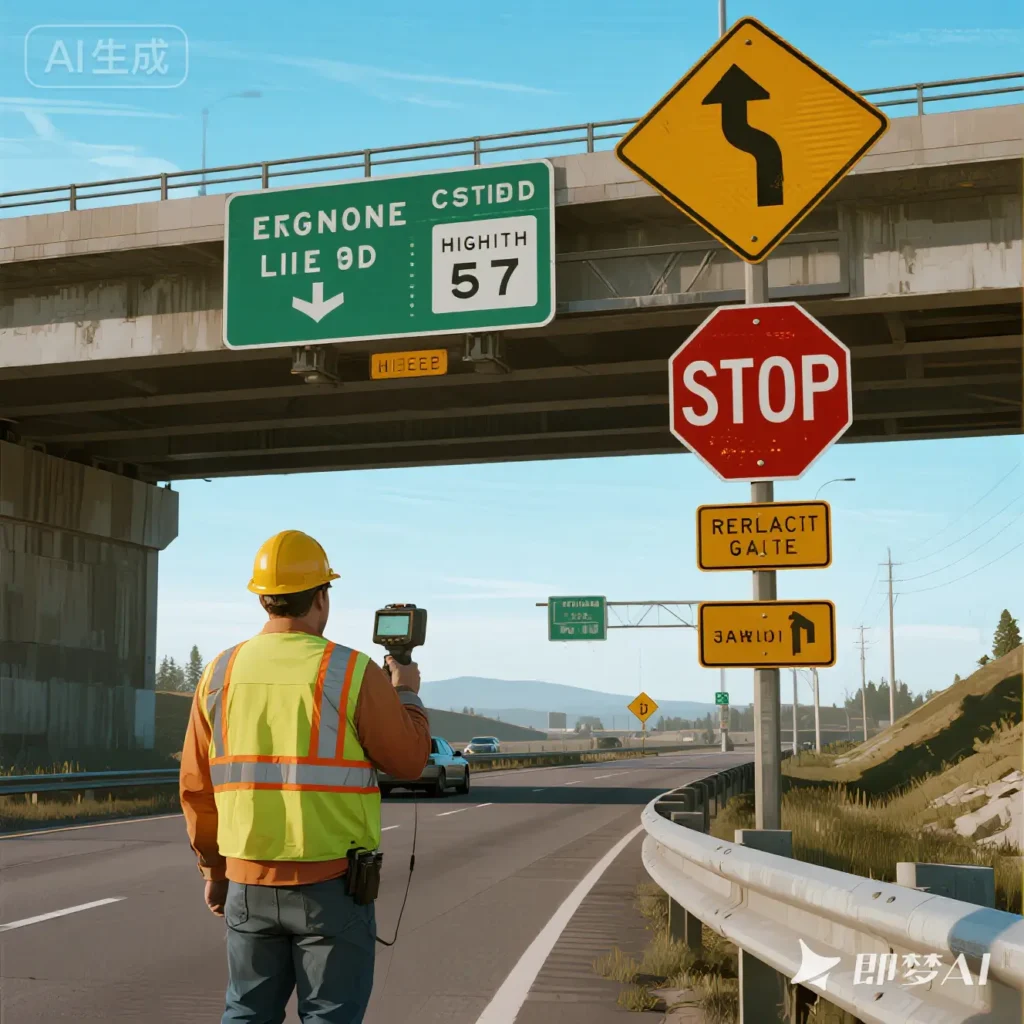
If you’ve ever driven at night and noticed how some signs glow brightly while others barely show up, the difference is almost always the type of reflective sheeting on the sign face. Choosing the right type isn’t just a technical preference — it determines whether your signs pass inspection, stay visible long enough, and actually keep people safe.
The main types of reflective sheeting, classified under ASTM D4956, include Engineer Grade (Type I) using glass bead technology, High Intensity Prismatic (Type III/IV) using enclosed lens or microprismatic elements, and Diamond Grade (Type IX/XI) using full cube microprismatic technology. Each type offers progressively higher retroreflective brightness, wider-angle performance, and longer outdoor durability — ranging from 7-year lifespan entry-level sheeting to 12+ year premium grades used on critical highway signs.
For sign manufacturers, importers, and transportation agencies, understanding these types is essential to avoid failed inspections, wasted materials, and liability risks. This guide walks through how each type works, what the standards actually require, and how to evaluate suppliers before committing to a purchase.
This article is written from direct industry experience working with retroreflective materials across traffic, vehicle, and industrial safety applications.
What Is the Real Difference Between Engineer Grade, High Intensity, and Diamond Grade Sheeting?
These three categories represent the most commonly referenced tiers of reflective sheeting, and most buying decisions start here.
Engineer Grade (Type I) uses glass bead technology and is the least bright.
High Intensity Prismatic (Type III/IV) uses microprismatic or enclosed lens elements and is roughly 2–3x brighter.
Diamond Grade (Type IX/XI) uses full cube microprismatic technology and can be 6–10x brighter than engineer grade, with superior wide-angle performance.
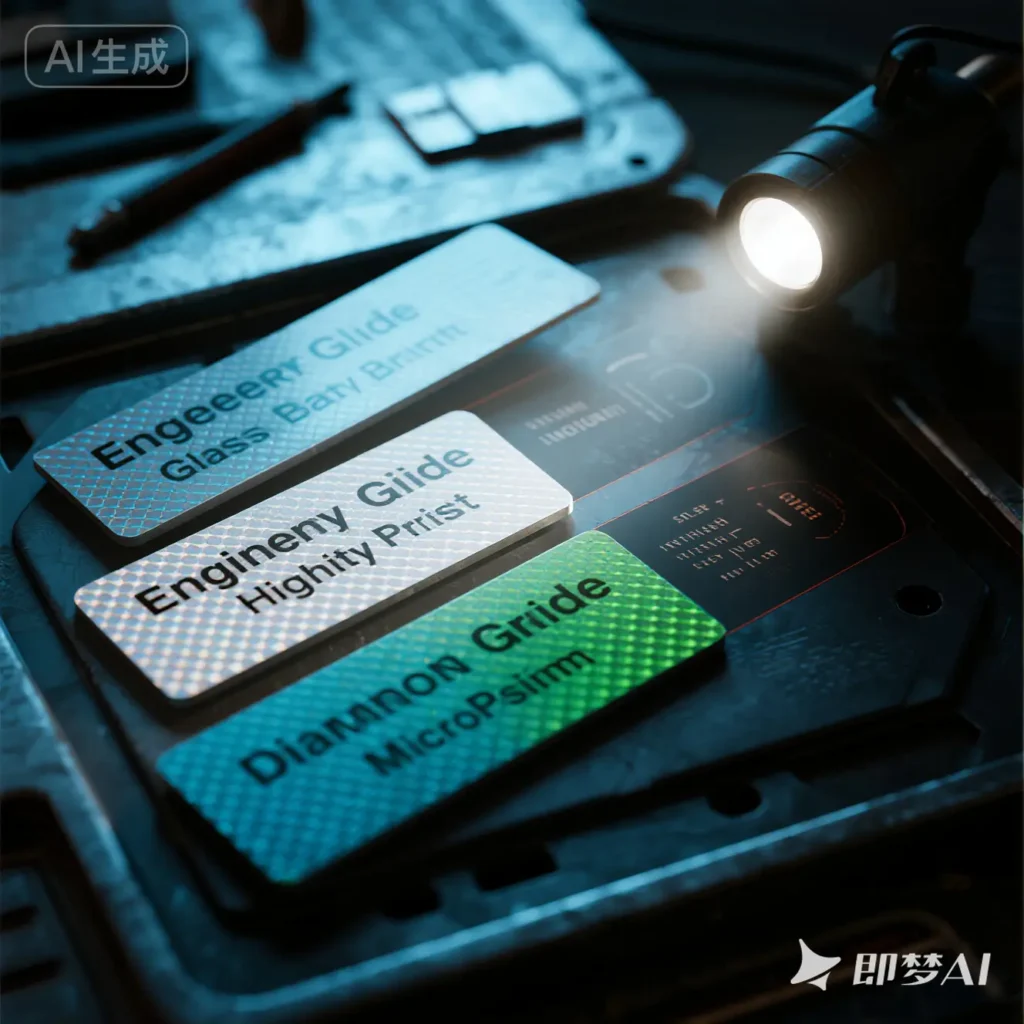
Engineer Grade is the oldest and cheapest option. The glass beads embedded in the surface reflect light adequately at short range, but brightness drops significantly at longer distances and wider angles. It’s acceptable for residential street signs, parking lots, and property markers where traffic speeds are low and ambient lighting is decent. Typical outdoor lifespan is around 7 years.
High Intensity Prismatic (HIP) is the standard workhorse for highway regulatory and warning signs. Type III uses encapsulated glass bead (enclosed lens) construction, while Type IV uses true microprismatic elements. Both deliver substantially better nighttime visibility than engineer grade. Most DOTs specify HIP as the minimum acceptable grade for speed limit signs, stop signs, and curve warnings on public roads. Durability ratings are typically 10–12 years.
Diamond Grade is the premium tier. Type IX uses truncated cube corner prisms, while Type XI uses full cube corner technology — meaning nearly all incident light is returned to the driver rather than being lost to internal reflection inefficiencies. This makes a dramatic difference on large overhead guide signs, high-mounted panels, and any sign that needs to be readable from 200+ meters or at steep truck-cab viewing angles. Durability ratings reach 12 years or more.
The practical bottom line: the further your sign is from the driver, the larger it is, or the faster the traffic — the higher the sheeting grade needs to be.
The performance gap between Type I and Type XI is not incremental — measured retroreflectivity (cd/lx/m²) can differ by 5x to 10x at standard test angles.
How Does ASTM D4956 Classify Reflective Sheeting — and Why Do the Type Numbers Matter?
Understanding the ASTM type system prevents the single most common procurement mistake in this industry: ordering sheeting that doesn’t meet the project specification.
ASTM D4956 classifies retroreflective sheeting into types (Type I through Type XI) based on minimum retroreflective performance, optical construction, and intended application. Each type number defines a specific brightness floor that the sheeting must meet at standardized observation and entrance angles.
Here’s the practical breakdown:
| ASTM D4956 Type | Technology | Typical Application | Relative Brightness |
|---|---|---|---|
| Type I | Glass bead (enclosed lens) | Low-speed roads, parking signs | Baseline |
| Type III | Enclosed lens (encapsulated) | Regulatory and warning signs | ~2.5x Type I |
| Type IV | Microprismatic | Highway regulatory signs | ~3x Type I |
| Type VIII | Microprismatic (fluorescent) | Construction zone signs | ~3x Type I + fluorescent |
| Type IX | Microprismatic (diamond grade) | Overhead guide signs | ~6x Type I |
| Type XI | Full cube microprismatic | Large signs, wide-angle critical | ~10x Type I |
Why does this matter practically? Because most government DOT bid documents and sign specifications call out ASTM types by number. If your project requires Type IV and you supply Type I, the signs will fail inspection — no matter how they look in daylight. The only reliable way to verify is to check the manufacturer’s product data sheet for the specific ASTM D4956 type designation, not just marketing terms like “high intensity” or “premium grade.”
Buyers outside the US should also know that European specifications follow EN 12899, which uses a different classification: RA1 (roughly Type I), RA2 (roughly Type III/IV), and RA3 (roughly Type IX/XI). Always confirm which standard governs your project before placing an order.
Mismatched ASTM types are one of the most common causes of sign rejection on DOT and municipal projects. Verify the required type number before procurement, not after delivery.
What Is the Difference Between RA1, RA2, and RA3 — and How Do They Map to ASTM Types?
If you work on European or international sign projects, the RA classification system is unavoidable — and confusing it with ASTM types is an expensive mistake.
RA1 corresponds roughly to ASTM Type I (engineer grade), RA2 corresponds to Type III/IV (high intensity prismatic), and RA3 corresponds to Type IX/XI (diamond grade). The RA classes are defined under EN 12899-1 and set minimum retroreflective performance levels for fixed road traffic signs in Europe.
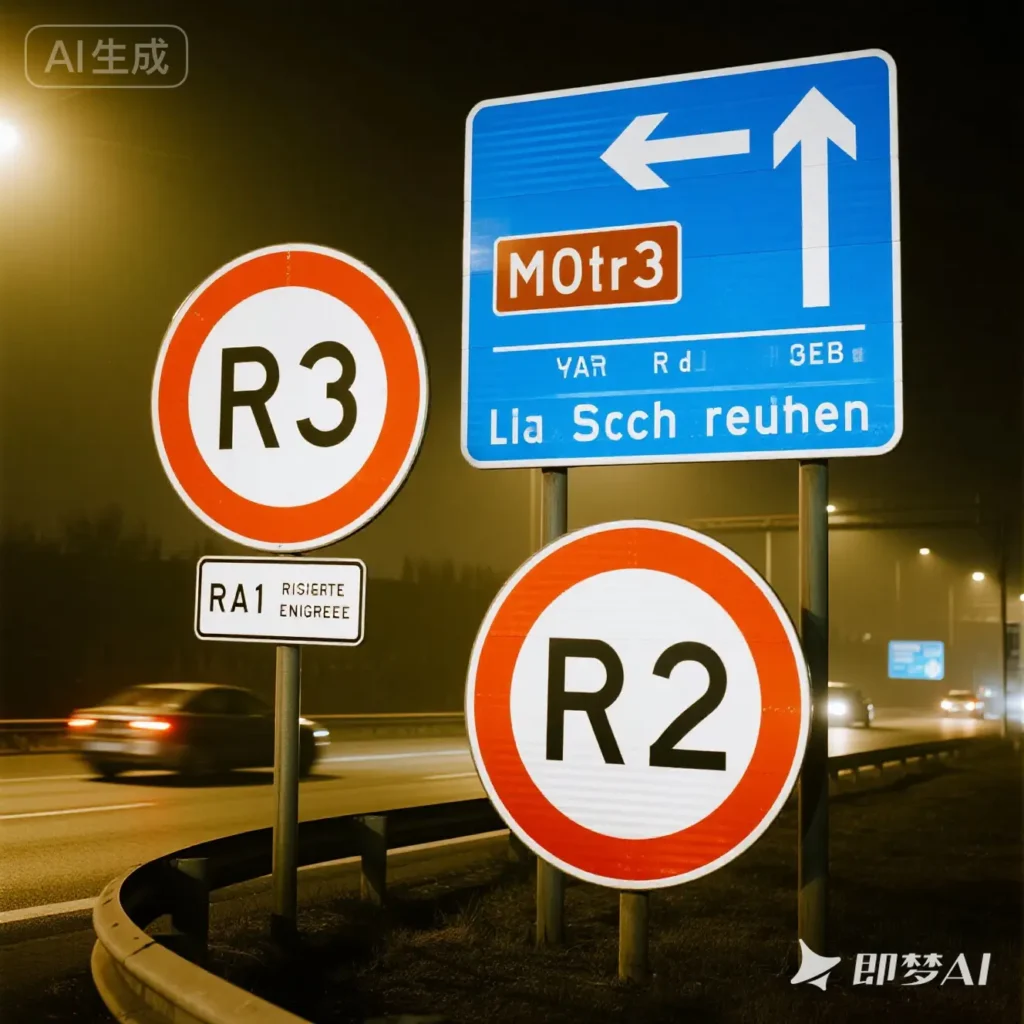
RA1 is the baseline. It’s acceptable for supplementary signs, low-traffic rural roads, and situations where nighttime visibility requirements are minimal. The glass bead technology behind RA1 limits its useful viewing distance and wide-angle performance.
RA2 is the most widely specified class across European highway networks. It covers standard regulatory signs (speed limits, prohibitions), warning signs, and most guide signs on national roads. RA2 sheeting offers a significant brightness improvement over RA1 and is considered the minimum professional standard for public road signage in most EU member states.
RA3 is the premium class, specified for motorway overhead signs, large direction panels, signs in complex interchange areas, and any situation where drivers need to read sign content from long distances or at wide approach angles — including truck drivers viewing signs at steep vertical angles. RA3 sheeting typically uses full cube or advanced microprismatic technology identical to ASTM Type IX/XI.
The practical decision framework:
- RA1 / Type I — residential, parking, low-speed, supplementary signs
- RA2 / Type III–IV — standard highway regulatory and warning signs
- RA3 / Type IX–XI — overhead signs, motorway guide signs, critical warning, large-format panels
For importers and distributors who serve both US and European markets: always confirm which standard your customer’s project falls under. Supplying RA1 when RA2 is specified will pass in daylight but fail at night — and that failure creates both safety risk and contract liability.
The jump from RA2 to RA3 is not just brightness — RA3 sheeting offers substantially better wide-angle retroreflectivity, which is critical for large overhead signs viewed by truck drivers at steep angles.
How Should Buyers Evaluate Reflective Sheeting Quality and Verify Supplier Claims?
Knowing the types and standards is only half the problem. The other half is making sure the sheeting you receive actually performs at the level claimed on the data sheet.
Buyers should verify four things before committing: the specific ASTM D4956 or EN 12899 type designation on the data sheet, third-party retroreflectivity test reports at standard angles, accelerated weathering durability data, and sample-level testing with a retroreflectometer.

Here’s what experienced buyers check — and what less experienced buyers often miss:
- Specific type designation, not marketing language. A data sheet that says “high intensity reflective film” without specifying ASTM D4956 Type III or Type IV is a warning sign. Reputable manufacturers always state the exact type or RA class their product meets.
- Third-party retroreflectivity test data. Ask for measured values at the standard observation angle (0.2°) and entrance angle (−4°). These numbers should match or exceed the minimums defined in ASTM D4956 for the claimed type. A product that claims Type IV but shows Type I-level test values is mislabeled.
- Outdoor durability evidence. The claimed lifespan (7, 10, 12 years) should be supported by accelerated weathering test results per ASTM D4956 or equivalent. This is especially important in tropical, desert, or coastal environments where UV and salt exposure accelerate degradation far beyond temperate-climate assumptions.
- Sample testing. Before committing to volume, request sample panels and test them yourself with a handheld retroreflectometer. A single measurement at 0.2°/−4° will immediately reveal whether the material performs at the claimed level. This step alone prevents more procurement problems than any amount of paperwork review.
- Warranty documentation. Major manufacturers like 3M, Avery Dennison, and Orafol publish specific warranty periods tied to specific product lines. If a supplier offers diamond-grade performance claims at engineer-grade pricing and cannot provide equivalent warranty terms, independent testing is essential.
The cost difference between genuine diamond grade and engineer grade sheeting can be 4x to 8x per square meter. If premium performance is offered at entry-level pricing, verify independently before committing.
Conclusion
Reflective sheeting types exist because different road conditions, sign sizes, and viewing distances demand different levels of retroreflective performance. The ASTM D4956 type system (Type I through Type XI) and the European RA classification (RA1, RA2, RA3) give you a clear, standardized framework for matching sheeting to application.
The practical rule is simple: always match the sheeting type to the specification requirement, verify the exact ASTM or EN designation on the supplier’s data sheet, and confirm actual performance with test data or your own retroreflectometer before placing volume orders.
Whether you’re manufacturing signs for a local municipality, importing sheeting for regional distribution, or specifying materials for a national highway project — the type you choose directly determines sign visibility, inspection compliance, and long-term value for every sign you produce.
- ASTM D4956 Standard Specification
- FHWA Retroreflectivity Requirements
- EN 12899-1 European Standard for Fixed Traffic Signs
FAQs
What is reflective sheeting and how does retroreflection work?
Reflective sheeting is a material bonded to sign faces that redirects vehicle headlight beams back toward the driver’s eyes using glass beads, microprismatic elements, or full cube corner prisms. This retroreflective effect makes signs readable at night without requiring external illumination. The optical technology inside the sheeting determines how bright it appears and from what distances and angles it remains visible.
What does ASTM D4956 Type IV mean compared to Type I?
Type I is the basic engineer grade using glass bead technology — suitable for low-speed, well-lit areas with a roughly 7-year outdoor life. Type IV is a microprismatic grade with approximately 3x the retroreflective brightness of Type I, commonly specified for highway regulatory and warning signs. The key practical difference is that Type IV signs remain readable from significantly greater distances and at wider approach angles.
What is Type XI sheeting and when is it needed?
Type XI is the highest-performing grade in the ASTM D4956 standard, using full cube microprismatic technology that returns nearly all incident light to the driver. It is typically specified for large overhead highway guide signs, high-mounted panels, and critical warning signs — especially in situations where truck drivers need to read signs at steep vertical angles. Type XI’s wide-angle performance advantage is its defining benefit over lower prismatic grades.
How long does reflective sheeting last outdoors?
Outdoor lifespan depends on the sheeting type, manufacturing quality, and installation environment. Engineer grade (Type I) typically lasts around 7 years. High intensity prismatic (Type III/IV) is usually rated for 10–12 years. Diamond grade (Type IX/XI) can last 12+ years under normal conditions. Extreme UV, tropical humidity, and coastal salt environments accelerate degradation — always check the manufacturer’s specific weathering test data and warranty terms for the product you’re purchasing.
How can I tell if a reflective sheeting supplier is providing genuine quality?
Check the product data sheet for a specific ASTM D4956 type or EN 12899 RA class designation — not just generic marketing terms. Request third-party retroreflectivity test reports with measured values at standard angles (0.2° observation / −4° entrance). Ask for accelerated weathering durability data. And before placing a volume order, test samples yourself with a handheld retroreflectometer. If a supplier avoids specific standard references or offers premium performance at unusually low pricing, independent verification is essential.