
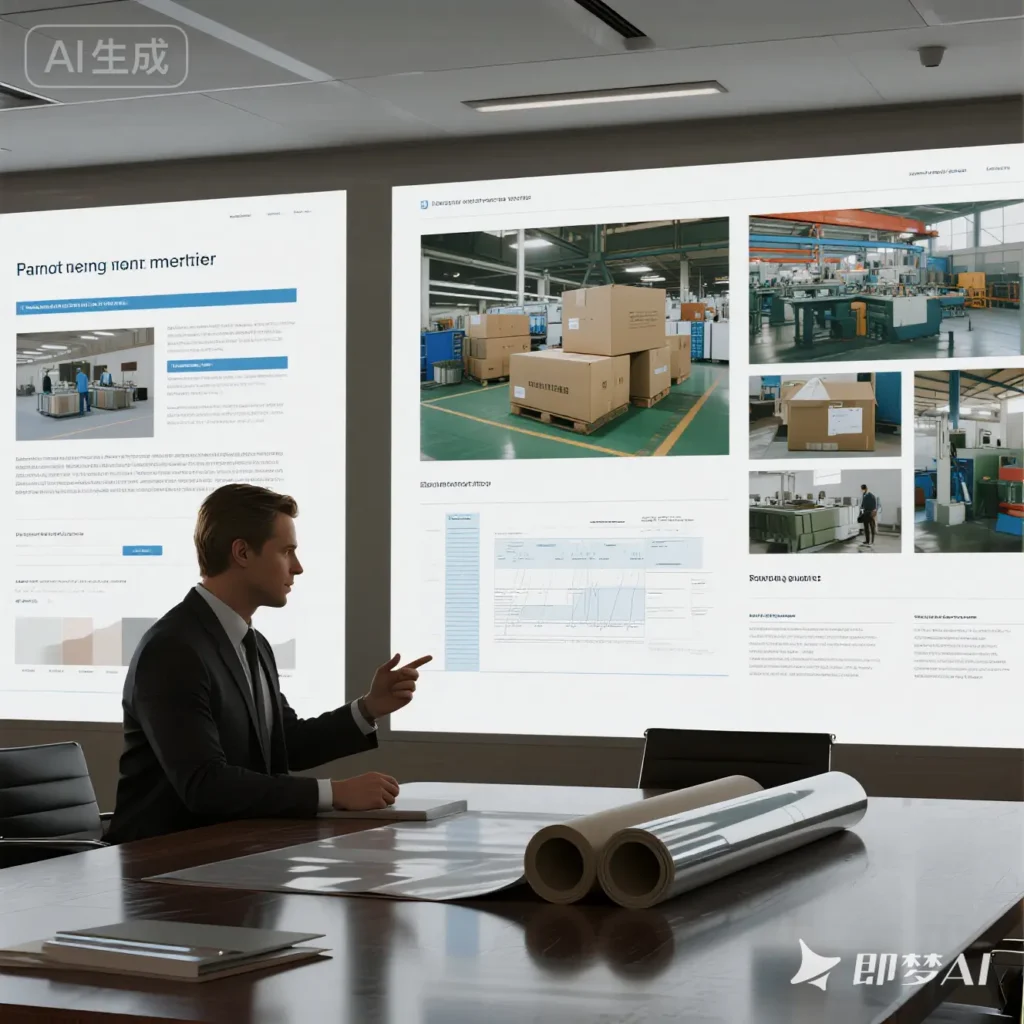
When buyers search for “reflective sheeting manufacturers,” they are usually not looking for a dictionary definition. They are trying to identify which suppliers are actually capable of producing stable reflective materials for road signs, vehicle markings, conspicuity tape, license plates, industrial warning products, or export markets with technical requirements. In other words, the real question is not who sells reflective sheeting, but who can deliver the right product consistently and with acceptable risk.
In practical B2B terms, a good reflective sheeting manufacturer should be able to provide stable product quality, clear grade positioning, relevant technical documentation, reliable production capacity, and support for the buyer’s specific application—not just a low quotation.
This is why buyers should evaluate reflective sheeting manufacturers using a structured procurement lens. A supplier may look strong online, but unless the buyer checks product specialization, standards familiarity, batch stability, and application support, there is still a high risk of buying the wrong material or choosing the wrong supply partner.
The best reflective sheeting manufacturer is not necessarily the largest, cheapest, or most visible online. It is the one that can consistently supply the right reflective material for the intended application, with proven quality control, technical clarity, and stable delivery performance.
What Types of Reflective Sheeting Manufacturers Exist in the Market?
One of the first mistakes buyers make is treating all “manufacturers” as if they were the same kind of company.
In reality, the reflective sheeting market includes brand owners, direct factories, OEM/ODM producers, vertically integrated manufacturers, converters, and trading companies—each with a different level of control over quality, formulation, and lead time.
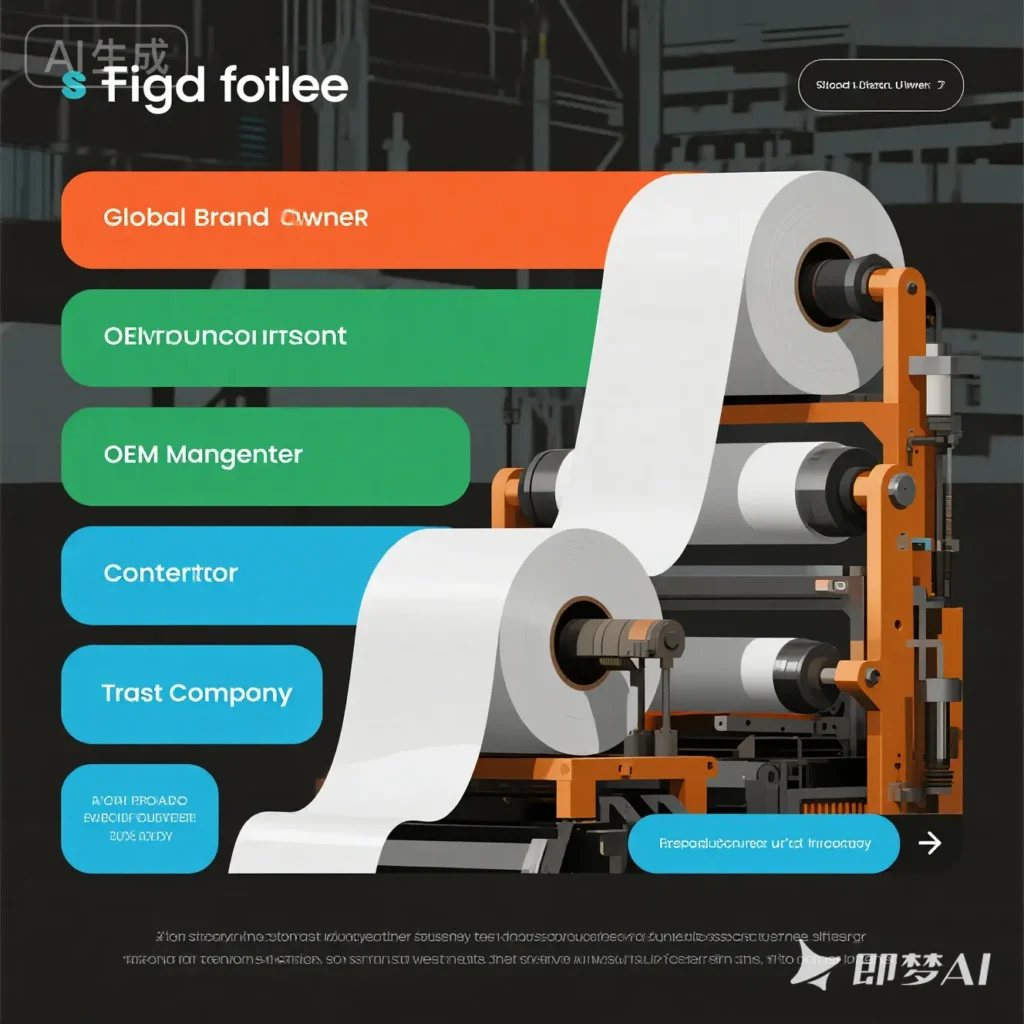
Some companies are true material manufacturers. They control coating, prism or bead structure, adhesive system, and core process technology. These suppliers usually have stronger technical depth, but they may also have stricter MOQ, less flexibility, or higher pricing.
Some are OEM or ODM manufacturers. They may produce reflective sheeting under private labels or for other brands. These suppliers can be attractive when buyers need customization, private branding, or price flexibility, but technical consistency needs closer review.
Some are mainly converters or distributors. They may slit, cut, package, or resell reflective materials from other producers. That does not automatically make them bad suppliers, but buyers should not confuse them with original manufacturers. If a project depends on long-term technical consistency, it is important to know whether the supplier controls raw production or only downstream handling.
This distinction matters because risk sits in different places. A distributor may be responsive and convenient, but may not be able to solve deep technical issues. A factory may offer better technical control, but may not provide the same communication quality or commercial flexibility.
- Not all reflective sheeting “manufacturers” have the same production role.
- Buyers should distinguish factories, OEM suppliers, distributors, and brand owners early.
- Supply-chain position affects quality control, flexibility, and technical support.
What Should Buyers Check First When Evaluating a Reflective Sheeting Manufacturer?
If I had to simplify supplier evaluation, I would start with product fit before company size.
The first real question is: Does this manufacturer actually specialize in the reflective product category you need? A strong traffic sign sheeting supplier may not be the right supplier for license plate sheeting, ECE conspicuity tape, or mining warning applications.

The first checkpoint is application specialization. Buyers should ask whether the supplier regularly produces materials for:
- traffic signs,
- vehicle conspicuity,
- license plates,
- guardrail marking,
- industrial warning labels,
- printable reflective film,
- or temporary construction use.
The second checkpoint is grade clarity. A reliable manufacturer should be able to explain the difference between engineering grade, high intensity, diamond grade, prismatic, glass bead, adhesive-backed, printable, and application-specific products without vague or contradictory language.
The third checkpoint is documentation. Buyers should request:
- technical data sheets,
- product bulletins,
- test reports,
- application recommendations,
- storage conditions,
- and when relevant, compliance references related to ASTM, EN, ISO, ECE, or country-specific requirements.
The fourth checkpoint is sample logic. A trustworthy manufacturer should not only send samples, but also explain what the sample represents:
- Is it production stock?
- Is it export grade?
- Is it the same formula as mass production?
- Is the adhesive system the same as bulk supply?
These questions may sound basic, but they are often where weak suppliers become exposed.
- Product specialization matters more than generic “manufacturer” claims.
- Good suppliers explain grades and applications clearly.
- Samples are useful only if buyers know what the sample actually represents.
How Can Buyers Judge Quality Stability and Manufacturing Reliability?
In reflective sheeting procurement, quality problems often do not appear in the first sample—they appear in the second or third shipment.
That is why buyers should evaluate not only product performance, but also batch consistency, process control, and the manufacturer’s ability to repeat the same quality over time.

A reliable manufacturer should be able to show signs of process discipline. That includes stable thickness control, consistent color appearance, predictable adhesive behavior, and repeatable retroreflective performance.
In real sourcing, quality stability is more important than one impressive sample. Buyers should look for evidence such as:
- internal QC procedures,
- traceable batch numbers,
- repeat order performance,
- complaint handling process,
- and willingness to explain production variation limits.
It is also useful to ask how the manufacturer handles formulation consistency. Reflective sheeting performance depends on several technical layers: optical system, top film, adhesive, liner, coating quality, and sometimes printability or embossability. If the supplier cannot explain how consistency is maintained, buyers should assume that variation risk is higher.
Another practical check is lead-time realism. Some suppliers promise extremely fast delivery for everything. That can sound good, but experienced buyers know unrealistic delivery claims often hide weak planning, unstable stock structure, or quality shortcuts.
A dependable reflective sheeting manufacturer is usually not the one making the boldest promises. It is the one whose product, lead time, and documentation stay stable when repeat orders begin.
- Batch consistency is often more important than first-sample performance.
- Quality control discipline is a major signal of manufacturing reliability.
- Realistic lead time is often a better sign than exaggerated delivery promises.
How Should Buyers Compare Chinese Suppliers, Global Brands, and Smaller Manufacturers?
This is one of the most practical sourcing questions in the reflective sheeting industry.
There is no single “best” supplier category. The right choice depends on whether the buyer prioritizes brand assurance, cost control, customization, technical support, compliance, or long-term supply flexibility.
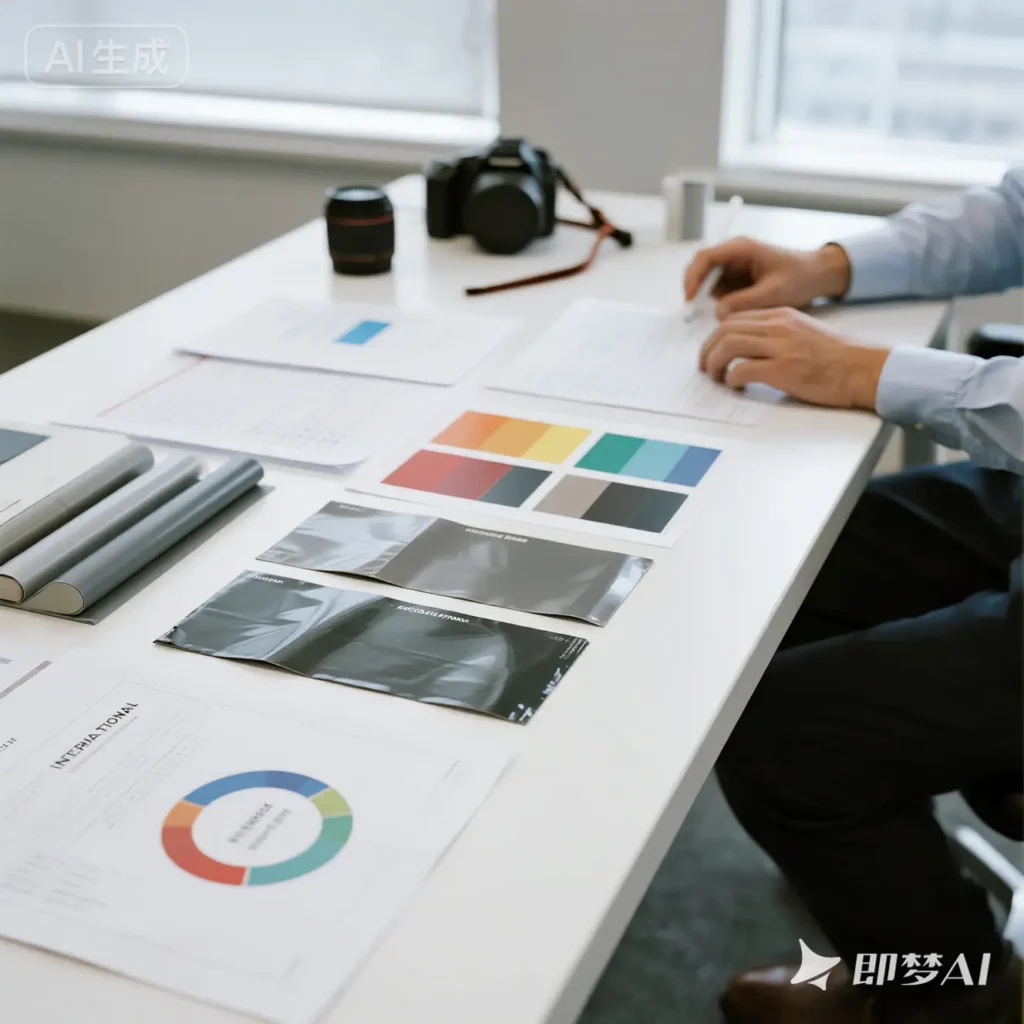
Global brands often offer stronger market recognition, mature product systems, and more established documentation. For buyers serving regulated traffic markets, that can reduce approval risk. However, global brands may also come with higher pricing, lower customization flexibility, and stricter commercial conditions.
Chinese manufacturers can be highly competitive in cost, OEM flexibility, packaging customization, and speed of commercial response. Some have strong technical capability and large-scale production, while others are much weaker than their websites suggest. That is why buyers should never evaluate Chinese suppliers as one category. The real difference is not “China versus non-China,” but serious factory versus weak supplier.
Smaller specialty manufacturers can be attractive when the application is niche or when buyers want closer cooperation. But these suppliers should be checked carefully for scale stability, export experience, and documentation maturity.
A smart buyer usually compares suppliers across four dimensions:
- technical fit,
- quality stability,
- commercial terms,
- long-term cooperation potential.
That framework is much more useful than comparing only brand prestige or only price.
- Global brands, Chinese factories, and niche manufacturers each have strengths and trade-offs.
- Buyers should compare technical fit and stability before comparing image or reputation.
- The real question is supplier capability, not country stereotype alone.
Conclusion
Searching for reflective sheeting manufacturers is really a supplier risk-evaluation exercise. The right manufacturer should be judged by application fit, grade clarity, documentation, sample integrity, process stability, and repeat-order reliability—not just website appearance or first quotation.
For buyers in traffic safety, vehicle marking, industrial warning, or license plate sectors, the best sourcing results usually come from a structured evaluation process: define the exact application first, verify grade and standards relevance, test samples properly, compare supplier communication, and only then compare price in a meaningful way.
In reflective materials, a weak supplier relationship can cost far more than a slightly higher unit price. Good manufacturers reduce uncertainty. That is what serious buyers are really paying for.
- ASTM standard for different target applications
- Government road authority guidance for sign and marking materials
FAQs
1. How do I know whether a reflective sheeting manufacturer is a real factory?
Ask direct questions about production process, product categories, OEM capability, batch control, and whether they manufacture the base material or only convert and resell it. Factory photos alone are not enough.
2. Should I buy from a global brand or a Chinese manufacturer?
That depends on your project. Global brands may reduce approval risk and offer stronger documentation, while strong Chinese manufacturers may offer better pricing and customization. The better choice depends on technical fit and supply reliability.
3. What documents should a reflective sheeting manufacturer provide?
At minimum, buyers should request technical data sheets, application recommendations, storage conditions, product bulletins, and where relevant, test reports or compliance-related documentation.
4. What is the biggest risk when sourcing reflective sheeting from a new supplier?
One of the biggest risks is inconsistency between the approved sample and the actual bulk shipment. That is why sample traceability and repeat-order consistency matter so much.
5. Is the cheapest reflective sheeting manufacturer usually the best option?
Not necessarily. A low price can become expensive if the material fails in durability, reflectivity, adhesion, or repeatability. Total procurement cost is more important than headline unit price.